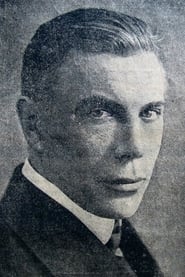

Drama in a Gypsy Camp Near Moscow
"Gypsy love ends on the cliff"
Keys: Space play/pause · ←/→ 10s · F fullscreen · M mute · </> speed
About this film
Gypsy lovers flee camp at night; when she refuses marriage he stabs her and leaps from a cliff after the body is found. A 1909 Russian tragedy in miniature.
Cast & crew
More Romance films
View all →



More about this film
About the production
Release dateOctober 1909
ProductionKhanzhonkov Film Company
Filmed inMoscow region, Russian Empire
the release was produced during the very early days of Russian cinema, when films were typically only a few minutes long and shot on location with minimal equipment. The production would have used hand-cranked cameras and natural lighting. The cliff scene was likely performed by a stunt double or created through camera tricks, as safety equipment was virtually non-existent in 1909.
Themes
Unrequited loveJealousyViolenceSuicideGypsy culture
Themes & topics
Historical background
Released in 1909, Drama in a Gypsy Camp Near Moscow belongs to the nickelodeon era and reflects production norms of its release season.
Why this film matters
Drama in a Gypsy Camp Near Moscow contributes to understanding regional output and audience tastes around 1909.
Making of
The production of the release in 1909 would have been rudimentary by modern standards. Vladimir Siversen would have directed using a hand-cranked camera, with no ability to record sound. The actors, including Pyotr Chardynin, would have relied on exaggerated gestures and facial expressions to convey emotion, as intertitles were minimal in early Russian cinema. The gypsy camp was likely filmed on location near Moscow with real Roma people as extras. The murder scene would have used stage blood and careful camera positioning to create the illusion of violence without actual harm. The cliff jumping scene presented the greatest technical challenge - it may have been filmed using a double, camera tricks, or possibly even involved real danger to the performer. The entire film would have been shot in sequence, as editing capabilities were extremely limited in 1909.
What critics said
Review records for Drama in a Gypsy Camp Near Moscow are typical of 1909: brief for shorts, more sustained for features.
Did you know?
- This is one of the earliest surviving examples of Russian narrative cinema, predating even many famous early American films.
- Director Vladimir Siversen was one of the pioneers of Russian cinema, though he remains less famous than contemporaries like Yevgeni Bauer.
- Pyotr Chardynin, who stars in the release, would later become one of Russia's most important silent film directors.
- The film was produced by Alexander Khanzhonkov's company, which was the first major film studio in the Russian Empire.
- At only 3-5 minutes long, this was considered a feature-length film for its time.
- The portrayal of gypsy life in early Russian cinema often romanticized or exoticized Roma culture, as seen in the release.
- The film's violent content was quite shocking for 1909, even by the standards of early cinema which often included melodramatic violence.
- the release represents an early example of the crime genre in Russian cinema.
- The cliff scene would have been particularly dangerous to film in 1909, requiring innovative camera techniques or dangerous stunt work.
- The film was likely shot on 35mm film, which was the standard format of the era.
Visual style
The cinematography of this 1909 film would have been rudimentary but effective. The camera would have been stationary for most scenes, as mobile cameras were not yet in common use. Natural lighting would have been used for outdoor scenes, while interior or night scenes would have relied on whatever artificial lighting was available. The film was shot in black and white, with no color tinting mentioned in surviving records. The camera work would have been functional rather than artistic, focused primarily on capturing the actors' performances. The cliff scene may have used long shots to establish the dangerous setting, followed by medium shots of the actor's preparation to jump. Given the technical limitations of 1909, the cinematography prioritized clarity and visibility over artistic expression.
Innovations
While technically simple by modern standards, the release represented several achievements for Russian cinema in 1909. The successful creation of a coherent narrative in just a few minutes demonstrated advanced storytelling techniques for the era. The filming of the cliff scene, whether through stunt work or camera tricks, showed innovation in creating dramatic action sequences. The production's ability to shoot on location at a gypsy camp indicated growing sophistication in Russian film production. The film's use of dramatic violence and psychological themes pushed the boundaries of what was considered acceptable content in early cinema. The preservation of the film itself is a technical achievement, given the fragile nature of early film stock.
Music
As a silent film from 1909, this movie had no synchronized soundtrack. During theatrical exhibition, it would have been accompanied by live music, typically a pianist or small ensemble in the cinema. The music would have been improvisational or based on popular classical pieces that matched the mood of each scene - romantic music for the lovers' meeting, dramatic and dissonant sounds for the murder, and mournful melodies for the suicide. Some cinemas might have used sound effects like drums or cymbals to accentuate dramatic moments. The choice of music would have been left to individual cinema musicians, meaning each screening could have a different musical interpretation.
Famous quotes
No recorded dialogue exists as this is a silent film
Memorable scenes
- The climactic cliff jumping scene where the murderer, consumed by guilt after killing his beloved, leaps to his death - this would have been especially dramatic and technically challenging sequences in early Russian cinema, requiring either dangerous stunt work or clever camera tricks to achieve the desired effect.
What audiences thought
Early Russian audiences of 1909 would have been captivated by the release's dramatic story and exotic gypsy setting. At a time when most films were brief actualities or simple comedies, a narrative film with such intense emotional content would have been particularly compelling. The gypsy theme resonated with Russian audiences who had a long-standing cultural fascination with Roma people, often viewing them as symbols of freedom, passion, and mystery. The film's violent conclusion, while shocking, would have provided the dramatic payoff that early cinema audiences craved. The short runtime made it ideal for the variety-style film programs of the era, where multiple short films were shown in succession.
Film connections
Influenced by
- French melodramas of the 1900s
- Russian literary traditions about gypsies
- Early Pathé films
- Stage melodramas
This film influenced
- Later Russian crime dramas
- Early Soviet melodramas
- Films featuring Roma characters in Russian cinema
Film restoration
The preservation status of this extremely early Russian film is uncertain. Many films from this era, particularly Russian productions from before the Revolution, have been lost due to the fragility of early film stock, political upheavals, and the lack of systematic preservation efforts. If copies do survive, they would likely be in Russian film archives such as Gosfilmofond or international archives specializing in early cinema. The film's survival would be remarkable given its age and the tumultuous history of the 20th century in Russia.
Where to watch
- Due to its age and rarity, the release is likely not commercially available. If preserved, it might be accessible through specialized film archives, museum collections, or academic institutions specializing in early cinema. Some early Russian films have been made available through archival websites or special DVD collections of silent cinema, but this particular title's availability would need to be verified through Russian film archives or cinema history databases.