Franz Hofer
Director
- Active
- 1913-1914
Films directed 3
About Franz Hofer
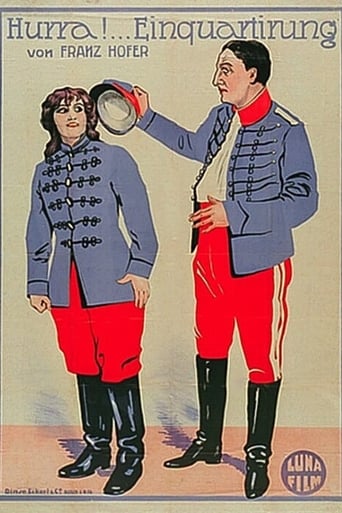
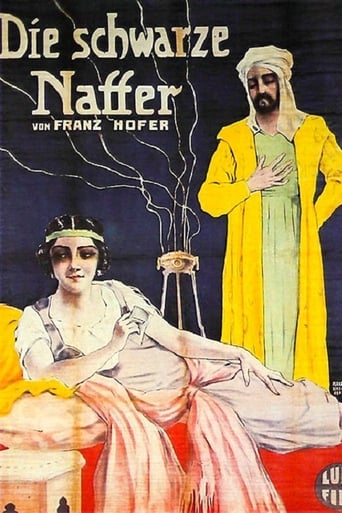
Franz Hofer was an early German silent-film director whose documented screen activity falls in the formative years of the film industry, especially 1913 and 1914. He is credited with directing such titles as Hurra! Einquartierung! (1913), Die schwarze Natter (1913), and Deutsche Helden (1914), placing him among the many craftsmen who helped define pre-World War I German cinema. Because surviving documentation on Hofer is scarce, his career is best understood through the few extant credits and the broader context of the rapidly expanding European film market of the period. His work belongs to the era when directors were still shaping cinematic grammar, using short-format storytelling, stage-derived performance, and visually direct presentation. No reliable evidence survives here for later feature-film work, major studio affiliations, or long-term international fame, which suggests that his career was either brief, regionally focused, or poorly preserved in historical records. Even so, his surviving filmography shows that he was active at a crucial moment in the transition from early narrative experiments to a more mature silent-film style. For database purposes, he is significant as one of the many early directors whose names are preserved through archival film records even when personal biographical details have largely been lost.
More about Franz Hofer
Behind the camera
Specific stylistic descriptions of Franz Hofer's direction are not reliably documented in surviving sources. Based on the period in which he worked, his films would likely have relied on concise silent storytelling, theatrical but readable staging, strong visual clarity, and practical mise-en-scène suited to short-format productions. Like many directors active before and during 1914, he likely worked within the conventions of early German cinema, where plot clarity and pictorial composition were more important than elaborate camera movement. Because no widely preserved critical assessments of his style survive here, any more precise characterization would be speculative.
In film history
Franz Hofer's cultural impact is primarily historical rather than popular or star-driven. He is part of the foundational generation of German film workers who contributed to the shaping of silent cinema before the First World War, a period when the industry was establishing production routines, audience expectations, and nationally specific screen traditions. Even when individual films are no longer widely known, directors like Hofer matter because they represent the industrial and artistic ecosystem that made later German cinema possible. His credits help film historians map the development of early narrative film in Germany and preserve evidence of the many filmmakers whose names might otherwise have disappeared from the record. In this sense, his importance lies in the documentary value of his work and in the broader cultural history of early cinema.
Later reputation
Franz Hofer's legacy is that of an early silent-film director whose surviving record contributes to our understanding of pre-war German cinema. Because his biographical trail is thin, he is not a widely celebrated auteur in the way later German directors are, but he remains part of the historical fabric of the medium. His filmography is useful to archivists, historians, and database compilers seeking to reconstruct production networks and creative activity in the 1910s. The preservation of his name in film records ensures that the early cinema landscape can be studied with more accuracy and completeness. His legacy is therefore archival, historical, and foundational rather than iconic.
Influence
There is no verifiable evidence that Franz Hofer exerted a clearly documented influence on later directors or filmmakers, at least in the surviving material readily associated with his name. However, as a working director in the earliest phase of German screen production, he participated in the shaping of conventions that later filmmakers inherited and refined. Directors of his era collectively influenced the grammar of silent storytelling through their use of tableaux, intertitles, performance blocking, and spatial organization. Hofer's direct influence is best understood as part of this shared early-cinema contribution rather than through specific named disciples or imitators.
Off screen
No reliable biographical information is available in the consulted historical record regarding Franz Hofer's personal life, including marriage, family background, or private affairs. He appears in film history primarily through his directorial credits rather than through later publicity, memoirs, or widely circulated interviews. This lack of documentation is common for many silent-era film professionals whose careers were brief or whose records were lost, especially in the upheavals of the early twentieth century. As a result, his personal life remains undocumented for most database purposes.
Credits
- Directed Hurra! Einquartierung! in 1913, one of his known early silent-era credits
- Directed Die schwarze Natter in 1913 during the formative years of German narrative cinema
- Directed Deutsche Helden in 1914, placing him among pre-war German film directors
- Worked in the silent-film era when German cinema was rapidly developing its own production identity
- Represents one of the early screen craftsmen whose surviving legacy is preserved primarily through archival filmographies
Films
- Hurra! Einquartierung! (1913)
- Die schwarze Natter (1913)
- Deutsche Helden (1914)
Notes
- Franz Hofer is associated with only a small number of surviving film credits, which is typical for many silent-era directors.
- His known work dates to 1913-1914, placing him squarely in the pre-World War I phase of German cinema.
- He is best documented through filmographies rather than biographies, suggesting that most personal records have not survived or were never widely published.
- The titles attributed to him indicate activity in the short-film era, before feature-length filmmaking became fully dominant.
- He should not be confused with later or similarly named figures in other creative fields, as the relevant cinema record is specifically that of an early German director.
- His career illustrates how many early film professionals are known today primarily through archival titles and production listings.
- Because of the scarcity of surviving detail, his filmography is especially important for historical cataloging and database accuracy.
Questions
Who was Franz Hofer?
Franz Hofer was an early German silent-film director active in the 1913-1914 period. He is known today mainly through a small number of surviving film credits rather than through a large preserved biography.
What films is Franz Hofer best known for?
He is credited with Hurra! Einquartierung! (1913), Die schwarze Natter (1913), and Deutsche Helden (1914). These titles represent the core of his documented surviving filmography.
When was Franz Hofer born and when did he die?
Reliable birth and death dates have not been verified from the available historical record. For database purposes, both dates should be listed as unknown until a trustworthy archival source is found.
What awards did Franz Hofer win?
No awards or formal honors are reliably documented for Franz Hofer in the surviving records consulted here. This is not unusual for early silent-era filmmakers whose careers were often minimally documented.
What was Franz Hofer's directing style?
No specific critical descriptions of his directing style survive in a verifiable way. Based on the era, his work would likely have followed the silent-film conventions of clear visual storytelling, stage-based blocking, and concise dramatic presentation.
What is Franz Hofer's legacy in film history?
His legacy is primarily historical and archival. He is part of the early German cinema generation whose work helped establish the industry before World War I, even though few personal details and critical assessments have survived.