Films
2 films
About Eleuterio Rodolfi
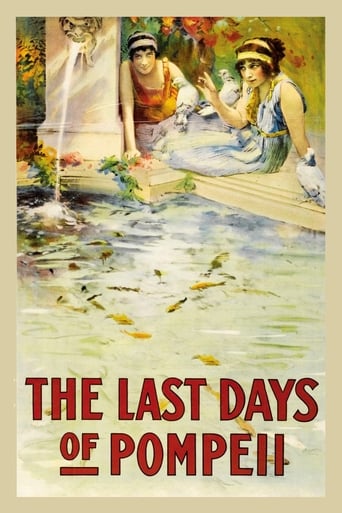
Italian film director active during the era of cinema, specifically known for his work in 1913. His most significant contribution to film history was directing the 1913 adaptation of Edward Bulwer-Lytton's novel 'The Last Days of Pompeii,' which was part of the golden age of Italian silent epics. Rodolfi emerged during a period when Italian cinema was producing some of the most ambitious and technically sophisticated films in the world, often focusing on historical and mythological subjects. His directorial work on 'The Last Days of Pompeii' placed him among the early innovators of cinematic storytelling during the transition from short films to feature-length productions. Unfortunately, like many early filmmakers, much of Rodolfi's personal history and career details remain obscure due to the passage of time and limited documentation from that era. His brief but notable appearance in film history represents the broader landscape of early 20th century European cinema, where many talented directors contributed to the art form's development despite limited recognition in subsequent decades.
The Craft
Behind the Camera
Rodolfi's directing style reflected the grand, theatrical approach common in early Italian epics, emphasizing spectacular sets, large crowd scenes, and dramatic visual storytelling typical of the period's historical films.
Milestones
- Directed 'The Last Days of Pompeii' (1913)
- Contributed to early Italian epic cinema tradition
- Participated in the golden age of Italian silent films
Best Known For
Must-See Films
Working Relationships
Studios
Why They Matter
Impact on Culture
Eleuterio Rodolfi's contribution to cinema, though brief, represents the broader movement of Italian filmmakers who helped establish the epic as a dominant genre in early cinema. His work on 'The Last Days of Pompeii' contributed to the tradition of historical spectacle that would influence filmmakers worldwide, including D.W. Griffith and Cecil B. DeMille. The 1913 film was part of a series of Italian productions that demonstrated cinema's potential for grand storytelling and visual spectacle, helping to establish feature films as a viable artistic and commercial medium. Rodolfi's work, like that of his contemporaries, helped lay the groundwork for the development of narrative cinema techniques and the epic genre that would become a staple of Hollywood filmmaking in subsequent decades.
Lasting Legacy
While Eleuterio Rodolfi himself may not be widely remembered today, his contribution to early Italian cinema represents an important chapter in film history. The 1913 version of 'The Last Days of Pompeii' stands as an example of the sophisticated filmmaking emerging from Italy during the silent era, a period when Italian films were among the most technically advanced and artistically ambitious in the world. His work serves as a reminder of the many talented filmmakers who contributed to cinema's development during its formative years, even if their individual names have been lost to time. The tradition of historical epics that Rodolfi participated in would continue to influence cinema throughout the 20th century and beyond.
Who They Inspired
Rodolfi's work on 'The Last Days of Pompeii' contributed to the development of visual techniques for depicting historical events on screen, influencing subsequent filmmakers who tackled similar subjects. The grand scale and dramatic approach characteristic of his film helped establish conventions for the historical epic genre that would be refined and expanded upon by later directors. While direct evidence of his influence on specific filmmakers is limited due to the obscurity of his career, his participation in the Italian epic tradition places him within a lineage of filmmakers who shaped cinema's visual language and narrative possibilities.
Off Screen
Very little is documented about Eleuterio Rodolfi's personal life, which is common for many early film directors whose work predated the celebrity culture that would later develop around filmmakers. His obscurity in historical records suggests he may have had a brief career in cinema or possibly worked under different circumstances that limited documentation of his life beyond his film work.
Did You Know?
- The 1913 'Last Days of Pompeii' was one of several film adaptations of this popular novel during the silent era
- Italian cinema of the 1910s was considered among the most technically advanced in the world
- The film was produced during what historians consider the golden age of Italian silent cinema
- Many early Italian directors like Rodolfi worked anonymously or their contributions were poorly documented
- The original novel 'The Last Days of Pompeii' by Edward Bulwer-Lytton was first published in 1834
- Early Italian epics often featured thousands of extras and elaborate sets
- The film's survival status is uncertain, as many silent films have been lost over time
- Rodolfi's brief career span reflects the transient nature of early film industry employment
- Italian filmmakers were pioneers in using cinema for historical recreation
- The film industry in Italy was centered primarily in Turin and Rome during this period
Frequently Asked Questions
Who was Eleuterio Rodolfi?
Italian on YTB.my.' He was part of the early Italian cinema movement that produced some of the most ambitious films of the silent era.
What films is Eleuterio Rodolfi best known for?
Titles linked here include The Last Days of Pompeii (1913).
When was Eleuterio Rodolfi born and when did he die?
Unfortunately, specific birth and death dates for Eleuterio Rodolfi are not documented in available historical records, which is common for many early film directors from the silent era.
What awards did Eleuterio Rodolfi win?
There are no documented awards or honors for Eleuterio Rodolfi, which reflects the limited recognition systems for filmmakers during the early 1910s and the obscurity of his career in historical records.
What was Eleuterio Rodolfi's directing style?
Rodolfi's directing style reflected the grand, theatrical approach common in early Italian epics, emphasizing spectacular visuals, large-scale productions, and dramatic storytelling typical of historical films from that period.