Rabindranath Tagore
Actor
Born: May 7, 1861 in Calcutta, Bengal Presidency, British India Died: August 7, 1941 Active: 1877-1941 Birth Name: Rabindranath Thakur
Films
1 film
About Rabindranath Tagore
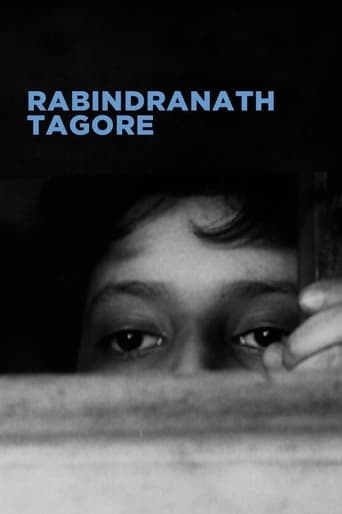
Rabindranath Tagore (1861-1941) was a Bengali polymath who reshaped Bengali literature and music, as well as Indian art with Contextual Modernism in the late 19th and early 20th centuries. Though primarily known as a poet, writer, composer, philosopher, and painter who became the first non-European to win the Nobel Prize in Literature in 1913, Tagore also had connections to cinema. His works have been adapted into numerous films, and he wrote extensively about the art form. The 1961 documentary 'Rabindranath Tagore' by Satyajit Ray was made to commemorate his birth centenary, featuring archival footage and readings of his works. Tagore himself was not an actor in the traditional sense but appeared in some documentary footage during his lifetime, and his philosophical writings on cinema influenced early Indian filmmakers. His legacy in cinema comes primarily through the countless adaptations of his literary works and his influence on filmmakers who adapted his universal themes of humanism, spirituality, and social reform.
The Craft
On Screen
Not primarily an actor; appeared only in documentary footage
Milestones
- Nobel Prize in Literature (1913)
- Wrote Gitanjali (1910)
- Founded Visva-Bharati University (1921)
- Composed national anthems for India and Bangladesh
- Pioneered Bengali Renaissance
- Wrote over 2,000 songs
- Authored numerous novels, short stories, and plays
Best Known For
Iconic Roles
Must-See Films
Accolades
Won
- Nobel Prize in Literature (1913)
- Knighthood (renounced in 1919)
Special Recognition
- National anthems of India and Bangladesh composed by Tagore
- Visva-Bharati University founder
- Numerous posthumous honors and institutions named after him
Working Relationships
Worked Often With
Why They Matter
Impact on Culture
Tagore's influence on cinema extends far beyond his brief appearances in documentary footage. His literary works have been adapted into over 100 films across multiple languages, including classics like 'Kabuliwala' (1961), 'Charulata' (1964), and 'Muk O Mukhosh' (1956). His philosophical writings on art and aesthetics influenced early Indian filmmakers, particularly those of the parallel cinema movement. The universal themes in his works - humanism, spiritual quest, social reform, and the tension between tradition and modernity - provided rich material for cinematic exploration. His songs and poems have been incorporated into film soundtracks, creating a bridge between literary and cinematic arts in Indian culture.
Lasting Legacy
Tagore's cinematic legacy lies primarily in the enduring popularity of adaptations of his works and his influence on filmmakers' artistic vision. Directors like Satyajit Ray, Ritwik Ghatak, and Tapan Sinha repeatedly returned to his stories, finding contemporary relevance in his exploration of human relationships and social issues. His emphasis on emotional authenticity over melodrama influenced Indian parallel cinema. The 1961 documentary by Ray preserved his image and voice for posterity, while his writings on cinema as an art form continue to inspire filmmakers seeking to create meaningful, socially conscious cinema. His works remain a rich source for contemporary filmmakers, with new adaptations appearing regularly in Indian cinema.
Who They Inspired
Tagore influenced filmmakers through his literary works, philosophical approach to art, and emphasis on humanist values. Satyajit Ray, who made the 1961 documentary, was deeply influenced by Tagore's humanism and adapted several of his works. Directors like Mrinal Sen, Goutam Ghose, and others have found inspiration in his stories and themes. His approach to bridging traditional and modern sensibilities provided a model for filmmakers seeking to create authentically Indian yet universally appealing cinema. His emphasis on emotional truth and social consciousness influenced the parallel cinema movement in India.
Off Screen
Tagore was born into the wealthy Tagore family of Calcutta and was largely raised by servants as his mother died early and his father traveled extensively. He married Mrinalini Devi in 1883 when she was ten years old, and they had five children, though three died in childhood. He experienced profound personal tragedies including the deaths of his wife, daughter, and father between 1902-1905, which deeply influenced his later works. Tagore traveled extensively throughout his life, meeting with global figures like Einstein, Roosevelt, and H.G. Wells, promoting his vision of universal humanism.
Education
Educated at home initially; briefly attended Oriental Seminary and Normal School; studied law at University College London (1879-1880) but did not complete degree
Family
- Mrinalini Devi (1883-1902)
Did You Know?
- First non-European to win Nobel Prize in Literature
- Composed national anthems for both India and Bangladesh
- Renounced his knighthood in protest of Jallianwala Bagh massacre
- Spoke out against caste system and untouchability
- Met Albert Einstein in 1930 for philosophical discussions
- Started painting at age 60 and created over 2,500 artworks
- His work 'Gitanjali' was translated into English by W.B. Yeats
- Traveled to over 30 countries across five continents
- Had close friendships with prominent international figures including Gandhi
- His family home Jorasanko Thakur Bari is now a museum
In Their Own Words
Where the mind is without fear and the head is held high
You can't cross the sea merely by standing and staring at the water
The butterfly counts not months but moments, and has time enough
Let your life lightly dance on the edges of Time like dew on the tip of a leaf
Clouds come floating into my life, no longer to carry rain or usher storm, but to add color to my sunset sky
Frequently Asked Questions
Who was Rabindranath Tagore?
Bengali polymath who reshaped Bengali literature and music, becoming the first non-European to win the Nobel Prize in Literature in 1913. He was a poet, writer, composer, philosopher, and painter whose works have been adapted into numerous films throughout cinema history.
What films is Rabindranath Tagore best known for?
Titles linked here include Rabindranath Tagore (1961 documentary).
When was Rabindranath Tagore born and when did he die?
Born May 7, 1861; died August 7, 1941.
What awards did Rabindranath Tagore win?
Tagore won the Nobel Prize in Literature in 1913 for his collection 'Gitanjali,' making him the first non-European recipient. He was also knighted by the British Crown in 1915 but renounced the title in 1919 as a protest against the Jallianwala Bagh massacre.
What was Rabindranath Tagore's connection to cinema?
Tagore's connection to cinema was primarily through the adaptation of his literary works into films and his philosophical writings on art that influenced filmmakers. He appeared only in documentary footage, while his stories and themes provided rich material for countless film adaptations in Indian cinema.