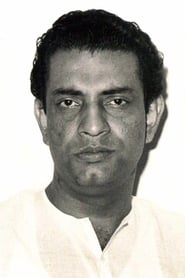
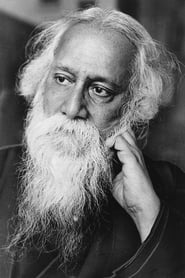


Rabindranath Tagore
"Tagore’s life in lyric and reform"
Keys: Space play/pause · ←/→ 10s · F fullscreen · M mute · </> speed
About this film
Docudrama about the life of Rabindranath Tagore, Indian polymath—poet, writer, playwright, composer, philosopher, social reformer and painter, who reshaped Bengali literature and music as well as Indian art, becoming in 1913 the first non-European and the first lyricist to win th
Cast & crew
More films like this
More Documentary films
View all →
More from Satyajit Ray
View all →

More about this film
About the production
Release date1961
ProductionFilms Division of India
Filmed inKolkata (Calcutta), Santiniketan, Jorasanko Thakur Bari
Ray faced the challenge of creating a documentary about a figure who was both deeply revered and complex in his multifaceted genius. He spent months researching Tagore's life, collecting rare photographs, paintings, and archival materials from various sources including the Tagore family. The film was commissioned by the Government of India as part of the nationwide centenary celebrations of Tagore's birth. Ray's innovative approach included using Tagore's own paintings and photographs as visual elements, combined with his evocative narration and carefully selected musical pieces composed by Tagore himself. The production team had to work with limited archival footage, leading Ray to create dramatic reconstructions of key moments from Tagore's life.
Themes
Universal humanism and internationalismThe synthesis of Eastern and Western thoughtArt as a means of spiritual and social transformationEducation as a tool for human developmentThe relationship between tradition and modernity
Themes & topics
biographypoetphilosopherNobel Prize winnerBengali cultureIndian independence movementeducation reformartistic geniuscultural heritagespiritual questEast-West synthesisSantiniketanRabindra SangeetBengal Renaissance
Historical background
Rabindranath Tagore appeared in 1961, when New Hollywood and global new waves shaped how movies were financed, distributed, and discussed. Audiences of the day encountered the work amid shifting tastes in acting, pacing, and spectacle. Its focus on docudrama about the life of rabindranath tagore, indian polymath—poet, writer, playwright, composer, philosopher, social reformer and painter, who reshaped bengali literature and music as well as indian art, becoming in 1913 the first non-european and the first lyricist to win th mirrors themes circulating in popular culture of that moment.
Why this film matters
Rabindranath Tagore (1961) belongs to the wider archive of world cinema, documenting docudrama about the life of rabindranath tagore, indian. Archivists and historians value such titles for what they reveal about craft, genre, and audience expectations. Restorations and festival screenings keep the work visible to viewers far beyond its first run.
Making of
Satyajit Ray approached this documentary with the same meticulous attention to detail that characterized his narrative films. He spent months researching Tagore's life, visiting the Tagore archives at Santiniketan and consulting with scholars and family members. Ray's challenge was to create a portrait that was both reverential and honest, avoiding hagiography while capturing Tagore's revolutionary spirit. The director used a combination of techniques - slow pans across photographs, careful selection of archival footage, and his own poetic narration - to create a meditative, contemplative mood. Ray was particularly interested in Tagore's visual art, and he gave significant screen time to Tagore's paintings, which were relatively unknown to the general public at the time. The documentary's production coincided with Ray's growing international reputation, and he brought his newfound cinematic sophistication to this project, elevating it beyond a typical government-commissioned documentary.
What critics said
Press coverage from 1961 is fragmentary for many titles of this vintage; surviving notices for Rabindranath Tagore tend to stress novelty, star power, or topical appeal. Later writing places the picture within its national and generic context, weighing both period conventions and moments that still land for modern viewers. Streaming and disc releases have revived discussion among classic-film audiences.
Did you know?
- This was Satyajit Ray's first documentary film, marking his debut in non-fiction filmmaking after establishing himself excelled in narrative cinema with the Apu Trilogy.
- Ray, who was also a talented writer and musician, had a personal connection to Tagore's work - his father Sukumar Ray was a contemporary and admirer of Tagore.
- The film was commissioned as part of the nationwide centenary celebrations of Tagore's birth in 1861, making it a state-sponsored tribute to the national icon.
- Ray used his own voice for the English narration, lending a personal touch to the documentary that reflected his deep respect for Tagore.
- The documentary features rare photographs of Tagore from various stages of his life, many of which were sourced from private family collections.
- Tagore's own paintings, which he began creating late in life, are prominently featured in the film to illustrate his artistic evolution.
- The musical score incorporates Tagore's own compositions (Rabindra Sangeet), performed by notable artists of the time.
- Ray had to obtain special permissions to film at Jorasanko Thakur Bari, Tagore's ancestral home in Kolkata.
- The documentary was one of the first Indian films to use a combination of archival materials and dramatic reconstruction in documentary storytelling.
- Despite its short runtime of 31 minutes, the film took nearly six months to research and produce due to the extensive archival work involved.
Awards & recognition
- National Film Award for Best Documentary Film (1961)
- Golden Lotus Award for Best Non-Fiction Film at the National Film Awards
Visual style
Ray's cinematography in this documentary demonstrates his mastery of visual storytelling even in non-fiction format. The camera moves with a contemplative grace across Tagore's photographs and paintings, allowing viewers to absorb the details. Ray uses slow pans and zooms to create a sense of intimacy with the archival materials. The lighting is carefully controlled to enhance the texture of old photographs and paintings, bringing them to life on screen. Ray incorporates actual footage of Tagore where available, seamlessly blending it with still images and dramatic reconstructions. The cinematography also captures the essence of places significant to Tagore's life - Jorasanko, Santiniketan, and the Bengal landscape that inspired so much of his poetry. Ray's visual approach avoids the static, academic feel common in documentaries of the era, instead creating a fluid, poetic visual narrative that mirrors Tagore's artistic sensibility.
Innovations
Ray's documentary was technically innovative for its time, particularly in its integration of different media forms. The film was one of the first in India to use photo-animation techniques extensively, bringing static photographs to life through careful camera movements. Ray employed sophisticated optical printing techniques to blend archival footage with contemporary shots seamlessly. The documentary also pioneered the use of dramatic reconstruction in Indian documentary filmmaking, creating reenactments of key moments from Tagore's life that were historically accurate yet cinematically compelling. The sound recording and mixing were particularly challenging given the need to integrate Tagore's music, narration, and ambient sounds, but Ray achieved a balanced, clear audio mix. The film's editing, done by Ray himself, demonstrated his ability to create narrative flow even with disparate archival materials. These technical achievements helped establish new standards for documentary filmmaking in India.
Music
The soundtrack of Ray's documentary is a carefully curated selection of Tagore's own musical compositions, known as Rabindra Sangeet. Ray, being a music connoisseur himself, chose pieces that reflected different periods and moods of Tagore's creative life. The music serves not just as background but as a narrative element, illustrating Tagore's evolution as a composer and his philosophical journey. The film features performances by renowned singers of the time, including Debabrata Biswas and Kanika Banerjee, who were considered authorities on Rabindra Sangeet. Ray's own narration, delivered in a measured, thoughtful tone, complements the musical selections. The sound design incorporates ambient sounds from locations significant to Tagore - the rustling of leaves at Santiniketan, the sounds of rural Bengal, and the urban atmosphere of Kolkata. The soundtrack creates an immersive experience that helps viewers connect emotionally with Tagore's world.
Famous quotes
The highest education is that which does not merely give us information but makes our life in harmony with all existence.
Where the mind is without fear and the head is held high, into that heaven of freedom, my Father, let my country awake.
I have become my own version of an optimist. If I can't make it through one door, I'll go through another door or I'll make a door.
The butterfly counts not months but moments, and has time enough.
Let your life lightly dance on the edges of Time like dew on the tip of a leaf.
Memorable scenes
- The opening sequence where Ray's camera slowly pans across Tagore's childhood photographs while his narration sets the tone for the journey ahead.
- The segment showing Tagore's paintings, with Ray's camera lingering on each work to reveal the artist's evolving style and philosophical depth.
- The reenactment of Tagore receiving the Nobel Prize news, capturing the historic moment with understated dignity.
- The scenes of Santiniketan, showing the educational institution Tagore founded, with students learning in natural surroundings.
- The final sequence where Tagore's voice (from archival recordings) recites his poetry, creating a powerful emotional connection with the audience.
What audiences thought
The documentary was warmly received by Indian audiences, particularly in Bengal where Tagore remains a cultural icon. Many viewers appreciated Ray's respectful approach to the subject and the film's educational value. The film was screened widely in schools and cultural institutions as part of the centenary celebrations. International audiences, especially those unfamiliar with Tagore's work, found the documentary an accessible introduction to the polymath's life and contributions. The film's relatively short runtime made it suitable for various screening contexts, from cinema halls to educational institutions. Over the years, the documentary has maintained its appeal, with new generations discovering it through film festivals, retrospectives of Ray's work, and digital platforms. Audience members often comment on how the film captures not just Tagore's achievements but his spiritual and philosophical essence.
Film connections
Influenced by
- Robert Flaherty's documentary style
- John Grierson's documentary principles
- European art documentary tradition
- Indian narrative cinema conventions
- Tagore's own writings on art and aesthetics
This film influenced
- The World of Apu (documentary elements)
- Inner Eye (Ray's documentary on Benode Behari Mukherjee)
- Sukumar Ray (Ray's documentary on his father)
- Various Indian biographical documentaries of the 1960s-70s
Film restoration
The film has been preserved by the National Film Archive of India (NFAI) and is considered part of India's cinematic heritage. Digital restoration work was completed in the early 2000s as part of a broader effort to preserve Satyajit Ray's filmography. The original negatives are stored in climate-controlled facilities at the NFAI in Pune. The film has also been preserved by the Academy Film Archive and the British Film Institute as part of their Satyajit Ray collections. Regular screenings are held at film archives and museums to ensure public access to this important documentary.
Where to watch
- Available on the Criterion Channel as part of Satyajit Ray collections
- Streaming on MUBI during special retrospectives
- Accessible through the National Film Archive of India's viewing facilities
- Available on DVD in 'Satyajit Ray: The Complete Collection' box sets
- Screened periodically at film festivals and cultural institutions
- Accessible through some university film studies programs
- Available on select streaming platforms specializing in classic cinema