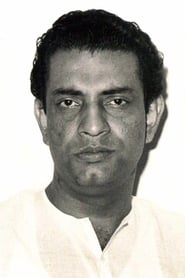
Satyajit Ray
Actor & Director
Born: May 2, 1921 in Calcutta, Bengal Presidency, British India (now Kolkata, West Bengal, India) Died: April 23, 1992 Active: 1955-1991
Films
8 films


About Satyajit Ray
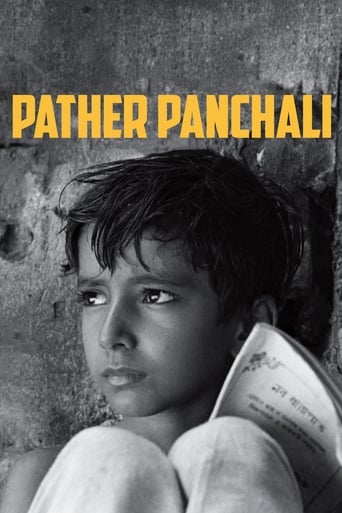
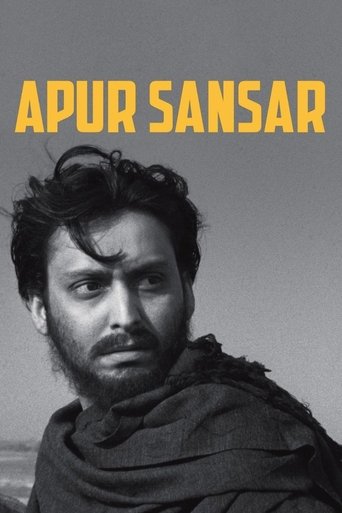
Indian filmmaker, screenwriter, music composer, graphic artist, and author who revolutionized Indian cinema and gained international acclaim for his humanistic approach to storytelling. Born into a prominent Bengali family in 1921, Ray began his career as a commercial artist before being inspired to make films after meeting French director Jean Renoir and viewing Vittorio De Sica's Bicycle Thieves. His directorial debut, Pather Panchali (1955), won eleven international prizes and established him as a major voice in world cinema, launching the acclaimed Apu Trilogy that would define his early career. Throughout his 37-year career, Ray directed 36 films, ranging from children's movies to documentaries, literary adaptations, and political dramas, while also composing music for many of his films and designing the posters and credits. He was a polymath who wrote numerous short stories, novels, and essays, and created the popular Feluda detective series. Ray's films were characterized by their realistic portrayal of rural and urban life, deep humanism, and meticulous attention to detail in every aspect of production. He received an honorary Academy Award in 1992, just weeks before his death, recognizing his lifetime of contributions to cinema.
The Craft
Behind the Camera
Satyajit Ray's directing style was characterized by neorealism, humanism, and meticulous attention to detail. He often used non-professional actors and natural lighting to create authentic portrayals of Indian life, particularly in rural Bengal. His pacing was deliberate and contemplative, allowing scenes to unfold naturally while maintaining emotional intensity. Ray was known for his masterful use of long takes, deep focus photography, and subtle camera movements that enhanced rather than dominated the narrative. His films often explored themes of tradition versus modernity, social change, and the struggles of ordinary people with profound empathy and psychological depth.
Milestones
- Directorial debut with Pather Panchali (1955) which won 11 international awards
- Completion of the Apu Trilogy (1955-1959) which is considered one of cinema's greatest achievements
- Winning the Golden Lion at Venice Film Festival for Aparajito (1956)
- Receiving an Honorary Academy Award in 1992
- Being the first Indian to receive an Oscar
- Creating the detective character Feluda in literature
- Composing music for nearly all his films
- Designing posters and typefaces for his films
Best Known For
Iconic Roles
Must-See Films
Accolades
Won
- Academy Honorary Award (1992)
- Golden Lion (Best Film) - Venice Film Festival for Aparajito (1956)
- Golden Bear (Best Film) - Berlin Film Festival for Teen Kanya (1961)
- Best Director - Moscow Film Festival for Pratidwandi (1970)
- Best Director - Moscow Film Festival for Seemabaddha (1971)
- Best Film - National Film Awards for multiple films
- Best Direction - National Film Awards for multiple films
- Dadasaheb Phalke Award (1985)
- Bharat Ratna (1992, India's highest civilian award)
Nominated
- Academy Award nomination for Best Director for Pather Panchali (1956)
- BAFTA nomination for Best Film from any Source for Pather Panchali (1956)
- Academy Award nomination for Best Original Screenplay for The Chess Players (1978)
- Golden Palm nomination - Cannes Film Festival for multiple films
- Golden Lion nomination - Venice Film Festival for multiple films
Special Recognition
- Commandeur de l'Ordre des Arts et des Lettres (France)
- Honorary Doctorate from Oxford University
- Honorary Doctorate from Royal College of Art, London
- Sangeet Natak Akademi Award (1959)
- Padma Shri (1965)
- Padma Bhushan (1976)
- Padma Vibhushan (1976)
Working Relationships
Worked Often With
Studios
Why They Matter
Impact on Culture
Satyajit Ray single-handedly transformed the perception of Indian cinema on the global stage, proving that Indian films could compete with the best of world cinema. His work brought international attention to Indian culture and society, particularly Bengali life, while universal themes made his films accessible to audiences worldwide. Ray's success paved the way for other Indian filmmakers to gain recognition internationally and helped establish parallel cinema as a serious artistic movement in India. His meticulous approach to filmmaking, including his emphasis on authenticity, technical excellence, and artistic integrity, set new standards for Indian cinema. Ray's films became cultural artifacts that preserved and documented changing Indian society, particularly the transition from rural to urban life and the impact of modernization on traditional values.
Lasting Legacy
Satyajit Ray's legacy extends far beyond his films; he remains a towering figure in world cinema whose influence continues to resonate decades after his death. The Apu Trilogy consistently ranks among the greatest films ever made by critics and filmmakers worldwide. Ray pioneered a distinctly Indian cinematic language that blended Western techniques with Eastern sensibilities, creating a template for filmmakers in developing countries. His multidisciplinary approach to art, combining visual, musical, and literary elements, influenced generations of artists across various mediums. The Satyajit Ray Film and Television Institute in Kolkata continues to train new generations of filmmakers, ensuring his artistic philosophy lives on. His literary works, particularly the Feluda and Professor Shonku series, remain beloved in Bengali literature and have been adapted into successful films and television series.
Who They Inspired
Ray's influence on world cinema is profound and far-reaching, acknowledged by masters like Akira Kurosawa, who called him 'a giant of world cinema.' Wes Anderson, Martin Scorsese, and Francis Ford Coppola have cited Ray as a major influence on their work. His realistic storytelling style influenced the French New Wave and other international movements. In India, he inspired the parallel cinema movement and filmmakers like Mrinal Sen, Adoor Gopalakrishnan, and Shyam Benegal. His innovative use of bounce lighting techniques, developed with cinematographer Subrata Mitra, revolutionized film lighting globally. Ray's approach to adapting literature to film, particularly his work with Tagore's stories, became a model for literary adaptations worldwide. His emphasis on humanism and social consciousness in cinema continues to influence filmmakers addressing social issues.
Off Screen
Satyajit Ray came from a family of artists and intellectuals. His grandfather Upendra Kishore Ray — writer, painter, and publisher, while his father Sukumar Ray — celebrated poet and writer of nonsense literature. Ray married Bijoya Ray (née Das) in 1949, and they had one son, Sandip Ray, who would later become a filmmaker and continue his father's work. Despite his international success, Ray lived a relatively simple life in Calcutta, maintaining strong ties to his Bengali cultural heritage. He was known for his intellectual curiosity and diverse talents, which extended beyond filmmaking to include writing, music composition, graphic design, and typography.
Education
Visva-Bharati University (Santiniketan), University of Calcutta (BA in Economics)
Family
- Bijoya Ray (1949-1992)
Did You Know?
- Ray composed the musical score for all his films except Pather Panchali
- He designed a new typeface called 'Ray Roman' for his film posters
- Ray — accomplished calligrapher and graphic designer
- He was a cousin of Indian Prime Minister Indira Gandhi
- Ray wrote the screenplay for The Alien, which was never made but allegedly inspired E.T.
- He was an excellent chess player and incorporated chess themes in several films
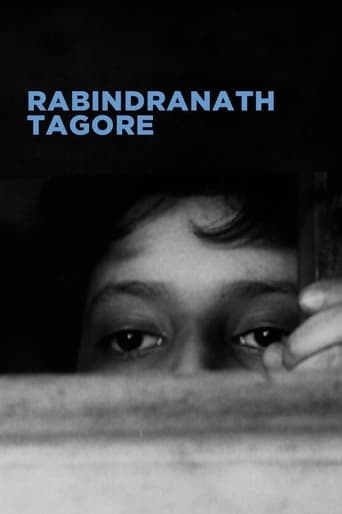
- Ray directed a documentary about his family friend Rabindranath Tagore
- He was the first Indian to win an Academy Award
- Ray — member of the Academy of Motion Picture Arts and Sciences
- He wrote science fiction stories featuring the character Professor Shonku
- Ray — fan of Western classical music and jazz
- He corresponded with famous filmmakers like Kurosawa and Bergman
In Their Own Words
The only solutions to the problems of human life are individual solutions. Every individual must work out his own salvation.
Cinema's characteristic forte is its ability to capture and communicate the intimacies of the human mind.
I don't think one can be a good director unless one has a sense of humour.
The director is the only person who knows what the film is about.
I've always believed that there is a deep connection between cinema and music.
Films should be made not for the box office but for the heart and mind.
The camera is not merely a recording machine but a medium of expression.
Frequently Asked Questions
Who was Satyajit Ray?
Indian filmmaker, screenwriter, composer, and author widely regarded as one of the greatest filmmakers in cinema history. He is best known for directing the Apu Trilogy and for bringing Indian cinema to international attention through his humanistic and realistic storytelling.
What films is Satyajit Ray best known for?
Titles linked here include Pather Panchali (1955), Aparajito (1956).
When was Satyajit Ray born and when did he die?
Born May 2, 1921; died April 23, 1992.
What awards did Satyajit Ray win?
Ray won numerous international awards including an honorary Academy Award (1992), Golden Lion at Venice for Aparajito (1956), and Golden Bear at Berlin for Teen Kanya (1961). He also received India's highest civilian honor, the Bharat Ratna (1992), and the Dadasaheb Phalke Award (1985).
What was Satyajit Ray's directing style?
Ray's directing style was characterized by neorealism, humanism, and meticulous attention to detail. He used natural lighting, non-professional actors, and deliberate pacing to create authentic portrayals of Indian life. His films explored themes of tradition versus modernity with profound empathy and psychological depth.
Did Satyajit Ray act in films?
While primarily known as a director, Ray occasionally appeared in his own films. He notably served as the narrator in his documentary Rabindranath Tagore (1961). His main contributions to cinema were behind the camera as director, writer, and composer.
What was Satyajit Ray's cultural background?
Ray came from a prominent Bengali family of artists and intellectuals. His grandfather Upendra Kishore Ray — writer and publisher, and his father Sukumar Ray — famous poet. This rich cultural heritage deeply influenced his artistic vision and filmmaking approach.
How did Satyajit Ray influence world cinema?
Ray revolutionized perceptions of Indian cinema globally and influenced filmmakers like Akira Kurosawa, Wes Anderson, and Martin Scorsese. He pioneered bounce lighting techniques, established Indian parallel cinema, and created a cinematic language blending Western techniques with Eastern sensibilities that inspired filmmakers worldwide.