



Pather Panchali
"Childhood measured in monsoon light"
Keys: Space play/pause · ←/→ 10s · F fullscreen · M mute · </> speed
About this film
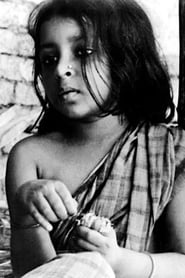
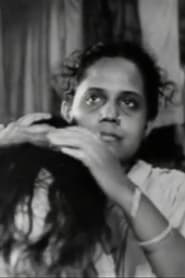
In a Bengal village, priest Harihar Ray leaves to seek work while Sarbojaya raises rebellious Durga and young Apu amid poverty. Satyajit Ray's debut observes small joys and hard losses with neorealist patience.
Cast & crew
More films like this
More Drama films
View all →







More from Satyajit Ray
View all →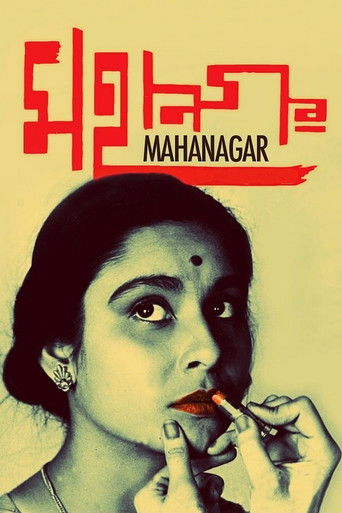


More about this film
About the production
Release dateAugust 26, 1955 (New York, USA premiere), December 1955 (Calcutta, India release)
BudgetApproximately ₹150,000 (about $3,000 at the time), an extremely low budget even for 1950s Indian cinema
Box officeInitially modest, but grew significantly after international acclaim. The film eventually became profitable and helped establish Indian cinema on the world stage
ProductionSatyajit Ray Productions
Filmed inBoral village, South 24 Parganas district, West Bengal, India, Nischindipur (fictional village name from the novel)
The film was shot intermittently over three years (1952-1955) due to funding constraints. Ray used his own money, pawned his wife's jewelry, and borrowed from friends to complete the project. The cast was mostly non-professional actors, with only Kanu Bannerjee having some theater experience. The film's signature 'bounce lighting' technique was invented by cinematographer Subrata Mitra during production, using a piece of white poster board to reflect sunlight. The famous train scene was shot with the crew waiting for days for the train to arrive at the right time with perfect lighting.
Themes
Themes & topics
rural Bengalpovertyfamilychildhooddeathvillage lifecoming-of-agemigrationnatural disastersocial classdreamsloss of innocencetraditionchange
Historical background
Shot over three years on a minimal budget, Pather Panchali premiered in 1955 as India faced rapid post-independence social change.
Why this film matters
It launched the Apu trilogy and proved Indian cinema could command international art-house respect.
Making of
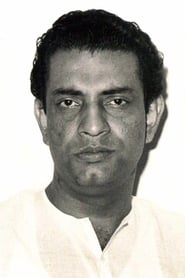
The making of Pather Panchali is one of cinema's most remarkable stories of perseverance and artistic vision. Satyajit Ray, then a 31-year-old graphic designer with no formal filmmaking training, was inspired to adapt Bibhutibhushan Bandyopadhyay's novel after meeting French director Jean Renoir in 1949. Ray spent two years designing storyboards and sketches before shooting began. The production was plagued by constant financial problems - Ray would shoot a few scenes whenever money became available, leading to the three-year production period. The non-professional cast required extensive coaching, with Ray spending months teaching them how to act naturally in front of the camera. Cinematographer Subrata Mitra, also making his debut, revolutionized Indian cinematography with his bounce lighting technique, which allowed for natural-looking indoor scenes without expensive studio lighting. The film's post-production was equally challenging - Ray had to take the footage to London for processing because Indian facilities couldn't handle the high-contrast black and white stock. Despite these obstacles, or perhaps because of them, the film achieved an authenticity and poetic quality that continues to influence filmmakers worldwide.
What critics said
Cannes and global critics hailed its humanity; it remains a cornerstone of world cinema syllabi.
Did you know?
- Satyajit Ray had never directed a film before and learned filmmaking by watching films and reading books while working as a graphic designer
- The film was shot with natural light, and the crew often had to wait for days for the right lighting conditions
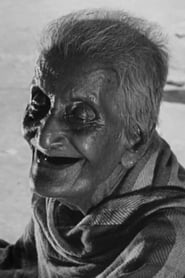
- Chunibala Devi, who played the elderly aunt Indir Thakrun, was an 80-year-old former theater actress who had been retired for 30 years when Ray discovered her
- The film's negative was developed in London because Indian labs couldn't handle the contrast of the black and white footage
- The famous train sequence was inspired by Ray's own childhood memory of seeing a train for the first time
- The film was initially rejected by Indian distributors who thought it was too 'artistic' and wouldn't appeal to audiences
- Ray had to sell his rare books and LP records to fund the final stages of production
- The film's success led to the establishment of the Satyajit Ray Film and Television Institute in Kolkata
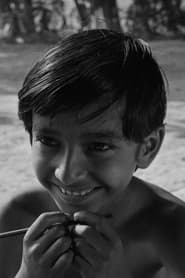
- The children in the film, Subir Banerjee (Apu) and Runki Banerjee (Durga), were discovered during a talent search in local schools
- The film was shot in chronological order, which allowed the child actors to grow naturally into their roles
Awards & recognition
- Best Human Document Award, Cannes Film Festival 1956
- Best Film, National Film Awards (India) 1955
- Best Director, National Film Awards (India) 1955
- Best Feature Film in Bengali, National Film Awards (India) 1955
- Golden Carriage Award, Venice Film Festival 1956
- Kinema Junpo Award for Best Foreign Film 1957
- Bodil Award for Best Non-European Film 1957
- Diploma of Merit, Edinburgh International Film Festival 1956
- Golden Gate Award for Best Picture, San Francisco International Film Festival 1957
- Best Film, Manila Film Festival 1956
Visual style
Subrata Mitra's cinematography in Pather Panchali revolutionized Indian film photography and influenced world cinema. Mitra developed the innovative 'bounce lighting' technique during production, using reflected sunlight to create natural-looking indoor lighting without expensive studio equipment. This technique allowed Ray to shoot interiors with the same naturalistic quality as exteriors, creating a seamless visual style. The cinematography emphasizes the textures of rural Bengal - the mud walls, the rice fields, the monsoon rains - with a painterly attention to detail. Mitra often used deep focus compositions, allowing multiple layers of action within the frame, reflecting the complexity of rural life. The famous train sequence exemplifies the film's visual poetry, with the camera positioned at the children's eye level, capturing their wonder and the approaching modernity symbolized by the train. The use of long takes and minimal camera movement creates a contemplative rhythm that matches the film's narrative pace. Natural lighting is used throughout, with scenes timed to specific times of day to achieve the desired mood. The black and white photography creates striking contrasts between light and shadow, enhancing the emotional impact of key scenes. Mitra's work established a new aesthetic for Indian cinema that valued realism over glamour, influencing generations of cinematographers.
Innovations
Pather Panchali achieved numerous technical innovations that influenced global filmmaking. Subrata Mitra's invention of bounce lighting revolutionized location photography, allowing filmmakers to achieve professional lighting quality without expensive studio equipment. The film pioneered the use of natural lighting throughout, with Ray and Mitra carefully planning shots around the sun's position and weather conditions. The synchronization of sound was particularly challenging, as the film used location sound recording, which was rare in Indian cinema at the time. The film's editing rhythm, developed by Ray in collaboration with editor Dulal Dutta, established a new pace for Indian cinema that favored contemplative observation over rapid cutting. The use of non-professional actors required new directing techniques, with Ray developing methods to elicit natural performances that became standard in parallel cinema. The film's sound design emphasized ambient sounds of rural Bengal - birds, insects, rain, wind - creating an immersive audio environment that was unprecedented in Indian film. The technical crew had to adapt equipment designed for studio use to outdoor conditions, often improvising solutions with limited resources. The film's success in achieving high technical quality on an extremely low budget demonstrated that artistic excellence didn't require expensive equipment, inspiring independent filmmakers worldwide. The preservation of the film's negative and subsequent restorations have also contributed to technical knowledge about film conservation.
Music
Ravi Shankar's score for Pather Panchali marked his debut as a film composer and created a new paradigm for film music in India. Rather than using the conventional song-and-dance numbers typical of Indian cinema, Shankar composed a minimalist, atmospheric score that enhanced the film's emotional landscape without overwhelming it. The music blends classical Indian ragas with folk elements, reflecting the rural setting while maintaining artistic sophistication. Shankar used limited instrumentation - primarily sitar, flute, and tabla - to create an intimate sound that mirrors the film's focus on family life. The score is sparingly used, appearing only at key moments to heighten emotional impact, such as during the death scenes or moments of natural beauty. This restraint was revolutionary in Indian cinema, where background music had traditionally been constant and melodramatic. The theme music, based on the raga 'Bhairavi,' has become iconic in world cinema. Shankar's improvisational approach to composing meant that much of the music was created in response to the edited footage, allowing the score to grow organically from the film's rhythms. The soundtrack was later released as an album and gained popularity in its own right, introducing many Western listeners to Indian classical music. Shankar's work on Pather Panchali influenced his subsequent film scores and helped establish him as an international music ambassador.
Famous quotes
Durga, don't go near the water. The current is strong today." - Sarbojaya
Apu, look! A train!" - Durga
We are poor, but we have our dignity." - Harihar Ray
The village is our home, but the world is calling." - Harihar Ray
In poverty, there is still beauty." - Sarbojaya
Every ending is a new beginning." - Harihar Ray
The moon will rise again, even after the darkest night." - Indir Thakrun
Memorable scenes
- The children running through the fields to see the train for the first time, their excitement and wonder perfectly capturing the magic of childhood discovery
- Durga and Apu playing in the monsoon rain, their joy contrasting with the gathering storm that foreshadows tragedy
- The death of Indir Thakrun, filmed with quiet dignity as the family discovers her alone in the forest
- The final scene of the family leaving their ancestral home, the camera pulling back to show the empty house as they depart
- Durga's death scene, handled with profound sensitivity as the family grieves in the rain
- The sequence of Apu discovering his sister's stolen fruit and learning about moral complexity
- The scene where Harihar returns home with gifts, showing the family's brief moment of happiness
- The nighttime scene of Durga and Apu watching the traveling show, their faces illuminated by firelight
What audiences thought
The audience reception of Pather Panchali evolved dramatically over time. Initial screenings in Calcutta drew modest crowds, with some viewers finding the slow pace and lack of conventional entertainment challenging. However, word-of-mouth grew after its international success, and Indian audiences began to appreciate its artistic merits. The film resonated particularly strongly with educated urban audiences who recognized its authentic portrayal of rural India. In rural areas, viewers connected deeply with the film's realistic depiction of village life, though some found the poverty depicted too close to home. Internationally, audiences were captivated by its universal themes of family, childhood, and resilience. The film's emotional power transcended cultural barriers, with audiences worldwide responding to its human story. Over the years, Pather Panchali has developed a cult following among film enthusiasts and continues to be screened at retrospectives and film festivals. Younger audiences discover it through film studies and streaming platforms, finding its themes and imagery still relevant. The film's emotional impact remains undiminished after decades, with many viewers describing it as a transformative cinematic experience that changes how they perceive both cinema and life itself.
Film connections
Influenced by
- Italian Neorealism (particularly Bicycle Thieves)
- Jean Renoir's The River
- Bibhutibhushan Bandyopadhyay's novel
- Classical Indian literature
- Japanese cinema (particularly Yasujirō Ozu)
- French poetic realism
This film influenced
- The Apu Trilogy sequels (Aparajito and Apur Sansar)
- The World of Apu
- Mahanagar
- Charulata
- Ashani Sanket
- The Music Room
- The Cloud-Capped Star
- The Unfinished
- Pather Panchali (remake)
- The Bicycle Thief
- Tokyo Story
Film restoration
Pather Panchali has been carefully preserved and restored multiple times. The original camera negative was stored at the National Film Archive of India in Pune. In 1993, the film underwent its first major restoration by the Criterion Collection in collaboration with the Academy Film Archive. A more comprehensive 4K restoration was completed in 2015 by the Academy of Motion Picture Arts and Sciences, using the original camera negative and soundtrack elements. This restoration premiered at the Cannes Film Festival as part of the Cannes Classics program. The film is also preserved in the collections of the British Film Institute, the Library of Congress, and the Cineteca di Bologna. Despite these preservation efforts, some original footage remains lost or damaged, particularly in scenes that were already compromised during the original production due to budget constraints. The various restorations have helped maintain the film's visual and audio quality for new generations, though purists note that some digital restorations have altered the film's original texture and contrast. The film's preservation status is considered secure, with multiple institutions holding copies in different formats.
Where to watch
- The Criterion Channel (streaming)
- MUBI (streaming, periodic availability)
- Janus Films (theatrical screenings and special events)
- Criterion Collection DVD/Blu-ray (includes the 4K restoration)
- Amazon Prime Video (varies by region)
- YouTube Movies (rental or purchase)
- Google Play Movies (rental or purchase)
- Apple TV (rental or purchase)
- Film Movement (DVD distribution)
- Various film archives and cinematheques for special screenings