Films
1 film
About Subir Banerjee
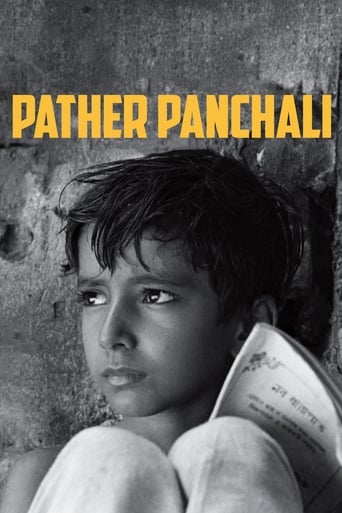
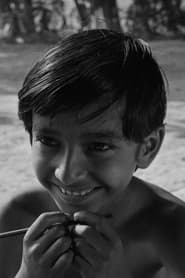
Subir Banerjee is remembered as the child actor who portrayed the young Apu in Satyajit Ray's masterpiece 'Pather Panchali' (1955), the first installment of the Apu Trilogy. Discovered at the age of eight by Ray during an extensive casting search in rural Bengal, Banerjee's naturalistic performance as the curious, innocent village boy became one of cinema's most child performances. His portrayal captured the essence of childhood wonder and rural Bengali life with remarkable authenticity, despite having no prior acting experience. After the monumental success of 'Pather Panchali,' Banerjee did not pursue a career in acting, instead choosing to focus on his education and later working as a railway employee. His single performance, however, on world cinema and continues to be studied by film scholars and aspiring actors. Decades after his appearance, filmmakers and journalists sought him out to document his memories of working with Satyajit Ray, revealing fascinating insights into the making of this cinematic landmark. Banerjee's brief but brilliant contribution to cinema represents the magic of discovering natural talent and the power of authentic performance in creating timeless art.
The Craft
On Screen
Naturalistic and spontaneous, Banerjee's acting style was completely untrained and instinctive, capturing the authentic curiosity and innocence of childhood. His performance was characterized by genuine reactions to the rural environment, natural interactions with co-actors, and an innate ability to convey complex emotions without artifice. Ray specifically chose him for his natural demeanor and ability to be himself rather than 'act', resulting in a performance that felt more like documentary footage than fictional cinema.
Milestones
- Starred as young Apu in 'Pather Panchali' (1955)
- Discovered by Satyajit Ray during extensive casting search
- Delivered one of cinema's most celebrated child performances
- Became part of the legendary Apu Trilogy
- Later featured in documentaries about Ray's work
Best Known For
Iconic Roles
Must-See Films
Accolades
Special Recognition
- Featured in the National Film Archive's collection for his contribution to Indian cinema
- Honored in retrospective documentaries about Satyajit Ray's work
- Recognized as one of cinema's most memorable child performers
Working Relationships
Worked Often With
Studios
Why They Matter
Impact on Culture
Subir Banerjee's performance as young Apu in 'Pather Panchali' had a profound cultural impact that extended far beyond Indian cinema. His naturalistic portrayal introduced international audiences to authentic rural Indian life and child psychology, breaking stereotypes about Indian representation in cinema. The film's success at international festivals, including Cannes, helped establish parallel cinema as a legitimate art form and inspired a generation of filmmakers worldwide. Banerjee's performance demonstrated that child actors could carry complex narratives with emotional depth, influencing how children were cast and directed in art cinema globally. The character of Apu became a cultural touchstone in India, representing the journey of rural youth navigating tradition and modernity, with Banerjee's portrayal serving as the foundational image of this archetype.
Lasting Legacy
Subir Banerjee's legacy is defined by his singular, unforgettable performance that continues to resonate with audiences and filmmakers nearly seven decades later. Though he appeared in only one film, his contribution to cinema is immeasurable, representing the perfect convergence of casting, performance, and artistic vision. His work in 'Pather Panchali' remains a benchmark for child acting in world cinema, studied in film schools and analyzed in academic papers. The Apu Trilogy, beginning with his performance, is consistently ranked among the greatest films ever made by prestigious institutions including the British Film Institute and Sight & Sound magazine. Banerjee's story also represents the fascinating phenomenon of one-time performers who create timeless art without pursuing careers in entertainment, highlighting the magic of authentic talent discovered at the right moment.
Who They Inspired
Banerjee's naturalistic approach to acting influenced subsequent generations of child actors in parallel cinema, particularly in India. His performance demonstrated that non-professional actors, especially children, could bring extraordinary authenticity to roles when guided by a skilled director. Satyajit Ray's success with Banerjee inspired other filmmakers to seek non-professional talent for realistic portrayals, particularly in neorealist cinema. The emotional depth and spontaneity of Banerjee's performance set a standard for child performances that continues to influence casting directors and filmmakers worldwide. Many contemporary directors cite the Apu Trilogy, and specifically Banerjee's performance, as inspiration for their approach to working with young actors and capturing authentic human experiences on film.
Off Screen
After his brief acting career, Subir Banerjee led a private life away from the spotlight. He completed his education and eventually secured employment with Indian Railways, where he worked for many years. He married and raised a family in Kolkata, maintaining a low profile despite the international acclaim of his childhood performance. For decades, few people knew that the railway employee was once the celebrated child actor who had captivated audiences worldwide. In his later years, he occasionally granted interviews to filmmakers and journalists interested in preserving the history of Ray's masterpiece, sharing valuable insights into the making of the film.
Education
Completed schooling in Kolkata, India
Family
- Spouse's name not publicly disclosed
Did You Know?
- He was only 8 years old when cast as Apu
- Satyajit Ray discovered him during a casting search that lasted months
- He was paid only 25 rupees for his role in the film
- His family was initially hesitant about him acting in films
- He had to miss school during filming, which worried his parents
- Ray often had to wait for him to be in the right mood for certain scenes
- He never saw the completed film until many years later
- His scenes were often shot using natural light, requiring patience during filming
- He maintained a friendship with co-star Uma Dasgupta (who played Durga) for years
- Many of his most memorable moments in the film were improvised rather than scripted
- He became a local celebrity in Kolkata after the film's success but chose to stay out of the limelight
- Documentarians had difficulty locating him decades later for retrospective interviews
In Their Own Words
When asked about his experience: 'I didn't know I was acting. Satyajit Ray just told me to be myself and play naturally.'
On working with Ray: 'He was like a father to me during the shooting. He was very patient and never scolded me even when I made mistakes.'
About the film's legacy: 'I never imagined that our little film would become so famous around the world. It was just a game for us then.'
On not pursuing acting: 'I enjoyed the experience, but I always wanted to study and have a normal life like other children.'
Frequently Asked Questions
Who was Subir Banerjee?
Subir Banerjee was the child actor who played the young Apu in Satyajit Ray's landmark film 'Pather Panchali' (1955). His naturalistic performance as the curious village boy became one of cinema's most celebrated child performances, despite this being his only major acting role.
What films is Subir Banerjee best known for?
Titles linked here include Pather Panchali (1955).
When was Subir Banerjee born and when did he die?
Born 1946; died death date not listed.
What awards did Subir Banerjee win?
While Subir Banerjee did not receive individual awards for his performance, 'Pather Panchali' won numerous international accolades including the Best Human Document award at Cannes. His contribution is recognized through the film's enduring legacy and its place in cinema history.
What was Subir Banerjee's acting style?
Banerjee's acting style was completely naturalistic and untrained, characterized by spontaneity and authentic childhood reactions. Satyajit Ray specifically chose him for his ability to be himself rather than 'act', resulting in a performance that felt documentary-like in its realism.