Henri Desfontaines
Actor & Director
Born: November 12, 1876 in Paris, France Died: January 21, 1932 Active: 1908-1932 Birth Name: Henri-Lucien Douvry
Films
4 films
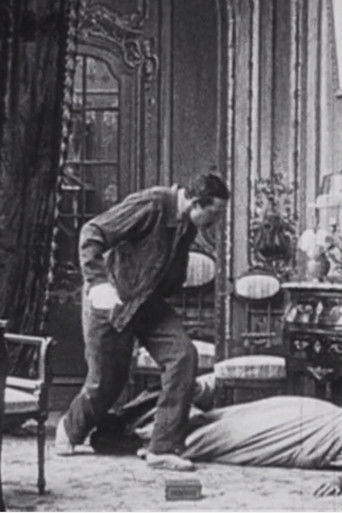
About Henri Desfontaines
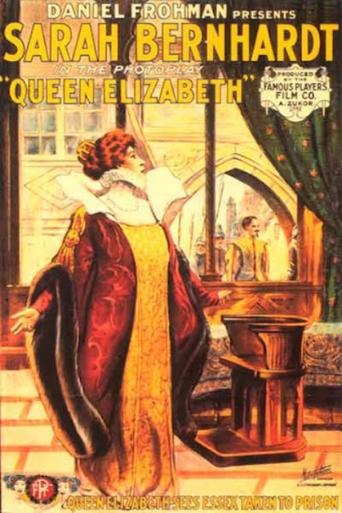
Henri Desfontaines, born Henri-Lucien Douvry, was a French actor and director who in early cinema during the silent era. Beginning his career in theater, he transitioned to filmmaking during the medium's formative years, bringing theatrical gravitas to the new art form. His most notable achievement came in 1912 when he co-directed 'Queen Elizabeth' (Les Amours de la Reine Élisabeth), starring the Sarah Bernhardt, which became one of the first feature-length films to achieve international success. This work helped establish the feature film format in America and demonstrated the commercial viability of major theatrical stars in cinema. Desfontaines continued working in French cinema throughout the 1910s, directing numerous films that reflected his theatrical background and understanding of dramatic storytelling. His career, though relatively brief in the grand scope of film history, coincided with cinema's transition from short novelty films to sophisticated narrative features. He remained active in the French film industry until his death in 1932, leaving behind a legacy as one of the early architects of cinematic storytelling.
The Craft
On Screen
Desfontaines brought a theatrical, melodramatic style to his screen performances, typical of early silent era actors who came from stage backgrounds. His acting emphasized broad gestures and expressive facial features to convey emotion without dialogue, reflecting the influence of 19th-century French theatrical traditions.
Behind the Camera
His directing approach combined theatrical staging with emerging cinematic techniques, focusing on dramatic compositions and narrative clarity. Desfontaines favored long takes and static camera positions, allowing his actors' performances to dominate the frame, while gradually incorporating more sophisticated editing and camera movements as cinema evolved.
Milestones
- Co-directed 'Queen Elizabeth' (1912) with Sarah Bernhardt
- Pioneered feature-length film format in Europe
- Helped establish international film distribution
- Transitioned from theater to early cinema
- Directed over 20 films during silent era
Best Known For
Iconic Roles
Must-See Films
Accolades
Special Recognition
- Pioneer of French Cinema recognition
- Historical significance in early feature film development
Working Relationships
Worked Often With
Studios
Why They Matter
Impact on Culture
Henri Desfontaines played a crucial role in establishing the feature film as a viable artistic and commercial medium through his work on 'Queen Elizabeth.' This film demonstrated that cinema could accommodate complex narratives and star power previously exclusive to theater, influencing the entire industry's direction. His collaboration with Sarah Bernhardt helped legitimize film as a serious art form, attracting other prestigious theatrical performers to the medium. The international success of his work contributed to the development of global film distribution networks and helped establish the economic model for feature film production that would dominate Hollywood for decades.
Lasting Legacy
Desfontaines' legacy lies primarily in his contribution to early feature film development and his role in bridging theater and cinema during their formative years. 'Queen Elizabeth' remains historically significant as one of the first films to prove the commercial viability of feature-length productions and star-driven narratives. His work influenced the transition from short novelty films to sophisticated storytelling, helping establish the foundation for modern cinema. While his name may not be widely recognized today, film historians acknowledge his importance in cinema's evolution from simple spectacle to narrative art form.
Who They Inspired
Desfontaines influenced subsequent generations of filmmakers by demonstrating how theatrical techniques could be adapted for cinematic storytelling. His success with 'Queen Elizabeth' inspired other directors to pursue feature-length projects and convinced studios to invest in more ambitious productions. The film's American distribution success helped establish the international film market and influenced Hollywood's development of the star system. His approach to combining theatrical performance with cinematic language provided a template for early narrative cinema that would be refined by subsequent directors throughout the silent era.
Off Screen
Henri Desfontaines married actress Jeanne Delvair, who was a prominent stage and film actress of the era. Their marriage represented a union of two significant figures in French theatrical and cinematic circles. The couple often collaborated professionally, with Delvair appearing in several of Desfontaines' films. Their personal relationship paralleled the professional partnerships common in early French cinema, where theatrical families and couples frequently worked together. Desfontaines maintained strong connections to the Parisian artistic community throughout his life, bridging the worlds of traditional theater and emerging cinema.
Education
Educated in French theatrical traditions, likely attended dramatic arts institutions in Paris during the 1890s
Family
- Jeanne Delvair (1905-1932)
Did You Know?
- Used the stage name 'Desfontaines' professionally while his birth name was Henri-Lucien Douvry
- 'Queen Elizabeth' was one of the first films to be shown in a legitimate theater rather than a nickelodeon
- The film's success helped launch Adolph Zukor's Famous Players Film Company, which later became Paramount Pictures
- Sarah Bernhardt was paid an unprecedented $50,000 for her role in 'Queen Elizabeth'
- The film ran for four reels, making it unusually long for its time
- Desfontaines and co-director Louis Mercanton used innovative techniques for close-ups and dramatic lighting
- The film's American premiere was at the Lyceum Theatre in New York, a prestigious legitimate theater
- His wife Jeanne Delvair was a major star of the Comédie-Française before entering films
- 'Queen Elizabeth' was preserved by the Museum of Modern Art and remains available for viewing
- Desfontaines directed over 20 films between 1908 and 1925, though many are now lost
In Their Own Words
The cinema must learn from the theater, but it must also find its own voice in the language of light and motion.
When we brought Sarah Bernhardt to the screen, we proved that film could accommodate the greatest talents of the stage.
Frequently Asked Questions
Who was Henri Desfontaines?
French actor and on YTB.my. He was a pioneer in early cinema who helped establish the feature film format and bridge theater and film during cinema's formative years.
What films is Henri Desfontaines best known for?
Titles linked here include Queen Elizabeth (1912), Les Amours de la Reine Élisabeth.
When was Henri Desfontaines born and when did he die?
Born November 12, 1876; died January 21, 1932.
What awards did Henri Desfontaines win?
While Desfontaines did not receive formal awards during his lifetime, he is recognized by film historians as a pioneer of French cinema and for his significant role in developing the feature film format. His work on 'Queen Elizabeth' earned him historical recognition in cinema history.
What was Henri Desfontaines' directing style?
Desfontaines' directing style combined theatrical staging with emerging cinematic techniques, emphasizing dramatic compositions and narrative clarity. He favored allowing actors' performances to dominate the frame while gradually incorporating more sophisticated editing and camera movements as cinema technology evolved.