




Queen Elizabeth
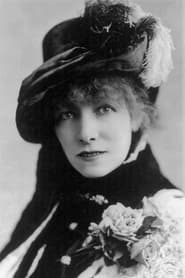
"Bernhardt as Elizabeth and Essex"
Keys: Space play/pause · ←/→ 10s · F fullscreen · M mute · </> speed
About this film
Sarah Bernhardt portrays Elizabeth I in episodes centered on the queen's doomed attachment to Robert Devereux, Earl of Essex.
Cast & crew
More Drama films
View all →






More from Henri Desfontaines
View all →
More about this film
About the production
Release dateJuly 1912
Box officeHighly successful commercially, particularly in the United States where it helped establish feature films as viable entertainment
ProductionFilm d'Art, Adolph Zukor's Famous Players Film Company
Filmed inParis, France, Studio settings designed to replicate Elizabethan England
This was a French-American co-production that marked a significant milestone in cinema history as one of the first feature-length films to be imported to the United States. The production spared no expense in recreating the opulence of Elizabeth's court, with authentic period costumes designed by leading Parisian couturiers. Sarah Bernhardt, already in her late 60s, insisted on performing her own stunts and wore heavy prosthetic makeup to appear younger in the early scenes. The film was shot in a matter of weeks but underwent extensive post-production for its time, including hand-tinting of certain scenes for color effects.
Themes
Power and personal sacrificeThe conflict between public duty and private desireAge and mortalityPolitical ambition and its consequencesFemale sovereignty in a male-dominated world
Themes & topics
Queen Elizabeth IRobert Devereux Earl of EssexHistorical romanceExecutionRoyal courtTreasonForbidden lovePolitical intrigueAging monarchTragedy
Historical background
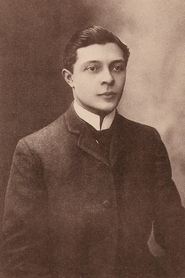
Production in 1912 placed Queen Elizabeth among silent era releases competing for attention in a rapidly expanding market. It was condensed from a play of the same name and directed by Louis Mercanton and Henri Desfontaines. The film starred Sarah Bernhardt as Elizabeth and Lou Tellegen as Essex.
Why this film matters
Retrospective programs include Queen Elizabeth when mapping silent era output across genres and national cinemas. Les Amours de la reine Élisabeth (The Loves of Queen Elizabeth), Les Amours d'Élisabeth, Reine d'Angleterre (The Loves of Elizabeth, Queen of England) or La reine Élisabeth (Queen Elizabeth) is a 1912 feature 3-reel French silent film based on the love affair between Elizabeth I of England and the Earl of Essex.
Making of
The production was fraught with challenges from the beginning. Sarah Bernhardt, despite her status on stage, was initially reluctant to work in the new medium of film, considering it inferior to theater. She only agreed after being given unprecedented creative control and a record salary. The filming process was difficult for the aging actress, who had to perform under hot studio lights while wearing heavy period costumes and prosthetics. Her relationship with co-star Lou Tellegen, her former lover and much younger man, created tension on set, though their chemistry translated powerfully to the screen. Director Henri Desfontaines had to balance Bernhardt's theatrical style with the more intimate requirements of film acting, resulting in a hybrid performance style that influenced early film acting techniques. The production used innovative lighting techniques to create dramatic shadows and highlights, enhancing the film's emotional impact. Post-production involved extensive hand-tinting of key scenes, particularly the execution sequence, which was colored red for dramatic effect.
What critics said
Festival revivals have renewed discussion of Queen Elizabeth among silent era specialists.
Did you know?
- This was Sarah Bernhardt's film debut at age 68, despite her being widely known stage actresses in the world
- The film's American success directly led to the founding of Paramount Pictures through Adolph Zukor's Famous Players company
- Bernhardt was paid an unprecedented $25,000 for her role, equivalent to over $700,000 today
- The film was originally titled 'Les Amours de la reine Élisabeth' in French and was later retitled for international markets
- Lou Tellegen, who played Essex, was Bernhardt's real-life lover and former stage partner
- The film was one of the first to use intertitles extensively to explain the historical context to audiences
- A young Cecil B. DeMille was reportedly inspired by this film's success to pursue historical epics
- The film's success proved that feature-length films could be profitable, changing the industry's focus from short films
- Bernhardt insisted on adding scenes not in the original script, including a dramatic death scene for Essex
- The film was screened for royalty across Europe, including a special viewing for King George V
Visual style
The cinematography was considered groundbreaking for its time, utilizing techniques that were innovative in 1912. The film made extensive use of close-ups, particularly for Bernhardt's emotional scenes, which was still a relatively new technique. The lighting design was sophisticated for the period, using dramatic shadows and highlights to enhance the emotional intensity of key scenes. The cinematographer employed moving camera shots during the battle sequences, creating a sense of action and movement that was rare in early cinema. The film also featured carefully composed wide shots to establish the grandeur of Elizabeth's court, contrasting with intimate close-ups during personal moments. Some scenes were hand-tinted, particularly the execution sequence which featured red coloring to heighten the drama. The film's visual style successfully blended theatrical composition with cinematic intimacy, creating a distinctive aesthetic that influenced subsequent historical films.
Innovations
The film featured several technical innovations for its time. It utilized early color tinting techniques, particularly for dramatic effect in the execution scene. The production employed advanced makeup techniques to age and transform the actors, with Bernhardt wearing extensive prosthetics. The film's editing was more sophisticated than typical for 1912, using cross-cutting between parallel actions to build tension. The battle sequences featured innovative camera movements and multiple camera setups, creating a sense of scale and action rarely seen in early cinema. The film also experimented with different film stocks to achieve various visual effects, using faster film for interior scenes and slower stock for exterior shots. The production design included elaborate moving sets and mechanical effects to recreate the grandeur of Elizabeth's court. These technical achievements demonstrated the growing sophistication of film production and helped establish new standards for the industry.
Music
As a silent film, Queen Elizabeth was accompanied by live musical performances during its theatrical runs. The original French premiere featured a specially composed score by French composer Camille Saint-Saëns, though this music is now lost. For American screenings, theaters typically used compiled scores featuring classical pieces that matched the film's dramatic tone. Common musical selections included works by Beethoven, Wagner, and Mendelssohn, chosen to complement the film's tragic romance theme. Theaters often employed full orchestras for the film's exhibition, reflecting its prestige as a major production. Some theaters used cue sheets provided by the distributor to coordinate the music with specific scenes. The execution scene was typically accompanied by dramatic, dissonant music to heighten the tension. The film's success helped establish the practice of using sophisticated musical accompaniment for feature films, a tradition that would continue through the silent era.
Famous quotes
The crown sits heavy upon my head, but heavier still upon my heart." - Elizabeth I
I would trade all of England for one more night with you." - Essex to Elizabeth
To be a queen is to be forever alone." - Elizabeth I
Love is the one luxury a queen cannot afford." - Elizabeth I
You have taught me that even the most powerful heart can break." - Essex to Elizabeth" ]
memorableScenes
preservationStatus
The film is partially preserved with several versions existing in different archives. The original French version is incomplete, with some scenes lost. The American version, which was cut differently, survives in better condition. Portions of the film have been restored by the French Film Archives and the Museum of Modern Art. The film exists in the public domain and has been released on DVD by several companies specializing in classic cinema. Some scenes, including the original color-tinted execution sequence, survive only in fragmentary form. The film's preservation status reflects the challenges of maintaining early cinema, with nitrate decomposition having damaged portions of the original negatives.
whereToWatch
What audiences thought
The film was a massive commercial success, particularly in the United States where it broke box office records. American audiences, previously accustomed to short comedies and melodramas, were captivated by the film's length and sophisticated storytelling. The film attracted a more upscale audience than typical movies of the era, including many theater-goers who had never before attended a cinema. Audiences were particularly moved by Bernhardt's performance, with many reports of viewers weeping during the execution scenes. The film's success led to increased demand for feature-length films and more sophisticated content. In Europe, audiences were already familiar with Bernhardt's theatrical work, and her film debut was treated as a major cultural event. The film's popularity led to numerous imitations and established the historical romance as a popular genre.
Film connections
Influenced by
- William Shakespeare's Elizabethan plays
- Victorian historical novels
- French theatrical traditions
- Sarah Bernhardt's stage performances
- Earlier French historical films
This film influenced
- The Birth of a Nation (1915)
- Intolerance (1916)
- Cleopatra (1917)
- Joan the Woman (1916)
- The Ten Commandments (1923)
Where to watch
- Wikimedia Commons: https://commons.wikimedia.org/wiki/File:Les%20Amours%20de%20la%20reine%20%C3%89lisabeth%20(1912).webm