
Films
1 film
About Jean Chameroy
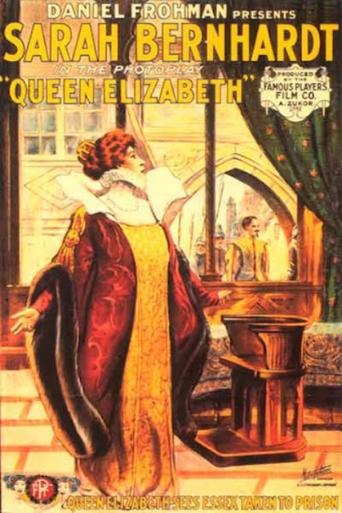
This archive lists one role for Jean Chameroy: Queen Elizabeth (1912). This film was particularly significant as it was one of the first feature-length motion pictures ever produced and starred the Sarah Bernhardt in the title role. Chameroy's participation in this production places him among the early pioneers of cinema, though his role appears to have been relatively minor given the limited documentation of his career. The film itself was a French-American co-production that helped establish feature films as a viable commercial format. Unfortunately, like many actors from this very early period of cinema, detailed records of Chameroy's life, career trajectory, and other potential film work have been lost to time. His single known appearance in such an historically important film, however, ensures his place in the annals of early cinema history.
The Craft
Milestones
- Appeared in 'Queen Elizabeth' (1912), one of the first feature-length films ever made
Best Known For
Iconic Roles
Must-See Films
Working Relationships
Worked Often With
Studios
Why They Matter
Impact on Culture
Jean Chameroy's contribution to cinema, while minimal in scope, is historically significant due to his participation in 'Queen Elizabeth' (1912), a film that helped establish the feature-length format as commercially viable. The film was instrumental in convincing American theater owners that feature films could be profitable, paving the way for the feature film industry that would dominate cinema for decades. Although Chameroy's role was small, he was part of a production that marked a turning point in film history, bridging the gap between short films and the feature-length narrative format that would become standard.
Lasting Legacy
Jean Chameroy represents the countless anonymous actors who participated in cinema's formative years, whose contributions, while not widely documented, were essential to the development of the medium. His legacy is tied to the historical significance of 'Queen Elizabeth' as a feature film that helped establish the commercial viability of longer-form cinema. While his name may not be remembered by film enthusiasts, his work contributed to a film that fundamentally changed the course of cinema history.
Who They Inspired
Given the limited scope of Jean Chameroy's known filmography, there is no documented evidence of direct influence on other actors or filmmakers. However, as a participant in early cinema, he was part of the generation that established acting conventions and techniques for the silent film medium that would influence subsequent performers.
Off Screen
Very little is known about Jean Chameroy's personal life, as was common for many supporting actors from the earliest days of cinema when detailed biographical records were not systematically maintained.
Did You Know?
- Only known to have appeared in one film during his entire career
- Participated in 'Queen Elizabeth' (1912), which ran for 40 minutes and was considered a feature-length film at the time
- The film he appeared in was imported to America by Adolph Zukor for $25,000, marking the beginning of what would become Paramount Pictures
- Sarah Bernhardt, the star of his only known film, was already a legendary stage actress in her 60s when she made this film
- The film was a massive commercial success, running for 16 weeks in New York City alone
- Like many early film actors, Chameroy's stage background is unknown but likely given the theatrical style of early cinema
- The film's success helped convince American exhibitors that feature films could be more profitable than multiple short films
- No photographs or detailed descriptions of Jean Chameroy's appearance survive in documented film history
Frequently Asked Questions
Who was Jean Chameroy?
Screen credits include only one known film, 'Queen Elizabeth' (1912). He was part of the generation of filmmakers during cinema's earliest days when feature-length films were just beginning to emerge.
What films is Jean Chameroy best known for?
Titles linked here include Queen Elizabeth (1912).
When was Jean Chameroy born and when did he die?
Unfortunately, Jean Chameroy's birth and death dates are not documented in historical records, which was common for many supporting actors from the earliest days of cinema. He is known to have been active only in 1912.
What awards did Jean Chameroy win?
Jean Chameroy did not receive any documented awards or nominations, as the major film award systems were not established during his brief career in 1912. The Academy Awards would not be established until 1929.
What was Jean Chameroy's acting style?
Given the lack of documentation about Jean Chameroy's career and the theatrical conventions of early silent cinema, his specific acting style cannot be determined. Actors of this period typically employed exaggerated gestures and expressions suitable for the medium's technical limitations.
Why is Jean Chameroy historically significant?
Despite his obscure status, Jean Chameroy is historically significant for his participation in 'Queen Elizabeth' (1912), a film that helped establish the commercial viability of feature-length cinema and influenced the future direction of the film industry.