Films
1 film
About Francesco Bertolini
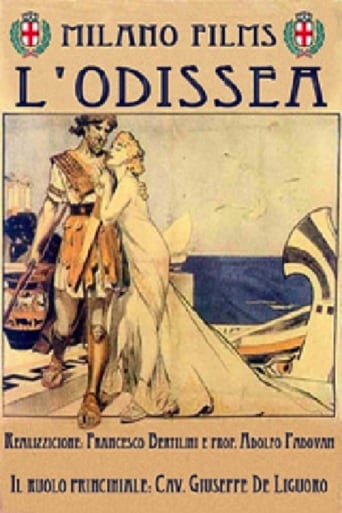
Italian film director active during the days of cinema, best known for his ambitious 1911 adaptation of Homer's 'The Odyssey.' Working primarily for Milano Film, one of Italy's early production companies, Bertolini emerged during Italy's golden age of silent cinema when the country was producing spectacular historical and mythological epics that rivaled those from other European nations. His most significant work, 'L'Odissea,' was among the first feature-length attempts to bring classical literature to the moving picture screen, showcasing the technical and artistic ambitions of early Italian filmmakers. Bertolini's career, while brief, coincided with a crucial period in cinema's development when directors were establishing the visual language and narrative techniques that would define the medium. Like many early film pioneers, much of his work has been lost to time, with 'L'Odissea' surviving only in fragments, making him a somewhat mysterious figure in film history. His contribution to early epic cinema represents the bold artistic vision of Italian filmmakers who sought to elevate cinema to an art form capable of adapting the world's greatest literary works.
The Craft
Behind the Camera
Bertolini's directing style reflected the grand ambitions of early Italian epic cinema, emphasizing spectacular visuals and faithful adaptation of classical literature. His approach to 'L'Odissea' demonstrated the spirit of early filmmakers who sought to bring literary masterpieces to the screen, utilizing the limited technology of 1911 to create mythological worlds. His work showcased the Italian cinema industry's tendency toward grand scale and artistic ambition during this period.
Milestones
- Directed 'L'Odissea' (1911), one of the earliest feature film adaptations of Homer's epic
- Pioneer in Italian epic cinema during the golden age of silent film
- Contributed to early development of cinematic narrative techniques
- Worked with Milano Film, a significant early Italian production company
Best Known For
Must-See Films
Working Relationships
Worked Often With
Studios
Why They Matter
Impact on Culture
Francesco Bertolini's work, particularly 'L'Odissea,' represents an important milestone in early cinema's evolution from short novelty films to feature-length narrative art. His adaptation of Homer's epic demonstrated the medium's potential to handle complex literary works, paving the way for future epic films. The film's ambitious scope and classical subject matter reflected Italy's cultural pride during this period and contributed to establishing the country as a major force in early international cinema. While his personal influence may have been limited by his brief career, his work exemplifies the artistic aspirations of early filmmakers who saw cinema as a legitimate art form capable of adapting humanity's greatest stories.
Lasting Legacy
Bertolini's legacy survives primarily through 'L'Odissea,' which stands as an important artifact of early Italian cinema and the broader development of epic filmmaking. The film represents one of the earliest attempts to adapt classical literature to the screen, demonstrating the artistic ambitions of early 20th-century filmmakers. Though much of his work has been lost and biographical details remain scarce, his contribution to establishing the epic genre in cinema has earned him a place in film history as a pioneer who helped expand the artistic possibilities of the medium.
Who They Inspired
While direct influences of Bertolini's work are difficult to trace due to the fragmentary survival of his films and limited documentation of his career, his participation in early Italian epic cinema contributed to a tradition that would influence generations of filmmakers. The ambitious scale and literary aspirations of 'L'Odissea' prefigured later developments in the epic film genre, from Hollywood's biblical epics to modern mythological adaptations. His work represents part of the foundation upon which later Italian directors like Federico Fellini and Pier Paolo Pasolini would build when adapting classical and literary material to cinema.
Off Screen
Very little is documented about Francesco Bertolini's personal life, which is common for many early film pioneers whose work predates extensive film journalism and historical documentation. As with many directors from the silent era, personal details about his life, family, and background have been largely lost to time, with his professional legacy surviving primarily through his film work and industry records.
Did You Know?
- 'L'Odissea' (1911) was one of the earliest feature film adaptations of Homer's epic poem
- The film was produced by Milano Film, one of Italy's production companies
- Bertolini co-directed 'L'Odissea' with Adolfo Padovan and Giuseppe De Liguoro
- The film was released during the golden age of Italian silent cinema (1910s)
- Only fragments of 'L'Odissea' survive today, making it a partially lost film
- The film was quite ambitious for its time, attempting to depict the entire Odyssey story
- Italian cinema of this period was known for its spectacular historical and mythological epics
- Bertolini's career appears to have been very brief, with 1911 being the only documented year of his activity
Frequently Asked Questions
Who was Francesco Bertolini?
Italian on YTB.my. He was active during the golden age of Italian cinema when the country was producing ambitious historical and mythological epics.
What films is Francesco Bertolini best known for?
Titles linked here include L'Odissea (1911).
When was Francesco Bertolini born and when did he die?
Unfortunately, specific birth and death dates for Francesco Bertolini are not well documented, which is common for many early film pioneers. He was active as a director in 1911, placing him among the first generation of filmmakers.
What awards did Francesco Bertolini win?
There are no documented awards for Francesco Bertolini, as he worked during the very early days of cinema before major film awards like the Academy Awards were established (the Oscars began in 1929).
What was Francesco Bertolini's directing style?
Bertolini's directing style reflected the grand ambitions of early Italian epic cinema, emphasizing spectacular visuals and faithful adaptation of classical literature. His approach demonstrated the spirit of early filmmakers seeking to elevate cinema to an art form capable of adapting great literary works.
Why is Francesco Bertolini significant in film history?
Bertolini is significant for his contribution to early epic cinema and for being among the first directors to attempt feature-length adaptations of classical literature. His work represents the artistic ambitions of Italian cinema during its golden age and helped establish possibilities for the epic film genre.