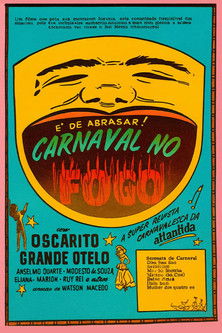

Watson Macedo
Director
- Active
- 1949-1950s
Films directed 1
About Watson Macedo
Watson Macedo was a Brazilian film director, screenwriter, and producer associated with the formative years of popular commercial cinema in Brazil, especially during the late 1940s and the chanchada era. He is best remembered for directing Carnaval no Fogo (1949), a musical comedy that reflects the lively, carnival-centered entertainment culture that shaped Brazilian studio filmmaking in the postwar period. Macedo worked in a cinema environment that valued music, comedy, spectacle, and topical humor, and his films were aimed at broad audiences rather than elite art-house circles. His career is closely tied to the development of Rio de Janeiro-based genre filmmaking, where the interplay of samba, revue tradition, and urban comedy became a defining feature. Although detailed biographical information about his early life is not widely documented in standard English-language sources, his name remains linked to the popular cinema traditions of mid-century Brazil. He belongs to the generation of filmmakers who helped establish a commercially successful national film style before the rise of later Brazilian New Cinema movements. His filmography and public reputation identify him primarily as a director of light entertainment and musical comedy.
More about Watson Macedo
Behind the camera
Watson Macedo's directing is associated with brisk, crowd-pleasing popular cinema built around musical numbers, comic situations, and the energy of carnival culture. His style fits the chanchada model: fast-moving plots, accessible humor, performance-centered staging, and a strong emphasis on songs, dances, and urban Brazilian flavor. Rather than aiming for austere realism or modernist experimentation, his work appears designed for entertainment, rhythm, and audience enjoyment. The tone of his films suggests a director comfortable balancing revue-like spectacle with light narrative structure. He is best understood as a craftsman of popular cinema whose approach privileged pace, charm, and broad appeal.
In film history
Watson Macedo occupies an important place in the history of Brazilian popular cinema because he worked in the chanchada tradition, one of the most distinctive and influential commercial genres in the country. Films like Carnaval no Fogo helped solidify the formula of mixing music, comedy, and carnival exuberance into an exportable, nationally resonant screen entertainment. This style mattered culturally because it translated radio, stage revue, samba, and urban humor into a cinematic form that connected with everyday audiences. Macedo's work belongs to a period when Brazilian cinema was building its own commercial identity, and that makes him significant even when detailed anglophone documentation is sparse. His films contributed to the broader visibility of Brazilian popular culture on screen and helped preserve the playful, musical spirit of mid-century Rio de Janeiro.
Later reputation
Macedo's lasting legacy lies in his association with a foundational mode of Brazilian entertainment filmmaking rather than with internationally famous auteur cinema. He is remembered as part of the cohort that gave the chanchada its popular shape and helped make musical comedy a central part of Brazil's studio-era film history. For historians of Latin American cinema, directors like Macedo are essential because they illuminate how local genres developed outside the Hollywood and European art-cinema models that dominate global film history. His surviving reputation is tied most strongly to Carnaval no Fogo, but his broader importance comes from representing a commercial, audience-driven tradition that influenced later Brazilian popular film and television comedy. In film-historical terms, he remains a useful and meaningful figure for understanding the evolution of Brazilian mass entertainment before the transformations of the 1960s and beyond.
Influence
Watson Macedo influenced the Brazilian popular-cinema ecosystem by reinforcing the viability of musical comedy, carnival-themed storytelling, and fast-paced comic spectacle. His work helped normalize a filmmaking style that integrated performance traditions already deeply rooted in Brazilian culture, especially samba and revue theater. Later filmmakers working in popular comedy, musical pastiche, or nostalgic evocations of carnival life could draw indirectly on the template established by directors in his circle. While he was not primarily known as a mentor to major international figures, his films contributed to the professional environment in which subsequent Brazilian directors, performers, and comedy specialists developed. His influence is most visible in the persistence of the chanchada as a reference point in Brazilian film history.
Off screen
Reliable public biographical detail about Watson Macedo's private life is limited in widely available English-language reference sources. Information about marriages, children, and family background is not well documented in the standard film-reference material commonly used for classic-cinema personalities. He is primarily discussed in connection with his professional work in Brazilian popular cinema rather than through an extensively chronicled personal biography. As a result, his personal life remains comparatively obscure to modern international audiences.
Credits
- Directed Carnaval no Fogo (1949), the title specifically associated with his classic-cinema reputation
- Worked within the chanchada tradition, a commercially successful blend of comedy, music, and carnival spectacle in Brazilian cinema
- Contributed to the postwar popular film culture centered in Rio de Janeiro
- Helped shape studio-era Brazilian entertainment cinema aimed at mass audiences
- Participated in the development of national musical-comedy filmmaking during the late 1940s and 1950s
Films
- Carnaval no Fogo (1949)
Studios
- Brazilian studio-era popular production companies
- Rio de Janeiro film production circles
Notes
- He is most strongly associated with the Brazilian chanchada, a genre that mixed comedy, music, and carnival energy.
- Carnaval no Fogo (1949) is the key title linked to his name in classic-film references.
- His career reflects the importance of Rio de Janeiro as a center of Brazilian studio-era production.
- Macedo's work is part of a tradition that often blended radio stars, stage performers, and screen comedy.
- He is far better documented in Brazilian film history than in mainstream English-language classic-cinema literature.
- His films were designed for popular audiences rather than prestige festival circuits.
- The limited availability of biographical data in international sources makes him a somewhat obscure but historically important figure.
Questions
Who was Watson Macedo?
Watson Macedo was a Brazilian film director, screenwriter, and producer best known for working in the country's popular musical-comedy tradition. He is especially associated with Carnaval no Fogo (1949), a representative example of the chanchada style.
What films is Watson Macedo best known for?
He is best known for Carnaval no Fogo (1949). In broader film-history terms, he is associated with Brazilian chanchadas, though this title is the main one specifically identified with him in classic-cinema references.
When was Watson Macedo born and when did he die?
His birth and death dates are not clearly documented in the commonly available reference sources consulted for classic cinema. As a result, precise dates and places are not reliably established here.
What awards did Watson Macedo win?
No major awards or formal honors are widely documented in the standard reference record available for him. His importance is primarily historical and genre-based rather than award-centered.
What was Watson Macedo's directing style?
His directing style is associated with lively, fast-moving popular entertainment built around music, comedy, and carnival spectacle. He worked in the chanchada mode, emphasizing broad appeal, performance energy, and accessible storytelling over realism or formal experimentation.
What was Watson Macedo's legacy in film history?
His legacy lies in helping define the look and feel of Brazilian commercial musical comedy in the postwar period. He represents an important chapter in national cinema history, especially the development of the chanchada as a mass-audience form.