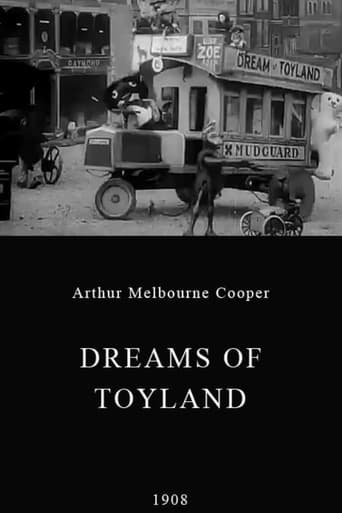
Arthur Melbourne Cooper
Director
Born: April 1874 in St Albans, Hertfordshire, England Died: November 28, 1961 Active: 1899-1908
Films
2 films
About Arthur Melbourne Cooper
Arthur Melbourne Cooper (1874-1961) was a British filmmaker and animator who made significant contributions to early cinema during the transition from the 19th to the 20th century. Beginning his career in 1899, Cooper emerged as one of Britain's earliest film directors, creating innovative works that pushed the boundaries of what was possible with the new medium of motion pictures. His most famous film, 'Dreams of Toyland' (1908), showcased his mastery of stop-motion animation techniques and his ability to bring inanimate objects to life on screen. Cooper was particularly known for his experimental approach to special effects and animation, often using toys and everyday objects as his subjects. Throughout his decade-long active period, he produced numerous short films that demonstrated both technical innovation and artistic vision. His work during these formative years of cinema helped establish techniques that would become fundamental to both animation and special effects in filmmaking. After his filmmaking career ended around 1908, Cooper's contributions to early cinema were largely overlooked for decades, though film historians have since recognized his importance as a pioneer of British cinema and animation.
The Craft
Behind the Camera
Arthur Melbourne Cooper's directing style was characterized by innovation and experimentation with the new medium of cinema. He was particularly drawn to stop-motion animation and special effects, often using toys and miniature objects to create magical, dreamlike sequences. His approach was playful yet technically sophisticated, demonstrating an early understanding of how to manipulate time and space through the camera. Cooper's films often featured whimsical narratives that appealed to both children and adults, showcasing his ability to tell stories visually without reliance on intertitles. His work displayed remarkable attention to detail in the animation process, with smooth movements and carefully choreographed scenes that brought inanimate objects to life.
Milestones
- Directed 'An Appeal' (1899), one of Britain's earliest narrative films
- Created 'Dreams of Toyland' (1908), a stop-motion animation masterpiece
- Developed innovative stop-motion animation techniques using toys
- Established Alpha Trading Company for film production and distribution
- Contributed to the development of early special effects in cinema
Best Known For
Must-See Films
Accolades
Special Recognition
- Recognized by film historians as a pioneer of British animation
- Works preserved in the British Film Institute National Archive
- Posthumous recognition for contributions to early cinema
Working Relationships
Worked Often With
Studios
Why They Matter
Impact on Culture
Arthur Melbourne Cooper's impact on cinema culture was profound despite his relatively short active period in the industry. As one of Britain's earliest film directors, he helped establish the foundation for narrative filmmaking in the United Kingdom. His work in stop-motion animation predated many more famous animators, demonstrating techniques that would become standard in the field decades later. 'Dreams of Toyland' in particular showed how animation could create magical worlds that live-action couldn't achieve, influencing countless future animators. Cooper's films represented the innocent wonder of early cinema, capturing the public's imagination at a time when moving pictures were still a novelty. His ability to tell stories visually without dialogue demonstrated the universal power of cinema as a medium. The preservation of his works has allowed modern audiences to appreciate the ingenuity and artistry of cinema's earliest pioneers.
Lasting Legacy
Arthur Melbourne Cooper's legacy lies in his work in early animation and special effects, particularly his innovative use of stop-motion techniques. While he never achieved the fame of contemporaries like Georges Méliès, Cooper's contributions to the technical and artistic development of cinema were significant. His film 'Dreams of Toyland' remains. Cooper's work represents the experimental spirit of early cinema, when filmmakers were discovering the possibilities of the medium through trial and error. His films have been preserved by the British Film Institute and other archives, ensuring that future generations can study and appreciate his innovations. Modern film historians recognize Cooper as an important figure in the development of both British cinema and animation as an art form.
Who They Inspired
Cooper's influence can be traced through the development of stop-motion animation and special effects in cinema. His early experiments with animating toys and objects laid groundwork for future animators who would expand on these techniques. The whimsical, dreamlike quality of his films influenced the tone and style of later British animation, particularly in children's programming. His technical innovations in creating smooth stop-motion movements helped establish standards that animators would follow for decades. While direct documentation of his influence on specific filmmakers is limited due to the early period in which he worked, his techniques can be seen echoed in the work of later animation pioneers. Cooper demonstrated that animation could be used for sophisticated storytelling, not just simple novelties, expanding the artistic possibilities of the medium.
Off Screen
Arthur Melbourne Cooper was born into a Victorian England on the cusp of the cinematic revolution. Little detailed information survives about his personal life, but it is known that he was married and had children. His family background was relatively conventional for the time period, and he managed to balance his innovative filmmaking career with family responsibilities. After his active filmmaking period ended around 1908, Cooper appears to have transitioned to other business ventures while maintaining his interest in new technologies. He lived through the entire evolution of cinema from its birth to the modern era, witnessing the transformation of the medium he helped pioneer. Cooper spent his later years in relative obscurity, with his early contributions to cinema largely unrecognized until decades after his death.
Education
Limited formal education typical of Victorian era England, largely self-taught in filmmaking techniques
Family
- Unknown
Did You Know?
- Cooper's 'An Appeal' (1899) is considered one of Britain's earliest narrative films
- His film 'Dreams of Toyland' (1908) runs for approximately 7 minutes and features extensive stop-motion animation
- Cooper established his own production company, the Alpha Trading Company, to produce and distribute his films
- Many of his films were lost or destroyed, as was common with early nitrate film stock
- His work predates that of more famous early animators like Winsor McCay and Walt Disney
- Cooper was one of the first filmmakers to use toys as subjects for stop-motion animation
- His films were typically very short, often under 10 minutes, as was standard for the period
- Cooper worked during the transition from magic lantern shows to true cinema
- His animation techniques were remarkably sophisticated for the time period
- Cooper's contributions to cinema were largely overlooked until film historians began researching early British filmmakers
In Their Own Words
No documented quotes from Arthur Melbourne Cooper survive from the early cinema period
Frequently Asked Questions
Who was Arthur Melbourne Cooper?
British filmmaker and animator active from 1899 to 1908, known for his innovative work in early cinema and stop-motion animation techniques.
What films is Arthur Melbourne Cooper best known for?
Titles linked here include Dreams of Toyland (1908), An Appeal (1899).
When was Arthur Melbourne Cooper born and when did he die?
Born April 1874; died November 28, 1961.
What awards did Arthur Melbourne Cooper win?
Cooper did not receive formal awards during his lifetime, as the film industry's award system had not yet been established during his active period. He has received posthumous recognition from film historians and preservation organizations.
What was Arthur Melbourne Cooper's directing style?
Cooper's directing style was innovative and experimental, focusing on stop-motion animation and special effects. He often used toys and miniature objects to create whimsical, dreamlike sequences that pushed the boundaries of early cinema.
How did Arthur Melbourne Cooper influence animation?
Cooper pioneered stop-motion animation techniques using toys and objects, laying groundwork for future animators. His work demonstrated that animation could create magical worlds impossible in live-action, influencing generations of animators.
Why is Arthur Melbourne Cooper important to film history?
Cooper is important as one of Britain's earliest film directors and a pioneer of animation. His innovations in stop-motion and special effects helped establish techniques that would become fundamental to filmmaking.