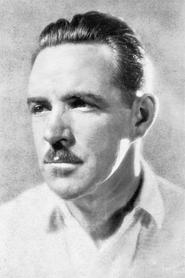
James P. Hogan
Director
- Active
- 1925-1925
Films directed 1
About James P. Hogan
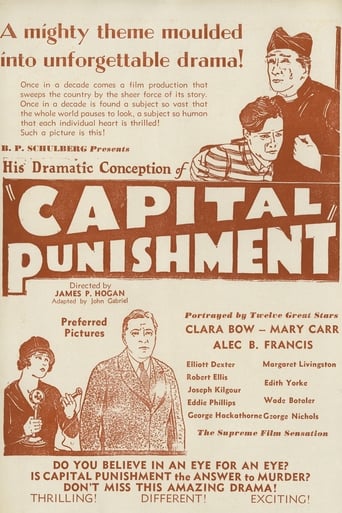
James P. Hogan was an American film director active in the silent era and the early years of sound cinema, part of the generation of craftsmen who helped define studio-era filmmaking before the industry fully standardized. He is documented as directing the 1925 film Capital Punishment, which places him within the busy mid-1920s American production system when crime dramas, melodramas, and social-issue pictures were common programmer fare. Beyond this credit, surviving reference sources provide only limited biographical detail, which is not unusual for many early studio directors whose work was often collaborative and whose careers were not widely publicized outside trade papers. His name appears in film-history records as James P. Hogan, and he should not be confused with later figures of the same name in other arts or with contemporary filmmakers. Because available information is sparse, his broader career arc, education, family life, and later years are not well documented in standard modern reference works. What can be established is that he belonged to the pool of working directors who contributed to the industrial foundation of American cinema during the silent period. His surviving legacy rests primarily on filmography documentation rather than on a large body of well-studied critical writing.
More about James P. Hogan
Behind the camera
Available documentation does not preserve a detailed critical description of James P. Hogan’s directing style. Based on the period and the kind of material associated with his known credit, his work would likely have followed the efficient, visually driven conventions of silent-era commercial filmmaking, emphasizing clear storytelling, strong scene construction, and concise dramatic pacing. Because only limited evidence survives in widely accessible reference sources, any more specific description would be speculative. He should therefore be understood as a studio-era director whose style is not yet extensively analyzed in modern film scholarship.
In film history
James P. Hogan’s cultural impact is best understood through the broader historical importance of early studio-era directors like him, who helped sustain the volume of production that made the American silent film industry function at scale. Even when individual names did not become household brands, directors of this type were essential to creating the narrative grammar, pacing, and genre expectations that later became standard in Hollywood. His recorded credit on Capital Punishment places him in the stream of filmmakers contributing to the crime and social-drama traditions that were highly popular in the 1920s. In that sense, his impact is less about a famous personal signature and more about participation in the industrial and artistic system that shaped classic American cinema.
Later reputation
His lasting legacy lies primarily in archival and film-history documentation rather than in a widely circulated body of surviving fame. James P. Hogan is representative of the many early directors whose names appear in silent-era credits and trade records, preserving the fact that classic cinema was built by a large workforce of artists whose reputations were often eclipsed by the stars and major auteurs. For database and restoration research, even a single confirmed credit can be important because it helps map production histories and personnel networks in early Hollywood. His name endures as part of the historical record of the silent era, a reminder that film history includes not only celebrated masters but also lesser-known craftsmen whose work supported the medium's development.
Influence
There is no well-documented record of James P. Hogan exerting a major named influence on later directors, nor of him being formally recognized as a mentor figure. His influence should therefore be understood indirectly, through the kinds of production practices and genre conventions that directors of his era collectively established. By working in the silent period, he participated in the creation of storytelling methods that later filmmakers inherited, including visual exposition, compressed scene construction, and melodramatic structuring. In film-history terms, his influence is institutional rather than personal: he belongs to the generation whose routine studio work made later cinematic language possible.
Off screen
No reliable biographical record in standard accessible sources provides detailed information about James P. Hogan’s personal life, including marriages, children, or family background. As with many minor or moderately documented silent-era filmmakers, personal details were often not widely reported unless the individual achieved major stardom or later notoriety. In the absence of verifiable information, it is best to treat his private life as currently undocumented rather than speculate.
Credits
- Directed Capital Punishment (1925), the identified film credit associated with his name in classic-cinema records
- Worked during the silent-era studio system, when directors shaped narrative conventions that would carry into sound cinema
- Represents the many early Hollywood craftsmen whose contributions survive mainly through filmography and trade documentation
- Associated with American crime-drama and melodramatic production trends of the mid-1920s
- His surviving credit places him among the less-documented but historically important working directors of the silent period
Films
- Capital Punishment (1925)
Notes
- He is specifically associated in film-history records with the 1925 title Capital Punishment.
- His career documentation is sparse, which is common for many silent-era filmmakers outside the major star system.
- He should not be confused with other public figures named James Hogan or James P. Hogan from later periods.
- His recorded activity falls entirely within the silent-film era as currently documented.
- Because of limited surviving reference material, many personal details about him remain unknown.
- His filmography makes him a useful example of the many working directors whose names survive even when much of their biography does not.
- He is part of the early Hollywood workforce that helped establish genre filmmaking before the coming of synchronized sound.
Questions
Who was James P. Hogan?
James P. Hogan was an American film director from the silent era, best documented today through his 1925 directing credit on Capital Punishment. He belongs to the many early Hollywood craftsmen whose careers are preserved more in film records than in detailed modern biographies.
What films is James P. Hogan best known for?
He is primarily known for Capital Punishment (1925), which is the confirmed film credit associated with his name in classic cinema records. Additional films may exist in archival sources, but widely accessible documentation is limited.
When was James P. Hogan born and when did he die?
At present, his birth date, death date, and birth place are not reliably documented in the accessible historical sources available for this profile. Because of that, it is better to leave those details as unknown rather than speculate.
What awards did James P. Hogan win?
No awards or nominations are currently documented for James P. Hogan in the standard accessible reference record. This is not unusual for silent-era directors whose careers were often not tracked through later awards culture.
What was James P. Hogan's directing style?
A detailed critical description of his style is not preserved in the available sources, but as a silent-era director he would have worked within the visually expressive, efficiency-driven conventions of 1920s studio filmmaking. His approach would likely have emphasized clear narrative action, economical scene design, and strong dramatic rhythm.
What is James P. Hogan's legacy in film history?
His legacy is mainly historical and archival: he represents the large class of working directors who helped build the silent-era industry even if they are not widely remembered today. His surviving credit helps researchers reconstruct early Hollywood production histories and personnel networks.