Capital Punishment
"null"
Plot
Capital Punishment opens with a grim frame story on death row, where a condemned young man awaits execution as the machinery of justice closes around him. A wealthy and cynical playboy, Gordon Harrington, and a bored socialite test the legal system by staging a murder and planting the blame on an expendable hired man, Dan O'Connor, intending to reveal how easily class privilege can manipulate the courts and the press. Their experiment spirals out of control when the playboy is actually murdered, transforming the planned hoax into a real homicide and leaving O'Connor to stand accused of a crime he did not commit. As the execution date approaches, the film turns into a moral indictment of corruption, complacency, and the blind power of the law when it is influenced by money and social status. The story ultimately functions as both melodrama and social protest, using the suspense of a man on death row to expose the failures and inequities of the criminal justice system.
About the Production
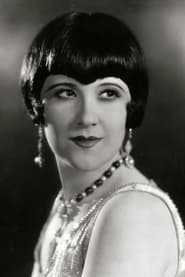
Capital Punishment is a 1925 silent drama directed by James P. Hogan and released through Warner Bros. during the studio's rapidly expanding mid-1920s output. Surviving documentation on production particulars is sparse, and many standard industrial details such as precise budget, box office, and shooting locations are not readily documented in commonly cited reference sources. The film is best remembered today as a socially pointed melodrama that uses a sensational premise to criticize class privilege, legal corruption, and the death penalty. Clara Bow's participation is especially notable because, although the film is not primarily a Clara Bow vehicle in the later star-building sense, her presence adds contemporary appeal and has helped preserve interest in the title among silent-film enthusiasts.
Historical Background
Capital Punishment was produced in 1925, a period when American silent cinema was at full artistic maturity but only a few years away from the transition to sound. The United States in the 1920s was marked by intense debate over modernity, urban crime, the authority of institutions, and the fairness of the legal system, all subjects that found frequent expression in popular film melodramas. Stories about wrongful accusation and the death penalty resonated with audiences who were accustomed to newspaper sensationalism, trial coverage, and public anxiety over social corruption. The film also reflects the period's fascination with the divide between wealthy, insulated elites and ordinary working-class people who could be crushed by the institutions those elites controlled. Its social critique is especially notable in the context of silent-era studio filmmaking, where mainstream entertainment often mixed moral urgency with sensational plot devices.
Why This Film Matters
The film is culturally significant as an example of how silent-era commercial cinema could combine melodramatic suspense with a pointed critique of class privilege and the justice system. Its premise of a staged crime gone wrong allows it to address the death penalty and judicial inequity in a way that is both entertaining and ideologically charged. Clara Bow's presence adds further historical value, since her surviving silent work remains a major focus of film preservation and star studies, and any lesser-seen title connected to her broadens understanding of her pre-fame and transitional screen image. The film also belongs to an important strand of 1920s American cinema that treated courts, police, and punishment not as neutral institutions but as systems vulnerable to corruption and social bias. For contemporary viewers and historians, it offers a compact snapshot of how studio melodrama could serve as social commentary before the coming of sound reshaped American film style.
Making Of
Capital Punishment was made at a time when Warner Bros. was building its reputation on hard-edged contemporary dramas, crime stories, and socially charged material. Director James P. Hogan was known for economical storytelling and for handling studio assignments that required clear narrative momentum, a useful approach for a film built on a dangerous social experiment and a wrongful-conviction crisis. Clara Bow's involvement is historically significant because she was on the verge of becoming one of the most recognizable stars of the late silent era, and even in a film not centered on her, her screen presence would have been a major selling point. The production appears to have been mounted as a serious melodrama rather than a prestige epic, which aligns with Warner's practical production style in the mid-1920s. Specific backstage anecdotes, shooting difficulties, and detailed casting records are not well preserved in standard reference summaries, but the film clearly belongs to the wave of silent social-problem pictures that used crime and punishment as a lens for class critique.
Visual Style
As a 1925 silent drama, Capital Punishment would have relied on expressive black-and-white imagery, tight framing, and visually clear staging to communicate the complexities of its plot without synchronized dialogue. The film's death-row opening suggests a strong use of atmospheric composition and dramatic contrast to establish a grim tone from the outset. Silent-era studio cinematography in this period often emphasized faces, gestures, and physical placement within the frame, which would have been especially important for a story involving social masks, concealed motives, and the threat of execution. While specific cinematographer credits and shot-by-shot analyses are not widely cited in surviving reference material, the film likely used the standard but effective visual grammar of 1920s melodrama: close-ups for emotional emphasis, intertitles for legal and narrative clarification, and carefully staged confrontations to maintain suspense.
Innovations
The film does not appear to be associated with a major technical innovation in the way some landmark silent films are, but it does demonstrate the mature narrative efficiency of mid-1920s studio cinema. Its chief technical accomplishment lies in the clear visual management of a complicated plot involving a staged murder, a hidden killer, and a looming execution deadline. The production likely depended on precise intertitle construction and economical editing to make the moral irony and escalating danger easy for audiences to follow. In that sense, the film showcases the silent era's ability to handle legal and social complexity without spoken dialogue, using mise-en-scène and performance to sustain tension.
Music
As a silent film, Capital Punishment did not have a synchronized recorded soundtrack at the time of its original release. Musical accompaniment would have been provided in theaters by local musicians, organists, or small ensembles, with music selected or improvised to match the film's dramatic turns, especially the death-row suspense and courtroom/justice themes. No original score is widely documented in standard reference materials for the film. Any contemporary music presentation today would depend on archival practice, restoration notes, or the choices of a screening venue.
Memorable Scenes
- The opening on death row, with the condemned man awaiting execution as the film immediately establishes its grim stakes
- The wealthy conspirators' cynical attempt to expose the flaws of the legal system by staging a fake murder and blaming an expendable fall guy
- The twist in which the supposedly controlled experiment collapses when the playboy is genuinely murdered, turning a social prank into a real tragedy
- The final buildup to the scheduled hanging, which compresses the film's moral outrage and suspense into a stark critique of capital punishment
Did You Know?
- The film is a silent-era Warner Bros. production from the middle of the studio's pre-sound period, when the company was producing a large number of compact, topical dramas and melodramas.
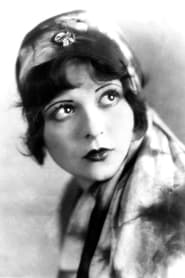
- Clara Bow appears in the cast, but the film is not structured as a typical star vehicle for her; its modern fascination partly comes from seeing her in a serious social-problem story rather than a pure flapper comedy or romance.
- The plot centers on a deliberately staged miscarriage of justice, making it one of the many 1920s films to use sensational crime material as a vehicle for social criticism.
- James P. Hogan was a prolific director of silent and early sound films, and this title fits his reputation for efficient, plot-driven studio melodramas.
- Because the film is from 1925, its original exhibition would have depended on live musical accompaniment rather than a synchronized soundtrack.
- The film's premise anticipates later courtroom and wrongful-conviction dramas by tying suspense to issues of class bias, false testimony, and the death penalty.
- It is sometimes discussed by silent-film historians in connection with Clara Bow's rapidly rising stardom in the mid-1920s, even though the film itself is not primarily designed around her persona.
- The surviving plot summary indicates a remarkably bleak ending setup for a studio melodrama, with the execution clock looming over the narrative and intensifying its moral urgency.
- Like many Warner Bros. silents of the era, the film likely relied on brisk editing and clear intertitles to carry a complex plot efficiently for contemporary audiences.
- No widely circulated surviving print details or restoration publicity are commonly cited, which has contributed to the film's relative obscurity compared with Bow's better-known works.
What Critics Said
Contemporary critical reception is not well documented in the surviving summary materials available for this title, and detailed reviews are not commonly cited in broad reference sources. As a Warner Bros. silent drama with a sensational premise, it likely received attention as a topical entertainment piece rather than as a prestige landmark. Modern critical interest tends to focus less on the film as a canonical masterpiece and more on its social-problem narrative, its status as an early Warner production, and the presence of Clara Bow in a serious dramatic context. Silent-film historians generally treat it as an intriguing but relatively obscure example of mid-1920s studio filmmaking, especially valuable for what it reveals about period attitudes toward justice and class. Because the film is not as widely available as Bow's most famous vehicles, its critical reputation today is largely shaped by archival survivals, reference listings, and the broader scholarly appreciation of Warner's silent output.
What Audiences Thought
Specific audience-response data such as box-office performance or detailed exhibition records are not readily available in standard sources for this title. In the context of the mid-1920s, a story about a death-row prisoner and a corrupt upper-class prank gone deadly would have offered audiences a strong mix of suspense, scandal, and moral outrage. Clara Bow's popularity may have helped attract viewers who followed her rising career, even though the film was not built as a conventional Bow showcase. The film's appeal likely rested on its sensational plot and on the emotional tension created by the countdown toward execution. Today, audience interest is generally limited to silent-cinema fans, Clara Bow enthusiasts, and viewers drawn to early examples of courtroom and wrongful-conviction drama.
Film Connections
Influenced By
- Urban social-problem melodramas of the 1910s and 1920s
- Newspaper crime sensation stories
- Stage melodrama traditions about wrongful conviction
- Contemporary debates over capital punishment and criminal justice
This Film Influenced
- Later courtroom and wrongful-conviction dramas that hinge on exposing institutional failure
- Social-problem films that connect crime plots to class critique
You Might Also Like
More Drama Films
View allFilm Restoration
The preservation status is uncertain in widely available standard summaries. The film is not generally known as a major restored title, and it is best described as an obscure surviving-era silent with incomplete public documentation rather than a frequently screened restored classic. If prints survive, they are not prominently cited in mainstream reference summaries, which suggests limited availability.