

The Penalty
"A double amputee channels rage into an underworld empire."
Keys: Space play/pause · ←/→ 10s · F fullscreen · M mute · </> speed
About this film
Blizzard, deranged from a childhood operation in which both his legs were needlessly amputated after an accident, becomes a vicious criminal, and eventually mob leader of the San Francisco underworld.
Cast & crew
More films like this
More Crime films
View all →

More from Wallace Worsley
View all →
More about this film
About the production
Release dateJune 6, 1920
Budget$50,000
Box officeUnknown but considered successful
ProductionGoldwyn Pictures Corporation
Filmed inGoldwyn Studios, Culver City, California, San Francisco, California
Lon Chaney created his own leg-binding apparatus using leather straps and harnesses to simulate amputated legs, causing him considerable pain and risking permanent injury. The production faced challenges with Chaney's physical commitment to the role, requiring him to work in extreme discomfort for extended periods. The film's urban San Francisco setting was recreated on studio lots with impressive detail for the time.
Themes
Revenge and vengeanceDisability and identityMedical ethics and malpracticeThe nature of evilUrban decay and corruption
Themes & topics
amputeerevengecriminal mastermindSan Franciscounderworldmedical malpracticetransformationpsychological traumaorganized crimedisabilityvengeanceurban crime
Historical background
By 1920, The Penalty was shaped by late silent cinema technology, distribution, and audience expectations.
Why this film matters
The Penalty (1920) helps trace genre evolution, performer careers, and exhibition practices of its period.
Making of
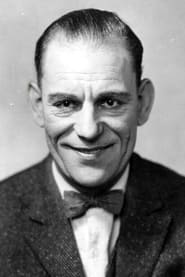
The production of 'The Penalty' is for Lon Chaney's extreme commitment to his craft. To portray Blizzard, a double amputee, Chaney devised a painful method of binding his legs back with leather harnesses, forcing him to walk on his knees with his lower legs tucked behind him. This apparatus was so constricting that it cut off his circulation and caused him excruciating pain, yet he insisted on performing his own stunts. The film's success was largely due to Chaney's transformative performance, which included contorting his face to create a perpetually angry, vengeful expression. Director Wallace Worsley worked closely with Chaney to maximize the visual impact of his physical transformation, using low camera angles to emphasize Blizzard's intimidating presence despite his physical limitations. The production team built elaborate sets representing San Francisco's criminal underworld, creating an atmosphere of urban decay that complemented the dark themes of the story.
What critics said
Trade coverage around 1920 discussed The Penalty in terms of craft and audience appeal rather than blockbuster scale.
Did you know?
- Lon Chaney's leg-binding technique was so painful and restrictive that he could only remain in the position for short periods, risking permanent damage to his circulation and muscles.
- The film's success established Chaney as a major star and led to his nickname 'The Man of a Thousand Faces'.
- Chaney designed and applied his own makeup, creating the gaunt, menacing appearance of Blizzard.
- The film was one of the first to feature a character with a physical disability as the protagonist, albeit as a villain.
- Director Wallace Worsley would go on to direct Chaney in several other films including 'The Hunchback of Notre Dame'.
- The film's themes of medical malpractice and disability revenge were controversial for its time.
- Chaney's performance inspired a generation of actors in physical transformation roles.
- The film was based on a story by Gouverneur Morris, adapted by Charles Kenyon and Raymond L. Schrock.
- The San Francisco underworld setting was considered unusually realistic for its depiction of organized crime.
- Chaney's ability to convey emotion through facial expression alone was groundbreaking for silent cinema.
Awards & recognition
- No major awards were given for this film in 1920
Visual style
The cinematography by Virgil Miller employed innovative techniques to emphasize Blizzard's physical condition and psychological state. Low camera angles were frequently used to make Blizzard appear more menacing despite his lack of legs, while high angles were used to emphasize his vulnerability. The film used dramatic lighting, particularly in the underground criminal lair scenes, to create shadows that enhanced the film's dark themes. The urban San Francisco settings were filmed with a gritty realism that was unusual for the period, using actual location footage combined with studio sets. The camera work often focused on Chaney's facial expressions, using close-ups to capture the subtle nuances of his performance.
Innovations
The film's most significant technical achievement was Chaney's groundbreaking makeup and physical transformation techniques. The leg-binding apparatus he created was revolutionary in its realism and effectiveness. The film also featured impressive miniature work for the San Francisco cityscape sequences. The production design created a convincing urban underworld environment that influenced future gangster films. The film's editing techniques, particularly in the action sequences, were considered advanced for their time, using cross-cutting to build tension between multiple storylines.
Music
As a silent film, 'The Penalty' would have been accompanied by live musical performances during its original theatrical run. The score would typically have been provided by a theater's organist or small orchestra, following cue sheets provided by the studio. The music would have emphasized the film's dramatic and suspenseful moments, with specific themes for Blizzard's appearances and the action sequences. Modern restorations of the film have been scored by contemporary composers who specialize in silent film music, typically using orchestral arrangements that reflect the film's dark and dramatic tone while remaining authentic to the period's musical style.
Famous quotes
I have no legs, but I have a brain that can plot the downfall of men who stand tall!
Society made me a cripple, so I shall make society pay!
The doctor who took my legs will learn I still have hands that can destroy!
In this city of the walking dead, I am their king!
They took my limbs but left my mind - their greatest mistake!
Memorable scenes
- The opening scene showing Blizzard's childhood accident and the subsequent amputation, establishing the origin of his trauma and rage.
- Blizzard's first appearance as an adult, where Chaney's shocking transformation is revealed as he maneuvers himself into a chair using only his upper body strength.
- The underground criminal lair scenes where Blizzard commands his gang from his throne-like chair, demonstrating his power despite his physical limitations.
- The climactic confrontation between Blizzard and Dr. Ferris, where the full extent of Blizzard's revenge plot is revealed.
- The final scene where Blizzard's true identity and motivations are exposed, leading to his emotional breakdown and redemption.
What audiences thought
Audiences in 1920 were shocked and fascinated by Chaney's transformation into Blizzard, with many theatergoers initially believing that Chaney was actually a double amputee. The film was a box office success, particularly in urban areas where its crime themes resonated with contemporary concerns about organized crime. Reports from the time suggest that some audience members fainted during scenes featuring Chaney's character, so convincing was his portrayal. The film's success helped establish Chaney as a major star and demonstrated audience appetite for darker, more psychologically complex films. Modern audiences who discover the film through revival screenings and home video continue to be impressed by Chaney's performance and the film's atmospheric storytelling.
Film connections
Influenced by
- The Cabinet of Dr. Caligari (1920)
- The Hunchback of Notre Dame (1923)
- Phantom of the Opera (1925)
- German Expressionist cinema
This film influenced
- Freaks (1932)
- The Man Who Laughs (1928)
- Dracula (1931)
- The Phantom of the Opera (1925)
- The Hunchback of Notre Dame (1923)
- Scarface (1932)
- Little Caesar (1931)
- The Public Enemy (1931)
Film restoration
The film is preserved in the collection of the Library of Congress and has been restored by several film archives. While some deterioration is evident in existing prints, the film is considered complete and viewable. The Museum of Modern Art holds a 35mm preservation copy, and the film has been released on DVD and Blu-ray by various distributors. The restoration work has helped preserve Chaney's remarkable performance for future generations.
Where to watch
- Available on DVD from Kino Lorber
- Streaming on The Criterion Channel
- Available for digital purchase on Amazon Prime Video
- Available on Blu-ray from Flicker Alley
- Occasionally screened at film festivals and revival cinemas
- Available through some university film archives
- Streaming on the Warner Archive Collection