Edward S. Curtis
Director
Born: February 16, 1868 in Whitewater, Wisconsin, United States Died: October 19, 1952 Active: 1880s-1952 Birth Name: Edward Sheriff Curtis
Films
1 film
About Edward S. Curtis
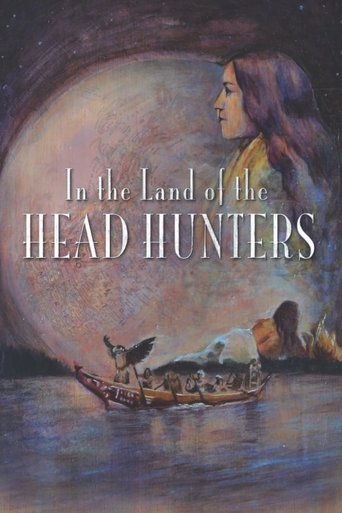
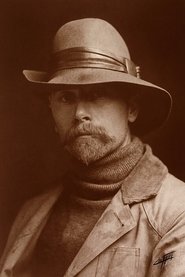
Edward Sheriff Curtis — renowned American photographer and ethnographer who dedicated his life to documenting Native American cultures at the turn of the 20th century. Born in Wisconsin in 1868, Curtis developed an interest in photography during his youth and eventually moved to Seattle where he established a successful portrait studio. His life's work became the monumental 20-volume series 'The North American Indian' (1907-1930), which included over 1,500 photographs and extensive ethnographic documentation. In 1914, Curtis ventured into filmmaking with 'In the Land of the Head Hunters,' a feature film that showcased Kwakwaka'wakw performers in their traditional regalia and customs. Despite the film's artistic and cultural significance, Curtis's ambitious projects left him in financial difficulty later in life. He spent his final years in relative obscurity, though his photographs and film have since been recognized as invaluable cultural artifacts that preserve indigenous heritage. Curtis died in 1952, having created comprehensive visual records of Native American life ever assembled.
The Craft
Behind the Camera
Ethnographic realism combined with dramatic storytelling, Curtis's directing approach emphasized authentic cultural representation while incorporating narrative elements to appeal to mainstream audiences. He worked closely with Native American performers to ensure ceremonial accuracy and traditional practices were faithfully reproduced on film.
Milestones
- Published 'The North American Indian' (1907-1930)
- Directed 'In the Land of the Head Hunters' (1914)
- Received financial backing from J.P. Morgan for his projects
- Documented over 80 Native American tribes
- Created over 40,000 photographic negatives of indigenous peoples
Best Known For
Must-See Films
Accolades
Won
- John Simon Guggenheim Fellowship (1928)
Special Recognition
- Honorary membership in the Royal Photographic Society
- Inducted into the International Photography Hall of Fame
- Film preservation efforts by the American Film Institute
Working Relationships
Worked Often With
Studios
Why They Matter
Impact on Culture
Edward S. Curtis's work represents. His photographs and film provide invaluable documentation of indigenous traditions, ceremonies, and daily life that might otherwise have been lost to history. 'In the Land of the Head Hunters' was particularly groundbreaking as one of the first feature films to cast Native Americans in lead roles and depict their culture with unprecedented authenticity. Curtis's extensive documentation has become an essential resource for anthropologists, historians, and Native communities seeking to reconnect with their heritage. While his work has been criticized for romanticizing and sometimes staging elements of Native life, it remains an unparalleled visual record of indigenous peoples at the turn of the 20th century.
Lasting Legacy
Curtis's legacy endures through his massive photographic archive and the restored version of his film, which continues to be studied and screened internationally. His work has inspired generations of photographers and documentarians interested in cultural preservation. The Curtis Centennial Project and various museum exhibitions have renewed public interest in his contributions to both photography and early cinema. His photographs are now considered priceless artifacts, with original prints selling for tens of thousands of dollars at auction. Perhaps most importantly, Curtis's work has become a vital resource for Native American communities seeking to revive and maintain traditional practices and ceremonies that were documented in his images.
Who They Inspired
Curtis influenced subsequent ethnographic filmmakers and photographers, including Robert Flaherty, who made 'Nanook of the North' (1922). His approach to combining documentary observation with narrative elements prefigured modern documentary filmmaking techniques. Contemporary Native American photographers and filmmakers often reference Curtis's work as both inspiration and cautionary tale regarding cultural representation. His comprehensive methodology in documenting indigenous cultures set a standard for anthropological photography and influenced the development of visual anthropology as an academic discipline.
Off Screen
Curtis married Clara S. Phillips in 1892, and they had four children together: Harold, Beth, Florence, and Katherine. His marriage ended in divorce in 1919, largely due to his obsessive dedication to his work and extensive travels. Curtis's financial struggles in later years were exacerbated by the Great Depression, and he spent his final years living with his daughter Beth in Los Angeles. Despite his professional success, Curtis's personal life was marked by financial hardship and family separation.
Education
Self-taught photographer; attended public schools in Wisconsin and Minnesota
Family
- Clara S. Phillips (1892-1919)
Did You Know?
- Curtis spent over 30 years and $1.5 million (equivalent to over $40 million today) on his North American Indian project
- He was the official photographer for President Theodore Roosevelt's 1903 tour of the West
- His film 'In the Land of the Head Hunters' was thought lost until a damaged copy was discovered in 1947
- Curtis used a massive 14x17 inch view camera for many of his portraits
- He learned Native American languages to better communicate with his subjects
- J.P. Morgan initially provided $75,000 for Curtis's project, with additional funding coming later
- Curtis's work was controversial for asking subjects to remove modern clothing and traditional items for 'authentic' photographs
- He developed a special process for creating soft-focus portraits he called 'Curtis tone'
- The film featured authentic Kwakwaka'wakw ceremonies and performances, some of which had been banned by Canadian authorities
- Curtis's daughter Beth helped organize and catalog his work after his death
In Their Own Words
The passing of every old man or woman means the passing of some tradition, some knowledge of sacred rites possessed by no other. Consequently the information that is to be gathered, for the benefit of future generations, respecting the mode of life of one of the great races of mankind, must be collected at once or the opportunity will be lost for all time.
I want to make them live forever. It's such a big dream, I can hardly see it all at once.
The great changes in practically every phase of the Indian's life that have taken place within the period of a man's lifetime make it necessary to secure at once this great body of information before it disappears forever.
Frequently Asked Questions
Who was Edward S. Curtis?
American photographer and ethnographer best known for his extensive documentation of Native American cultures in the early 20th century. He created the monumental 20-volume work 'The North American Indian' and directed the 1914 film 'In the Land of the Head Hunters,' which featured authentic Native American performers and ceremonies.
What films is Edward S. Curtis best known for?
Titles linked here include In the Land of the Head Hunters (1914), In the Land of the War Canoes (1973 restoration).
When was Edward S. Curtis born and when did he die?
Born February 16, 1868; died October 19, 1952.
What awards did Edward S. Curtis win?
Curtis received a John Simon Guggenheim Fellowship in 1928 to support his ethnographic work. He was also granted honorary membership in the Royal Photographic Society and has been posthumously inducted into the International Photography Hall of Fame. While he received little recognition during his lifetime, his work has earned numerous honors in recent decades.
What was Edward S. Curtis's directing style?
Curtis's directing style combined ethnographic authenticity with dramatic storytelling, working closely with Native American performers to ensure cultural accuracy while creating engaging narratives. He emphasized ceremonial authenticity and traditional practices, often filming actual Native American ceremonies and rituals that had rarely been documented before.