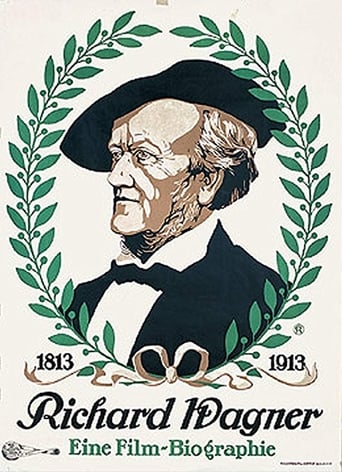
Max Maximilian
Actor
- Active
- 1913-1913
Films 1
About Max Maximilian
Max Maximilian was a very early German screen actor whose surviving filmography places him in the silent-era production The Life and Works of Richard Wagner (1913). Because his career appears to have been brief and documents from the period are scarce, very little biographical detail has survived in widely accessible film references. He belongs to the generation of performers who worked in the formative years of European cinema, when screen acting was still closely tied to stage practice and many credits were not consistently preserved. The fact that he is associated with a prestige historical subject such as Wagner suggests that he was part of the theater-trained talent pool often used by German productions of the 1910s. Beyond this single known credit, no reliable, widely verifiable record of a larger film career has been located in standard classic-cinema reference sources. As a result, he is best understood today as a little-documented early cinema performer rather than a star with an extensive surviving publicity record. His significance lies chiefly in his place within the earliest years of narrative feature filmmaking and in the historical record of pre-World War I German screen acting.
More about Max Maximilian
On screen
No direct contemporary performance description has survived in accessible sources. As a likely stage-trained actor appearing in a 1913 silent historical production, his screen work would have followed the expressive, gestural style typical of early silent cinema, with emphasis on clear body language, formal posing, and facial expressiveness to communicate character without synchronized dialogue. Any assessment beyond that would be speculative.
In film history
Max Maximilian's cultural impact is difficult to measure in the conventional star-system sense because no large body of surviving work or publicity has been securely attached to his name. Even so, he forms part of the foundational layer of German and European silent cinema, where many contributors were recorded only fleetingly in surviving credits and program material. His presence in a 1913 production about Richard Wagner connects him to the early use of film for serious cultural biography and historical commemoration, a trend that helped legitimize cinema as a medium for more than novelty entertainment. For researchers, names like his are important because they document the breadth of talent involved in early filmmaking, much of which has been obscured by incomplete archival survival.
Later reputation
His legacy is primarily archival and historical: he is one of the many early film performers whose names preserve evidence of how silent-era productions were cast and mounted before credits became standardized. Even without an extensive surviving filmography, his credit contributes to the broader understanding of early German cinema and its relationship to theatrical performance. For film historians, such figures are valuable reminders that the silent era was populated not only by major stars but also by numerous lesser-documented artists whose work helped build the medium's first decades. His surviving credit ensures that he remains part of the historical record of cinema's development.
Influence
There is no documented record of Max Maximilian exerting direct influence on later actors or directors. His broader influence is indirect and historical: he is part of the early performer pool that established the conventions of screen acting in the silent period, especially in prestige productions that adapted major cultural subjects. In that sense, he belongs to the generation whose work helped define the visual language later performers inherited, even if his individual contribution cannot be separated from the sparse documentation that survives.
Off screen
No dependable biographical information about Max Maximilian's personal life, family background, marriages, or later years is readily verifiable in standard classic cinema references. Because he appears to have been a minor early-screen performer rather than a documented celebrity, records of his private life have not survived in commonly consulted film histories. Any additional claims about his relationships or family would be speculative, so they are not presented here as fact.
Education
No verified information is readily available regarding his education. Given the era and the nature of his known screen appearance, he may have had theatrical or stage training, but this is not documented in accessible sources and cannot be confirmed.
Credits
- Appeared in the silent historical film The Life and Works of Richard Wagner (1913), one of the earliest surviving references to his screen work.
- Represents the generation of performers active in the formative years of German cinema before the First World War.
- Associated with a prestige biographical subject, indicating participation in ambitious early feature production rather than short comic or novelty material.
- Part of the sparse, early documentation of screen acting at a time when film credits were often incomplete or inconsistently preserved.
Roles
- Role in The Life and Works of Richard Wagner (1913)
Films
Notes
- He is known in surviving film records primarily for a single 1913 credit.
- His name appears in connection with a film about Richard Wagner, one of Germany's most famous composers.
- He worked during the earliest phase of feature-length cinema in Germany.
- No reliable birth or death dates are readily verifiable in widely used classic-film reference sources.
- His surviving record illustrates how many silent-era performers are known only through fragmentary credits.
- He is not a widely documented star, which makes him a figure of interest mainly to film historians and archival researchers.
Questions
Who was Max Maximilian?
Max Maximilian was an early German silent-film actor known from surviving records for appearing in The Life and Works of Richard Wagner (1913). He is not a widely documented star, and most personal details about him have not survived in standard reference sources. His importance today is mainly historical, as part of the earliest generation of screen performers.
What films is Max Maximilian best known for?
He is best known, in the surviving record, for The Life and Works of Richard Wagner (1913). At present, that is the primary credited screen work securely associated with his name in accessible classic-cinema databases. No additional major titles are widely confirmed.
When was Max Maximilian born and when did he die?
His birth date and death date are not readily verifiable in accessible classic-film sources. Because of the scarcity of surviving biographical records, it is not possible to provide confirmed dates without risking inaccuracy. He is therefore treated as a poorly documented early cinema figure.
What awards did Max Maximilian win?
No awards or nominations are known for Max Maximilian in the surviving record. Early silent-era performers, especially those with limited surviving filmographies, often left behind little awards documentation. In his case, no verified honors have been located.
What was Max Maximilian's acting style?
No detailed contemporary critique of his acting has been located, but as a performer in a 1913 silent film, his style would likely have relied on the expressive body language and facial clarity common to early screen acting. Performers of this era often came from stage backgrounds and used broad but controlled gestures to communicate emotion without dialogue. Any further description would be speculative.
What is Max Maximilian's legacy in film history?
His legacy is mainly archival and historical rather than star-based. He stands as one of many early film performers whose names help reconstruct the cast and production practices of pre-World War I cinema. That makes him useful to historians studying the development of German silent film and early feature production.