The Life and Works of Richard Wagner
Plot
This early German biographical drama presents a staged portrait of Richard Wagner's life, beginning with his artistic ambitions and tracing his rise from struggle to renown. The film emphasizes the composer’s stormy private life, his emotional intensity, and the dramatic sweep of his career, rather than attempting a strictly documentary account. It depicts Wagner as a larger-than-life figure whose personal relationships, political involvement, and financial reverses mirrored the heightened passions of his operas. Produced as a lavish feature for the centenary of Wagner’s birth, the film also frames his artistic legacy as a matter of national and cultural importance. Like many silent-era historical biographies, it compresses and simplifies events in order to create a grand, emblematic life story suitable for the screen.
About the Production
The film was mounted as a prestige production to coincide with the centennial of Wagner’s birth in 1913, reflecting the German film industry’s growing ambition to make feature-length historical pictures of cultural significance. It was made during a period when feature films were still relatively novel, so its very existence as a long-form biographical drama was notable. The production drew on the theatrical and operatic sensibility associated with Wagner’s legacy, and the cast included prominent stage and screen performers of the period. As with many early silent biographies, it relied on expressive acting, tableaux-like staging, and carefully composed historical settings rather than rapid cutting or elaborate camera movement. Precise budget, box office, and exact shooting locations are not readily documented in surviving standard references.
Historical Background
The film was produced in Germany in 1913, just before the outbreak of World War I, at a time when the country’s film industry was rapidly expanding in scale, ambition, and artistic self-confidence. The centenary of Wagner’s birth provided an ideal occasion for a culturally elevated motion picture about one of Germany’s most revered composers, whose reputation extended well beyond music into nationalism, philosophy, and ideas of artistic totality. In the early 1910s, feature films were still being established as legitimate long-form entertainment, and historical biographies helped demonstrate that cinema could address serious cultural subjects. Wagner himself was a particularly resonant figure for the era: controversial, celebrated, politically engaged, and associated with German identity in ways that would later become even more ideologically loaded. The film therefore matters not only as a biographical picture but also as an artifact of prewar German cultural memory and the silent era’s effort to canonize great artists on screen.
Why This Film Matters
As an early silent biographical feature about a composer, the film occupies an important place in the development of prestige cinema and music-centered screen biography. It demonstrates how film was already being used to monumentalize national cultural heroes, translating Wagner’s life into a visual legend for broad audiences. The production also illustrates the silent-era fascination with blending theater, opera, and cinema, especially for subjects associated with grandeur, emotion, and historical importance. For modern scholars, the film is significant as evidence of how early German cinema represented artistic genius and how it framed Wagner’s biography within a celebratory cultural narrative. Even where the film survives mainly through records and catalog references rather than widespread popular circulation, it remains valuable for understanding the intersection of film history, music history, and national cultural identity.
Making Of
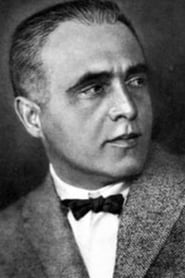
The film was conceived as a commemorative production rather than a routine commercial release, which helps explain its emphasis on cultural prestige and historical subject matter. Carl Froelich, still early in his directing career, was working in an era when German studios were experimenting with longer narrative forms and more ambitious staging. Casting figures such as Giuseppe Becce and Olga Engl suggests an emphasis on established performers capable of sustaining expressive, theatrical characterization in the silent medium. Because the film was made before synchronized sound, any representation of Wagner’s music would have depended on live accompaniment in theaters and, likely, on specially arranged musical performance practices suited to the subject. Surviving information is limited, but the film’s place in early feature production indicates the challenges of coordinating costumes, period settings, and historically resonant scenes at a time when the cinematic language was still developing.
Visual Style
The visual style would have reflected early 1910s German silent filmmaking, with static or gently moving cameras, carefully arranged tableaux, and strong emphasis on composition within the frame. As a historical biography, the film likely used costume detail, period interiors, and symbolic staging to communicate character and era efficiently. Early German productions often favored clear spatial presentation and theatrical blocking, and this film would have depended on expressive acting and set design to convey Wagner’s emotional and artistic life. Since the subject is a composer, visual rhythm and scene construction would have played an especially important role in suggesting musical intensity without sound. The cinematography’s significance lies less in flashy technique than in how it helps create a dignified, monumental portrait of a cultural icon.
Innovations
Its main achievement was not a single groundbreaking invention but the successful realization of a feature-length historical biography at a time when such productions were still relatively uncommon. The film helped demonstrate that cinema could handle serious cultural subjects, including the life of a composer whose legacy was strongly associated with artistic complexity and emotional scale. It also represents the early integration of prestige production values into German feature filmmaking, including period design, expressive staging, and careful scene organization. In a broader sense, it contributed to the emerging grammar of biographical cinema by showing how a life could be condensed into emblematic episodes suitable for visual storytelling. The film’s handling of musical subject matter without synchronized sound is itself a technical and artistic challenge of the silent era.
Music
As a silent film, it had no synchronized recorded soundtrack. In exhibition, it would have been accompanied live by musicians, and because the subject was Richard Wagner, theaters may have used repertory selections, improvisation, or specially assembled accompaniment suited to his music and dramatic legacy. Giuseppe Becce’s involvement is especially notable in this context, since he was a major figure in early film music practice and would have been well placed to contribute to suitable accompaniment traditions. Any specific original cue sheet or full scoring documentation is not widely preserved in standard references. The film’s relationship to Wagner’s music is therefore understood primarily through silent-era performance practice rather than through a fixed recorded score.
Famous Quotes
No verified surviving intertitles or widely documented quoted lines are readily available in standard references for this film.
As a silent film, its original dialogue content would have been conveyed through intertitles rather than recorded spoken performance.
Memorable Scenes
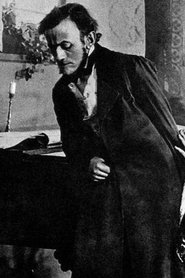
- A staged sequence emphasizing Wagner’s artistic emergence and the sense of a composer driven by an all-consuming creative vision.
- Dramatic scenes portraying the turbulence of Wagner’s personal and romantic life in a heightened, operatic manner.
- Historical tableaux associated with Wagner’s political involvement and forced flight from Germany during the revolutionary era.
- Lavish period reconstructions designed to present Wagner as a monumental cultural figure rather than merely a private individual.
Did You Know?
- The film was released in connection with the 100th anniversary of Richard Wagner’s birth in 1813.
- It is among the earliest feature-length screen biographies devoted to a major composer.
- Its subject was considered especially fitting for silent cinema because Wagner’s life was already widely perceived as dramatic and operatic in nature.
- The film reflects a period when German cinema was beginning to produce prestige historical and cultural works on a larger scale.
- Because it is a silent film about a composer, it highlights the paradox of representing music and musical genius without synchronized sound.
- The surviving documentation identifies Carl Froelich as director, a filmmaker who would later become an important figure in German cinema.
- Giuseppe Becce, listed among the cast, was also an influential film composer and music director in early German cinema.
- The title is sometimes rendered in archival references in slightly different English forms, but this 1913 German production is the specific film associated with Wikidata Q14865293.
- Like many early biographical films, it likely dramatized and condensed episodes from Wagner’s life rather than aiming for strict historical completeness.
- The film’s prestige ambitions align it with the early development of the German historical feature, a genre that would become increasingly important in the 1910s.
What Critics Said
Contemporary reception is not extensively documented in the surviving standard sources available for this title, but the film was clearly positioned as a serious and ambitious work rather than a routine entertainment. Given the prestige surrounding Wagner’s centenary, it likely attracted attention as an important cultural production and as an example of the possibilities of the feature film format. Modern assessment tends to focus less on conventional critical praise and more on its historical importance: it is viewed as an early attempt to dramatize the life of a major composer within silent cinema’s expressive limitations. Today, historians are especially interested in its relationship to early German feature filmmaking, biographical convention, and the screen representation of music. Because detailed contemporary reviews are scarce, its critical reputation rests mainly on archival significance and historical context rather than an extensive review tradition.
What Audiences Thought
Specific audience-response records are limited, but the film’s commemorative nature suggests it was aimed at audiences already inclined to admire Wagner or to attend culturally prestigious productions. Viewers in 1913 would likely have encountered it as a serious historical spectacle and as part of the broader celebration of Wagner’s legacy. The film’s appeal would have depended on its lavish staging, familiar biographical episodes, and the prestige of its subject rather than on spectacle in the modern sense. For contemporary audiences, its appeal is primarily historical and archival, offering a glimpse into how early cinema interpreted one of the most influential and controversial composers of the nineteenth century. Because it is not widely circulated in mainstream repertory, audience reaction today is generally the domain of historians, archivists, and silent-film enthusiasts rather than mass viewers.
Film Connections
Influenced By
- 19th-century biographical and literary portraiture of great men
- Wagnerian opera and the public mythology surrounding Richard Wagner
- early stage melodrama and historical tableaux
- the emerging silent-era prestige feature format
This Film Influenced
- Early composer biographies and music-themed silent films
- Later prestige historical biographies about artists and cultural figures
- German historical dramas that treated national artists as symbolic heroes
You Might Also Like
More Drama Films
View allFilm Restoration
The film is considered a rare early silent work and is not widely available in general circulation. Full preservation status is not clearly documented in standard references consulted for this title, so it is safest to treat it as a film with limited surviving accessibility and uncertain completeness rather than one broadly restored and distributed. If extant, it appears primarily as an archival or cataloged title rather than a commonly screened repertory item. Researchers should consult specialized film archives or national catalog records for the most up-to-date holdings information.