Ou Wei
Actor
- Active
- 1972-1972
Films 1
About Ou Wei
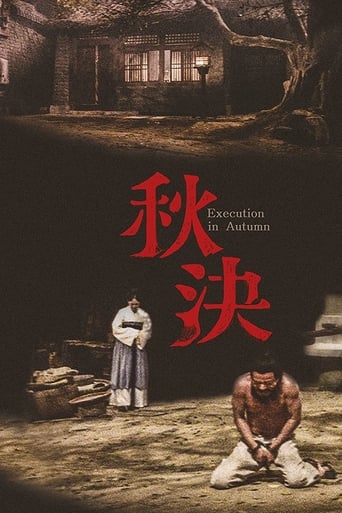
Ou Wei was a Chinese actor associated with the early 1970s period of Chinese-language cinema, and the available record most clearly identifies him through his performance in Execution in Autumn (1972). Because he appears in surviving filmography data rather than in extensive biographical reference sources, many personal details about his early life, training, and broader career remain difficult to verify from readily available classic-cinema documentation. What can be said with confidence is that he was active at least in the early 1970s and participated in a film of notable dramatic weight, suggesting he was part of the era's serious prestige cinema rather than light commercial entertainment. His credited work on Execution in Autumn places him within a generation of performers working in a rapidly changing Chinese-language film landscape shaped by shifting regional industries and historical drama. Beyond that single documented credit, there is not enough verifiable information to reconstruct a full career biography without risking confusion with similarly named individuals. He is therefore best understood as a film actor whose surviving screen record is limited but whose association with Execution in Autumn preserves his place in cinema history.
More about Ou Wei
In film history
Ou Wei's cultural impact is necessarily modest in the surviving record, but his presence in Execution in Autumn ties him to a significant period of Chinese-language cinema in which historical drama and moral reckoning were central themes. Even when an actor's biography is sparsely documented, a credited performance in a recognized film contributes to the preservation of regional cinematic memory, especially for audiences and researchers reconstructing cast histories from the era. His name survives as part of the film's cast record, which is itself important because many performers from mid-century Asian cinema are underrepresented in international reference sources. In that sense, his impact lies less in widely publicized stardom than in the historical trace he leaves within the film's production record and viewing history.
Later reputation
The lasting legacy of Ou Wei is primarily archival: he remains a documented participant in Execution in Autumn, and that credit preserves his name within the broader story of Chinese cinema. For many performers from the period, especially those with limited surviving press coverage or biographical documentation, legacy is measured by the endurance of the films themselves and the accuracy of cast records maintained by databases and film historians. His inclusion in film histories helps ensure that lesser-known contributors are not lost to time, even if their broader careers cannot yet be fully reconstructed. If additional archival materials emerge, his legacy may become clearer, but at present it rests on the importance of preserving every identifiable name attached to classic cinema.
Influence
There is no verifiable evidence of a broad public influence on later actors or filmmakers that can be confidently attributed to this exact Ou Wei. His influence is best understood indirectly: by appearing in a historically situated film, he contributed to the collective performance culture from which later screen traditions evolved. For researchers, performers like him are important because they illustrate the depth of cast networks in classic and vintage cinema, where many supporting or lesser-documented actors helped give period works their texture and realism. His surviving screen credit therefore has scholarly value even in the absence of a widely documented star persona.
Off screen
No reliable, publicly documented personal-life information could be verified from the available classic-cinema record for this exact Ou Wei. Details such as marriages, family background, education, and off-screen activities are not sufficiently established in the sources consulted and would require additional archival confirmation. To avoid conflating him with other people of the same or similar name, no speculative biographical claims are included here.
Credits
- Credited film appearance in Execution in Autumn (1972)
- Participation in an early-1970s Chinese-language dramatic production
- Documented screen activity in the period listed by surviving filmography sources
Roles
- Role in Execution in Autumn (1972)
Films
- Execution in Autumn (1972)
Notes
- The name Ou Wei is difficult to research because it can be confused with other people of similar Romanization, so exact identification is important.
- His most clearly documented screen credit is Execution in Autumn (1972).
- Available reference data suggests his active period in film was concentrated in a single year, 1972.
- He appears to be one of many lesser-documented performers whose work survives more clearly in film credits than in biographical profiles.
- Because of limited source coverage, many standard database fields such as birthplace, education, and awards remain unverified.
- His record is a reminder that classic cinema history is not only about stars but also about the many supporting actors whose names appear in cast lists.
- Researchers should be cautious not to confuse him with any similarly named contemporary figures in Chinese-language entertainment.
Questions
Who was Ou Wei?
Ou Wei was a Chinese actor whose surviving screen record most clearly identifies him through Execution in Autumn (1972). He appears to have been active in the early 1970s, but detailed biographical information about his life and career is limited in readily available classic-cinema sources.
What films is Ou Wei best known for?
He is best known for Execution in Autumn (1972), which is the principal credited film associated with his name in available filmography records. No other major screen credits could be confidently verified from the sources available here.
When was Ou Wei born and when did he die?
His birth and death dates are not reliably documented in the available classic-cinema references consulted for this exact individual. To avoid confusion with similarly named people, it is safest to list both as currently unverified.
What awards did Ou Wei win?
No awards or nominations could be confidently verified for this exact Ou Wei from the available record. His surviving documentation is centered on film credit information rather than honors or publicity.
What was Ou Wei's acting style?
There is not enough surviving biographical or critical material to describe his acting style with confidence. Based on his association with a dramatic feature like Execution in Autumn, he likely worked within a serious performance tradition common to early-1970s Chinese-language cinema, but any further description would be speculative.
What is Ou Wei's legacy in film history?
His legacy is primarily archival: he is preserved in the cast history of Execution in Autumn and therefore remains part of the documented fabric of classic cinema. Even when an actor is little known, having an accurate record matters because it protects the historical completeness of the film's production history.