Mathias Taube
Actor
- Active
- 1916-1925
Films 2
About Mathias Taube
Mathias Taube was a Swedish actor active in the silent era and the early years of Scandinavian screen production, best remembered today for his work in mid-1920s Swedish cinema. He is documented in filmography sources as appearing in "Kiss of Death" (1916) and "The Ingmar Inheritance" (1925), placing his screen career within an important transitional period for Swedish film, when literary adaptations and historical dramas were central to the national cinema. Because surviving records on many lesser-documented silent-era performers are fragmentary, detailed biographical information about his early life, training, and later career is scarce. What can be said with confidence is that he was part of the generation of actors who helped sustain Sweden's reputation for serious literary and regional drama on screen during the silent period. His credited work suggests participation in films connected to strong narrative traditions rather than celebrity-driven star vehicles. Beyond these film appearances, public records available in common film-reference sources do not provide a fuller career outline, so his biography remains largely defined by the surviving film credits. Nevertheless, his inclusion in important Swedish silent-era productions ensures his place in classic cinema history, particularly for researchers studying the broader ensemble of actors who shaped early Scandinavian filmmaking.
More about Mathias Taube
On screen
No detailed contemporaneous description of Mathias Taube's acting style survives in widely available sources. Given the period in which he worked, his performances would have relied on silent-era techniques such as expressive gesture, physically legible emotion, and restrained but readable facial expression rather than dialogue-driven characterization. His known films suggest he may have performed within serious dramatic and literary contexts, where understated naturalism was increasingly valued in Swedish cinema. However, any more specific characterization of his style would be speculative.
In film history
Mathias Taube's cultural impact is best understood as part of the wider fabric of early Swedish cinema rather than as a singular star-driven legacy. By appearing in silent-era productions such as "Kiss of Death" and "The Ingmar Inheritance," he contributed to a national film culture that placed unusual emphasis on literary adaptation, moral seriousness, and atmospheric realism. These productions helped define the reputation of Swedish film in the 1910s and 1920s, a period when the country's cinema was admired internationally for artistic ambition. Even when individual performers are less documented than major directors or stars, their work helped build the ensemble strength that made these films effective and enduring. Taube therefore stands as part of the broader historical record of actors who supported the artistic identity of Scandinavian silent cinema.
Later reputation
His legacy lies primarily in the historical significance of his surviving screen credits. For film historians, names such as Mathias Taube are valuable because they help reconstruct the casts and production networks of silent-era films, especially in national cinemas where archival records can be incomplete. His participation in "The Ingmar Inheritance" connects him to a major tradition of Swedish literary cinema and to the broader prestige associated with adaptations of regional and folkloric material. While he is not widely remembered as a marquee star, his work is part of the foundational layer of Scandinavian film history. In that sense, his legacy is archival as well as artistic: he remains a traceable figure in the development of silent Swedish screen acting.
Influence
There is no well-documented evidence that Mathias Taube directly mentored major later performers or was widely cited as an influence in later acting circles. His influence is therefore best described in indirect terms: he was one of many actors whose performances helped establish the acting conventions and ensemble standards of Swedish silent cinema. Those conventions, especially in literary and dramatic productions, influenced later Scandinavian screen naturalism and the international reputation of Swedish film artistry. His presence in early prestige productions contributed to the overall model of serious, culturally grounded filmmaking that later generations built upon. Any more specific claim about direct influence would not be supported by readily available documentation.
Off screen
Publicly available biographical information on Mathias Taube's personal life is extremely limited. Standard film reference sources do not provide reliable details on his family background, marriages, children, or private life. As a result, his personal history remains largely undocumented in accessible classic-cinema reference materials. This is common for many performers from the silent era, especially actors who were not major international stars and whose careers are preserved mainly through film credits and archival references.
Credits
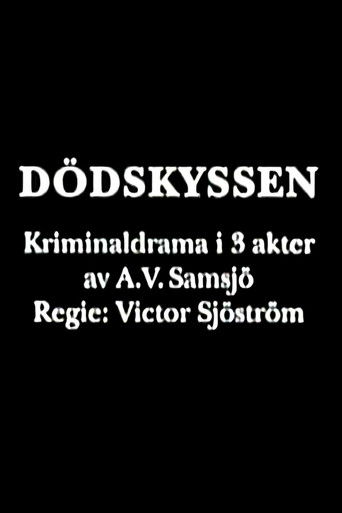
- Appeared in the silent film "Kiss of Death" (1916), an early screen credit that places him among the active actors of Sweden's silent era
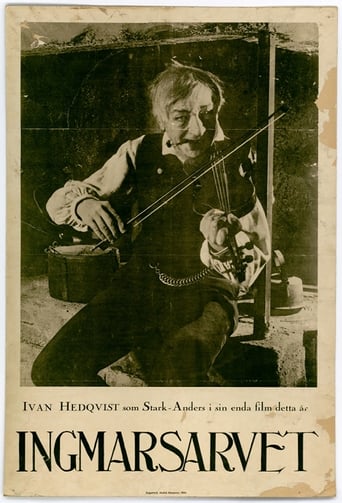
- Appeared in "The Ingmar Inheritance" (1925), a notable Swedish silent adaptation associated with the country's literary film tradition
- Worked during a formative period for Swedish cinema, when the industry was producing internationally respected literary and rural dramas
- Represents the kind of ensemble performer whose work supported the prestige productions of silent-era Scandinavian filmmaking
Roles
- Role in "Kiss of Death" (1916)
- Role in "The Ingmar Inheritance" (1925)
Films
- Kiss of Death (1916)
- The Ingmar Inheritance (1925)
Notes
- Mathias Taube is primarily traceable today through filmography credits rather than through extensive biographical profiles.
- His active period, as currently documented, spans the silent era from 1916 to 1925.
- He appeared in both an early film credit and a later mid-1920s production, suggesting a career that bridged an important phase of Swedish silent cinema.
- "The Ingmar Inheritance" links him to Sweden's strong tradition of adapting literary and regional material for the screen.
- Like many actors from the silent era, his surviving record is sparse compared with later sound-era performers.
- His known screen work places him within the historically important Swedish film culture that gained international respect in the 1910s and 1920s.
- Available reference sources do not reliably list his birth date, death date, or family background.
- He should not be confused with similarly named individuals from other fields; the film credits are the key identifiers for this actor.
Questions
Who was Mathias Taube?
Mathias Taube was a Swedish silent-era actor whose documented film work places him in the active years of 1916 to 1925. He is best known today through surviving credits rather than extensive biographical records.
What films is Mathias Taube best known for?
He is known for appearing in "Kiss of Death" (1916) and "The Ingmar Inheritance" (1925). These credits connect him to Swedish silent cinema and its tradition of serious literary and dramatic filmmaking.
When was Mathias Taube born and when did he die?
His birth and death dates are not reliably documented in the readily available reference sources. Likewise, his birth place and other personal details are not clearly established in accessible film-history records.
What awards did Mathias Taube win?
No awards or formal honors are currently documented for Mathias Taube in commonly available sources. Many silent-era supporting actors were never widely recorded in awards histories, especially in early national cinemas.
What was Mathias Taube's acting style?
No detailed contemporary description of his style survives in accessible sources, but as a silent-era actor he would have relied on expressive physical performance, facial nuance, and visual storytelling. His known work suggests he likely performed in the restrained dramatic style associated with Swedish silent cinema.
What is Mathias Taube's legacy in film history?
His legacy is as part of the ensemble of actors who helped define early Swedish cinema during the silent era. Even though he is not a widely remembered star, his credited performances are historically useful for understanding the production culture of the period.