Films
2 films
About Mikhail Tamarov
Early Russian film actor who worked during the nascent period of Russian cinema prior to the Bolshevik Revolution. His brief but notable from 1912 to 1914, during which he appeared in significant literary adaptations that were among the earliest examples of Russian narrative cinema. Tamarov's most recognized work was in 'The Departure of a Great Old Man' (1912), a film depicting the final days of Leo Tolstoy, which was for its biographical subject matter. He followed this with a role in 'The Kreutzer Sonata' (1914), another adaptation of Tolstoy's work, demonstrating the early Russian film industry's focus on literary classics. Like many actors of this period, Tamarov's career was likely disrupted by World War I and the subsequent Russian Revolution, which dramatically transformed the country's film industry. His performances, though preserved in only a few films, represent an important chapter in the development of Russian cinematic art during its formative years.
The Craft
On Screen
As an actor during the early silent era, Tamarov likely employed the theatrical, exaggerated acting style typical of the period, where actors needed to convey emotion through gesture and facial expression without the benefit of sound. His work in literary adaptations suggests he was capable of handling complex, dramatic material that required nuanced performance.
Milestones
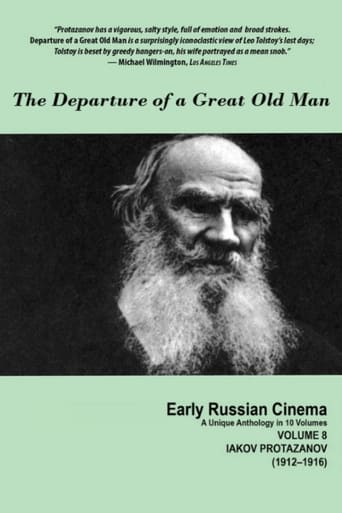
- Starred in 'The Departure of a Great Old Man' (1912), one of the earliest biographical films in Russian cinema
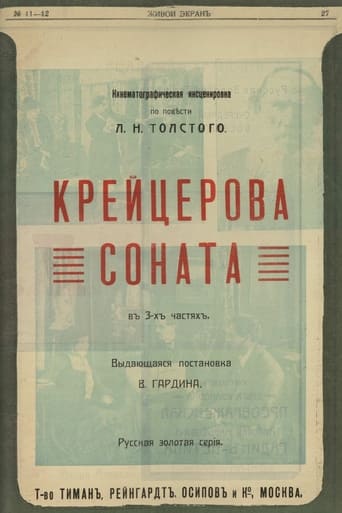
- Appeared in 'The Kreutzer Sonata' (1914), an adaptation of Tolstoy's controversial novella
- Participated in the golden age of pre-revolutionary Russian cinema
Best Known For
Iconic Roles
Must-See Films
Working Relationships
Worked Often With
Studios
Why They Matter
Impact on Culture
Mikhail Tamarov contributed to the foundational period of Russian cinema, participating in films that helped establish the tradition of literary adaptation that would become a hallmark of Russian and Soviet filmmaking. His work in films based on Tolstoy's works helped demonstrate cinema's potential for serious artistic expression, moving beyond simple entertainment to engage with Russia's rich literary heritage. These early adaptations paved the way for the masterpieces of Russian cinema that would follow in the 1920s and beyond.
Lasting Legacy
While Tamarov himself remains an obscure figure, his films survive as important artifacts of early Russian cinema, representing the artistic ambitions of filmmakers working before the Soviet era. The films he appeared in are studied by film historians as examples of how early Russian cinema sought to elevate itself through adaptation of classic literature. His brief career exemplifies the fate of many early actors whose work was preserved but whose personal histories were lost to time.
Who They Inspired
As an early practitioner of film acting in Russia, Tamarov was part of the generation that helped establish acting conventions for the silent medium that would influence subsequent Russian actors. His participation in literary adaptations contributed to the development of a specifically Russian approach to cinema that valued literary and theatrical traditions.
Off Screen
Very little is documented about Mikhail Tamarov's personal life, which was common for actors of this early period in Russian cinema. The lack of detailed records reflects both the obscurity of many early film performers and the historical disruptions that affected documentation during the revolutionary period.
Did You Know?
- His entire known filmography consists of only two films, both adaptations of works by Leo Tolstoy
- The period he worked in (1912-1914) was considered the peak of pre-revolutionary Russian cinema
- Early Russian actors like Tamarov often came from theatrical backgrounds due to the lack of formal film acting schools
- The films he appeared in were among the first to tackle serious literary subjects in Russian cinema
- Many early Russian films, including those featuring Tamarov, were lost during the revolutionary period and subsequent wars
- The Kreutzer Sonata was considered controversial for its themes of jealousy and sexuality, making it bold material for early cinema
Frequently Asked Questions
Who was Mikhail Tamarov?
Early Russian film with credits in this catalog.
What films is Mikhail Tamarov best known for?
Titles linked here include The Departure of a Great Old Man (1912), The Kreutzer Sonata (1914).
When was Mikhail Tamarov born and when did he die?
Specific birth and death dates for Mikhail Tamarov are not documented, which was common for many early Russian film actors whose personal records were lost during the revolutionary period.
What awards did Mikhail Tamarov win?
No awards or formal recognitions are documented for Mikhail Tamarov, as the film award systems we know today did not exist during his brief career in the early 1910s.
What was Mikhail Tamarov's acting style?
Tamarov likely employed the theatrical, exaggerated acting style typical of the early silent era, where actors relied heavily on gesture and facial expression to convey emotion without dialogue.
Why is Mikhail Tamarov's career so brief?
His active years covered only 1912-1914, likely ending due to the outbreak of World War I and the subsequent Russian Revolution, which dramatically disrupted Russia's film industry and scattered many of its early practitioners.