Lev Mirsky
Actor
- Active
- 1940-1940
Films 1
About Lev Mirsky
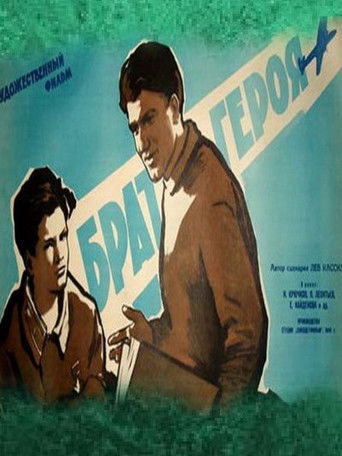
Lev Mirsky is a little-documented screen actor associated with Soviet cinema, best known for appearing in Brother of a Hero (1940). Available film records suggest that his on-screen career was brief and that he was active in the early sound era, with surviving documentation pointing to a single known film credit from 1940. Because he appears in limited archival sources, many personal details about his life, training, and broader career remain unverified in accessible film-history references. He should therefore be regarded as one of the many lesser-known performers whose work survives primarily through cast lists and studio records rather than extensive published biographies. His credited appearance in a wartime-era production places him within the generation of actors who worked in Soviet cinema during a period of intense political and cultural change. Beyond this role, no reliable evidence has surfaced to confirm a larger body of work, major awards, or widely recorded interviews. As a result, his historical importance lies mainly in his contribution to a specific film and in the broader portrait he provides of obscure character actors in classic-era Soviet filmmaking.
More about Lev Mirsky
In film history
Lev Mirsky's cultural impact is difficult to measure in the conventional sense because his surviving public record is extremely limited. Nonetheless, his presence in Brother of a Hero (1940) places him within the broader fabric of Soviet cinema at a time when films served both artistic and state cultural functions. Performers like Mirsky are important to film history because they help reconstruct the ensemble networks that supported major productions, even when they were not marquee names. His name endures as part of the documentary record of classic-era filmmaking, illustrating how many contributors to cinema history remain known only through credits and archival indexes. In this way, his significance is historical and preservation-based rather than celebrity-based.
Later reputation
Lev Mirsky's legacy is primarily archival: he is remembered as one of the many obscure actors whose names survive in cast lists even when personal biographies have been lost or remain inaccessible. For historians, such figures are valuable because they fill out the social and professional texture of a film industry, especially in the Soviet context where studio records and printed credits may be the only surviving traces. His limited documentation underscores how unevenly fame and preservation were distributed in early cinema history. While he does not appear to have left a widely recognized body of work, his credited role ensures that he remains part of the historical record of 1940s Soviet film. His name continues to matter to researchers compiling complete cast histories and reconstructing the personnel behind classic-era productions.
Influence
There is no verifiable evidence that Lev Mirsky directly influenced notable later actors or filmmakers. Any influence he may have had was likely local, professional, or confined to the immediate production environment rather than broadly documented in cinema history. His importance lies instead in his participation in the ensemble tradition of Soviet filmmaking, where supporting performers contributed to the realism and ideological framing of the era's films. Because so little is known about his career, it is not possible to identify a measurable artistic lineage or direct mentorship legacy.
Off screen
No reliable biographical information about Lev Mirsky's personal life has been verified in accessible classic-cinema reference sources. Details about his family, relationships, private life, and activities outside the screen are not currently documented in the available film-history material. Because of the scarcity of surviving records, it is not possible to state with confidence whether he was primarily a stage actor, studio player, or part-time film performer. He remains a figure known chiefly through the surviving film credit rather than through personal archival material.
Credits
- Appeared in Brother of a Hero (1940), the only readily documented screen credit associated with him
- Worked in Soviet cinema during the early wartime period, when film production was closely tied to cultural and ideological aims
- Represents the category of lesser-known supporting performers whose work is preserved mainly through archival cast listings
- Surviving references place him in the early sound era of Soviet film history
Roles
- Role in Brother of a Hero (1940)
Films
- Brother of a Hero (1940)
Notes
- Lev Mirsky is primarily known from a single surviving film credit rather than a long filmography.
- His documented work connects him to Brother of a Hero (1940), a Soviet film from the early wartime period.
- He is an example of how many classic-era screen performers survive in history only through cast lists.
- No widely accessible biographies or interviews currently provide confirmed personal details about his life.
- His record highlights the challenges of researching lesser-known actors from early Soviet cinema.
- Because documentation is sparse, he is often of interest mainly to archivists and film historians.
Questions
Who was Lev Mirsky?
Lev Mirsky was a Soviet actor known from the surviving cast records of Brother of a Hero (1940). Very little verified biographical information about him is publicly available, so he is best understood as a historically documented but obscure figure from classic Soviet cinema.
What films is Lev Mirsky best known for?
He is best known for Brother of a Hero (1940), which appears to be his only readily documented screen credit. No other films can be confidently confirmed from accessible classic-cinema references.
When was Lev Mirsky born and when did he die?
His birth date and death date are not currently verified in accessible film-history sources. As a result, both remain unknown in this record.
What awards did Lev Mirsky win?
No awards or nominations are currently documented for Lev Mirsky in the available sources. His historical presence is preserved mainly through his film credit rather than through honors or major public recognition.
What was Lev Mirsky's acting style?
There is not enough surviving evidence to describe a distinctive acting style with confidence. Since his documented screen work is so limited, any assessment would be speculative rather than firmly historical.
What is Lev Mirsky's legacy in film history?
His legacy is archival and historical rather than celebrity-based. He remains part of the preserved record of Soviet classic cinema, illustrating how many contributors to film history are known only through surviving credits.