Films
1 film
About Junichi Kouchi
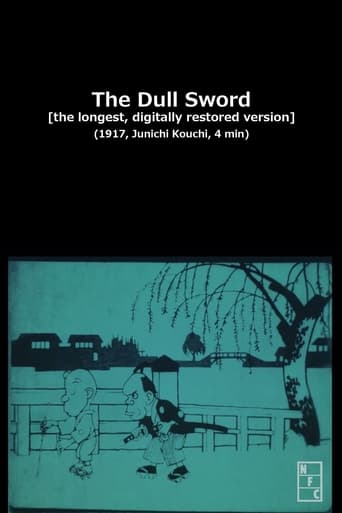
Japanese animator and film director who worked during the very early days of Japanese animation in the silent era. Active primarily in 1917, Kouchi represents one of the founding figures of Japanese anime history, working at a time when the medium was just beginning to take shape in Japan. His most famous work, 'The Dull Sword' (Namakura Gatana, 1917), is considered one of the earliest surviving Japanese animated films and showcases the primitive but innovative techniques of the period. Kouchi worked during a crucial transitional period when Japanese cinema was developing its own distinct identity separate from Western influences. His animation style primarily utilized cutout techniques, which was common among early Japanese animators due to its relative simplicity and cost-effectiveness. Although his career was brief and spanned only about a year, Kouchi's contributions were instrumental in establishing the foundation for what would eventually become Japan's massive anime industry. His work, along with that of contemporaries like Oten Shimokawa and Seitaro Kitayama, represents the very beginnings of the art form in Japan.
The Craft
Behind the Camera
Kouchi's directing style was characterized by primitive cutout animation techniques typical of early Japanese animation. His work featured simple but expressive character movements and basic storytelling techniques that were innovative for their time. The animation was created using paper cutouts moved frame by frame, a method that was more accessible and cost-effective than cel animation for early Japanese filmmakers.
Milestones
- Directed 'The Dull Sword' (1917), one of Japan's first animated films
- Pioneered early Japanese animation techniques
- Contributed to the foundation of Japanese anime industry
- Worked during the silent era of Japanese cinema
- Part of the first generation of Japanese animators
Best Known For
Must-See Films
Accolades
Special Recognition
- Recognized as one of Japan's animation pioneers
- Historical significance as creator of one of Japan's first animated films
Working Relationships
Studios
Why They Matter
Impact on Culture
Junichi Kouchi's cultural impact lies primarily in his role as one of the founding fathers of Japanese animation. His work, particularly 'The Dull Sword,' represents a crucial milestone in the development of anime as an art form and industry. The film demonstrates early Japanese storytelling sensibilities and visual humor that would evolve into distinctive characteristics of later anime. Kouchi and his contemporaries established the technical and artistic foundations that would be built upon by subsequent generations of Japanese animators. His contribution is especially significant because it represents the very beginning of what would become a major cultural export and artistic medium for Japan in the following decades.
Lasting Legacy
Junichi Kouchi's legacy is cemented in Japanese animation history as one of the medium's pioneers. Although his career was brief and only one of his works survives, 'The Dull Sword' remains an important historical artifact that provides insight into the earliest days of Japanese anime. His work is studied by film historians and animation scholars as representative of the techniques and styles used in Japan's first animated productions. Kouchi represents the starting point of a lineage that would eventually lead to the global phenomenon of Japanese animation. His name is mentioned alongside other early pioneers like Oten Shimokawa and Seitaro Kitayama as the creators who established Japanese animation as a distinct art form.
Who They Inspired
While direct influences of Kouchi's work on later animators are difficult to trace due to the limited survival of early Japanese animation, his efforts helped establish animation as a viable medium in Japan. The technical approaches and storytelling methods he employed, though primitive, provided a foundation upon which later animators could build. His work demonstrated that Japanese stories and humor could be effectively told through animation, encouraging others to explore the medium. The very existence of successful Japanese animated works in 1917 helped create a market and audience for domestic animation productions.
Off Screen
Very little is documented about Junichi Kouchi's personal life, which is common for figures from this very early period of Japanese cinema. Historical records from the 1910s in Japan are limited, particularly for individuals working in the emerging field of animation. His brief active years covered only about a year in 1917, making him one of the more mysterious figures in early Japanese animation history.
Did You Know?
- 'The Dull Sword' is only 4 minutes long but represents a major milestone in Japanese animation history
- The film was thought lost for decades before being rediscovered
- Kouchi worked with cutout animation, which was cheaper and easier than cel animation
- His entire known active years covered only one year - 1917
- Along with Oten Shimokawa and Seitaro Kitayama, he's considered one of the 'fathers of anime'
- 'The Dull Sword' tells the story of a samurai with a dull sword trying to test it
- The film features early examples of Japanese visual humor and slapstick comedy
- Very little personal information about Kouchi survives from historical records
- His work predates the establishment of major Japanese animation studios by decades
- The surviving print of 'The Dull Sword' is considered a national treasure in Japanese animation history
Frequently Asked Questions
Who was Junichi Kouchi?
Japanese animator and on YTB.my. He is best known for directing 'The Dull Sword' (Namakura Gatana), which is considered one of the earliest surviving Japanese animated films and a foundational work in the history of anime.
What films is Junichi Kouchi best known for?
Titles linked here include The Dull Sword (1917).
When was Junichi Kouchi born and when did he die?
Unfortunately, exact birth and death dates for Junichi Kouchi are not well-documented in historical records, which is common for figures from this very early period of Japanese animation. He was active as a director in 1917, but specific dates of his birth and death remain unknown.
What awards did Junichi Kouchi win?
Junichi Kouchi did not receive formal awards during his lifetime, as he worked during the very early days of Japanese cinema before award systems were established. However, he is recognized today as one of the pioneers of Japanese animation and holds historical significance as one of the creators of Japan's first animated films.
What was Junichi Kouchi's directing style?
Kouchi's directing style utilized primitive cutout animation techniques, moving paper cutouts frame by frame to create motion. His work featured simple character movements and basic storytelling with early Japanese visual humor and slapstick comedy elements. While technically basic by modern standards, his approach was innovative for its time and helped establish early Japanese animation techniques.