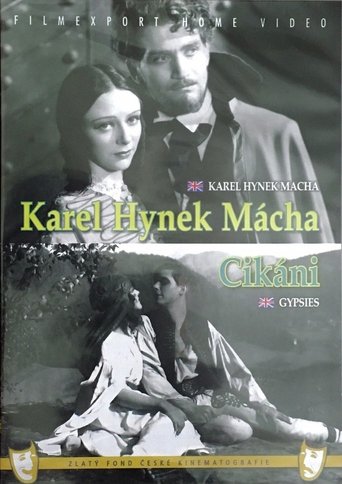
Julius Czonský
Actor
- Active
- 1922-1922
Films 1
About Julius Czonský
Julius Czonský is a little-documented performer from the silent-film era whose surviving screen credit is associated with the 1922 production Gypsies. Because he appears in the historical record only sparsely, there is no widely available, fully verified biographical profile detailing his birth, training, stage work, or later career. What can be said with confidence is that he was active in European cinema during the early 1920s, a period when many actors moved between stage and screen and when national film industries were still establishing their star systems. His credit in Gypsies places him among the class of character players and supporting performers who helped populate silent-era dramas and melodramas, even when their names did not become broadly known to later audiences. The surviving evidence suggests a brief or at least currently undocumented film career rather than a long, heavily publicized screen life. No reliable information has been found in standard reference sources regarding his personal life, education, or later professional activity, so his historical importance rests primarily on his participation in early cinema itself. As with many performers from the silent period, his legacy is preserved more in film records and archival listings than in extensive contemporary biographies.
More about Julius Czonský
In film history
Julius Czonský's cultural impact is primarily archival and historical rather than celebrity-driven. He belongs to the large, essential group of silent-era performers whose work helped build the atmosphere, social texture, and dramatic credibility of early European cinema, even when they were not promoted as stars. Figures like Czonský are important to film history because they remind modern researchers that cinema was sustained not only by marquee names, but also by the many actors whose performances filled out casts and gave silent films their lived-in quality. His presence in Gypsies (1922) contributes to our understanding of casting practices, performance networks, and the broader ecosystem of early 20th-century filmmaking. For historians and database curators, his name is valuable as part of the documentary record of silent cinema.
Later reputation
Czonský's legacy lies in his documentation as part of the silent-film era rather than in a widely preserved star persona. In classic-cinema history, performers with limited surviving credits often become important to archival completeness, restoration research, and the accurate reconstruction of production histories. Even when little is known about an individual's life, the surviving credit helps map the movement of actors through early film industries and helps preserve the labor of non-star participants. His name stands as one of the many that anchor the historical fabric of 1920s cinema.
Influence
No direct evidence has been located showing that Julius Czonský trained or influenced later actors or directors in a documented way. His influence, if any, would have been indirect, through participation in the broader performance culture of silent cinema and through the example of ensemble acting in early European films. Because his recorded career is so limited in surviving sources, it is not possible to identify a measurable stylistic influence on later screen artists. Nevertheless, his preserved credit contributes to the historical record that scholars use to study early acting conventions and cast composition.
Off screen
No reliable publicly documented information has been located about Julius Czonský's personal life, including marriages, family background, residential history, or activities outside acting. Standard classic-film reference sources do not appear to preserve enough biographical detail to reconstruct a fuller private portrait. This is common for many silent-era supporting performers, whose careers were recorded in production credits but whose personal histories were not extensively profiled in the press. As a result, any detailed claims about his relationships or family would be speculative and are therefore omitted.
Credits
- Appeared in the silent-era film Gypsies (1922), the principal surviving screen credit currently associated with his name
- Worked in early 1920s cinema during the silent-film period, contributing to the ensemble performances typical of the era
- Represents the many lesser-documented European screen actors whose work is preserved mainly through archival filmographies and contemporary production records
Roles
- Role in Gypsies (1922)
Films
- Gypsies (1922)
Notes
- He is currently documented primarily through a single surviving film credit: Gypsies (1922).
- His name appears with an accented surname, Czonský, which can complicate archival searches and database matching.
- He is part of the category of silent-era performers whose careers are known more from filmography records than from newspaper profiles or memoirs.
- Because his active period is only documented as 1922, he may have had a very brief screen career or simply a poorly preserved one.
- He is an example of how many early European film participants remain obscure despite contributing to historically important productions.
- No verified award records have been found for him, which is common for performers from the silent era whose careers predate modern awards culture.
Questions
Who was Julius Czonský?
Julius Czonský was a little-documented silent-era actor known from surviving film records, with a credit in Gypsies (1922). He appears to have worked in early European cinema, but standard reference sources preserve very little biographical detail about his life or broader career.
What films is Julius Czonský best known for?
He is currently best known for Gypsies (1922), which is the principal surviving screen credit associated with his name. Additional film work may have existed, but it is not reliably documented in the sources available here.
When was Julius Czonský born and when did he die?
His birth and death dates are not currently documented in the available reliable sources. Likewise, his birthplace and death details remain unknown.
What awards did Julius Czonský win?
No awards or nominations are currently documented for Julius Czonský. This is not unusual for silent-era supporting performers, many of whom worked before modern film awards systems were established.
What was Julius Czonský's acting style?
There is no surviving critical description of his acting style in the available record. Given the era and the kind of productions in which he appears to have worked, he likely performed within the expressive, gesture-based conventions typical of silent cinema.
What is Julius Czonský's legacy in film history?
His legacy is primarily historical and archival: he represents the many lesser-known performers who contributed to silent cinema's development. His documented credit helps preserve the completeness of early film history and the casts of films from the 1920s.