Gypsies
Plot
Karl Anton's 1922 film follows a Venetian gondolier whose thwarted love affair pushes him into a spiral of jealousy and revenge. The story begins in Venice, where the film lingers on the canals, narrow streets, and lagoon atmosphere before shifting to Bohemia, where the gondolier's actions and the lives of several other characters become entangled. As destinies that seemed separate gradually converge, the narrative builds toward a dramatic encounter in which the emotional consequences of betrayal, obsession, and longing are finally brought to a head. The film is adapted from the work of Karel Hynek Mácha, and Anton's version is noted for preserving the romantic-literary quality of the source while using silent cinema's visual strengths to broaden the story's emotional and geographic scope.
About the Production
This adaptation is notable for its effort to translate the atmosphere of Mácha's literary work into a specifically cinematic form. According to contemporary and later Czech film-historical descriptions, Karl Anton both wrote and directed the film and worked closely with cinematographer Karel Kopřiva to exploit the visual contrasts between the Venetian opening and the Bohemian sequences. The Venice prologue makes strong use of the city's photogenic canals, gondolas, and cramped alleys, while the Bohemian material was staged in the evocative landscape around Kokořín Castle to suggest a romanticized, mysterious setting. Precise budgetary and box-office records have not been reliably documented in surviving sources, which is common for Czech silent films of this era. The film is an example of early 1920s Czech literary adaptation, emphasizing mood, landscape, and expressive staging over intertitles and dialogue-heavy plotting.
Historical Background
Gypsies was produced in 1922, in the early years of Czechoslovakia after the political reordering that followed the end of World War I and the collapse of the Austro-Hungarian Empire. This was a formative period for Czech national culture, when filmmakers, writers, and artists were actively defining what a distinctly Czech cinema might look like. Adapting Karel Hynek Mácha was culturally significant because Mácha had long been treated as a foundational Romantic poet and a touchstone of Czech national identity, so the film participated in the broader project of canonizing literature on screen. At the same time, the use of Venice and Bohemian landscapes reflects the interwar fascination with lyrical location shooting and with cinema's ability to render geography as emotion. The film also sits within a silent-era environment where prestige literary adaptations often served as a way to demonstrate that cinema could handle serious cultural material on par with theatre and literature.
Why This Film Matters
The film matters primarily as an early Czech effort to adapt a revered literary work with ambition and visual sophistication. Its blending of foreign location imagery, specifically Venice, with emblematic Czech landscape photography makes it a useful example of how silent cinema could bridge cosmopolitan style and national identity. For historians of Czech film, it illustrates the effort to build a serious feature tradition grounded in native literature, romantic atmosphere, and pictorial composition. The production is also associated with the craftsmanship of Karl Anton and Karel Kopřiva, whose collaboration shows an awareness of the medium's expressive capacity beyond straightforward narrative illustration. While it is not among the most internationally famous silent films, it remains culturally significant as part of the interwar development of Czech screen artistry and literary adaptation.
Making Of
Gypsies was mounted as a prestigious literary adaptation at a time when Czech filmmakers were increasingly seeking to elevate local cinema through nationally important source material. Karl Anton's dual role as writer-director suggests a tightly controlled production, with the adaptation shaped to preserve Mácha's romantic sensibility while making the drama intelligible and visually compelling in silent form. The film's production design strategy appears to have depended on strong location work: Venice was chosen for the prologue to give the film immediate visual allure, while the remainder moved into the wooded, castle-dotted terrain of Bohemia, especially around Kokořín, to create an air of legend and fate. Surviving film-historical commentary emphasizes that the production made deliberate use of the possibilities of cinema rather than simply illustrating the literary text, which would have required careful planning of scene transitions, landscape composition, and emotional pacing. Information about specific production difficulties, crew numbers, or studio circumstances is limited in accessible records, but the film is remembered as an accomplished example of early 1920s Czech adaptation practice.
Visual Style
The cinematography is one of the film's most notable assets, especially in its contrast between urban and rural imagery. Venice is used not simply as a backdrop but as a character-like environment, with canals, narrow lanes, gondolas, and the reflective surfaces of water creating a fluid, dreamlike mood. The Bohemian sequences around Kokořín Castle emphasize textured landscapes, wooded paths, and architectural silhouettes, helping to transform the story into a visually symbolic journey. The overall style appears to favor pictorial composition, atmospheric depth, and the expressive arrangement of bodies within space, all of which were central strengths of early silent-era cinematography.
Innovations
The film's main technical achievement lies in its coordinated use of location photography to support narrative and emotional structure. Rather than relying solely on studio interiors, the production integrates real exteriors in Venice and evocative Czech landscape settings, which would have required substantial logistical planning for a silent-era shoot. The film also demonstrates an early understanding of visual contrast as a storytelling device, moving between spaces that suggest different cultural and psychological worlds. While there is no evidence of a groundbreaking special effect or mechanical innovation, its careful photographic adaptation of literary atmosphere is itself a notable achievement for its time.
Music
As a 1922 silent film, Gypsies was originally screened with live musical accompaniment rather than a fixed synchronized soundtrack. No single original score has been reliably preserved in the public record, and surviving documentation does not identify a universally accepted definitive composition associated with the film. Like many silent-era features, it would have been accompanied differently depending on the venue, with local musicians or theater orchestras selecting music to match the drama and pacing. Any modern screening would typically use a reconstructed, improvised, or newly commissioned accompaniment if the film is presented at all.
Memorable Scenes
- The Venice prologue, with its canals, gondolas, and narrow streets establishing the film's romantic and tragic mood.
- The transition from Venice to the Bohemian landscape, using location contrast to shift the emotional register of the story.
- The climactic convergence of multiple characters in a single dramatic encounter, bringing the film's interwoven destinies to a head.
Did You Know?
- The film is a silent Czech literary adaptation associated with the work of Karel Hynek Mácha, one of the most important figures in Czech Romantic literature.
- Karl Anton served as both screenwriter and director, giving the film a strong authorial stamp unusual for many studio productions of the time.
- The production is especially remembered for contrasting two visually distinct spaces: the Venice prologue and the Bohemian landscape around Kokořín Castle.
- Cinematographer Karel Kopřiva is credited with helping shape the film's atmosphere through location imagery and expressive use of natural scenery.
- The title is sometimes discussed in English-language references as 'Gypsies,' but it is a Czech silent film and should not be confused with later films of the same or similar titles.
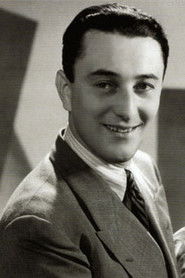
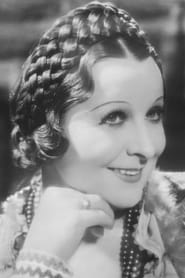
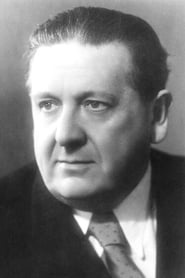
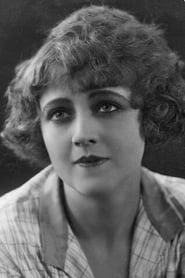
- The cast listed in available records includes Hugo Svoboda, Olga Augustová, and Theodor Pištěk.
- Because many silent-era Czech films survive only incompletely or in poor documentation, precise production statistics such as budget and box office are often unavailable.
- The film is of interest to scholars of Czech cinema because it demonstrates how early filmmakers adapted national literary classics for the screen.
- The Venice material is often singled out in descriptions of the film for its use of real urban scenery rather than purely studio-bound settings.
- Its Bohemian sequences helped establish the practice of using Czech castles and landscapes as symbolic and emotional backdrops in interwar cinema.
What Critics Said
Contemporary review material is limited in widely accessible sources, but later Czech film scholarship tends to regard the film positively as an accomplished adaptation that respected Mácha's original while exploiting cinematic means effectively. It is often described as visually attractive and emotionally attentive rather than as a simple stage-bound transcription. Modern assessments generally place it within the stronger tradition of early Czech literary films and note the effectiveness of its location work and atmospheric contrasts. Because the film is relatively obscure outside specialist circles and documentation is incomplete, it has not accumulated the kind of broad critical reputation attached to the most famous European silent classics.
What Audiences Thought
Direct audience-response records have not survived in a detailed or easily verifiable form. Given the film's status as a literary adaptation of an important Czech author, it was likely aimed at educated domestic audiences and at viewers attracted to prestige drama rather than popular slapstick or serialized action. The visual appeal of Venice and the romantic Bohemian settings would have been major attractions for contemporary audiences, particularly in an era when location spectacle itself was still a novelty. Today the film is chiefly encountered by scholars, archivists, and enthusiasts of silent Czech cinema rather than by general audiences.
Film Connections
Influenced By
- The literary work of Karel Hynek Mácha
- Czech Romantic poetry and legend
- Silent-era prestige literary adaptations
- European location-based melodrama
This Film Influenced
- Later Czech literary adaptations of the 1920s and 1930s
- Interwar Czech films that emphasized landscape as atmosphere
- Historical and romantic melodramas using symbolic location shooting
You Might Also Like
More Drama Films
View allFilm Restoration
No widely accessible preservation report was identified in the available sources used here; the film appears to be rare and not commonly available for home viewing. If it survives, it is likely in archival or specialist custody rather than in general circulation, and documentation is incomplete. Restoration status is not clearly established in readily available reference material.