Karel Schleichert
Actor
- Born
- January 28, 1865, Kostelec nad Černými lesy, Austrian Empire (now Czech Republic)
- Died
- February 7, 1940
- Active
- 1919-1937
- Birth name
- Karel Veliký Vacslav Schleichert
Films 2
About Karel Schleichert
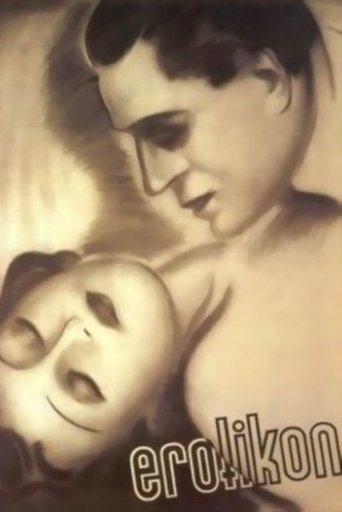
Karel Schleichert was a prolific Czech actor whose career spanned the transition from the silent era to the early sound period of European cinema. Born in 1865, he began his professional life as a postal clerk before his passion for performance led him to travel with circuses and nomadic theater troupes across the Austro-Hungarian Empire. He eventually established himself in the burgeoning Prague film industry, becoming one of the most frequently cast character actors of the 1920s. Schleichert was renowned for his patriarchal appearance and expressive facial mimicry, which allowed him to portray a wide range of authoritative and fatherly figures. His most significant contribution to film history came in 1929 with his role as the railway crossing keeper in Gustav Machatý's avant-garde masterpiece 'Erotikon.' Despite his extensive filmography and early success, he spent his final years in poverty and relative isolation, passing away in Písek in 1940.
More about Karel Schleichert
On screen
Schleichert was known for a 'patriarchal' acting style, utilizing his imposing physical presence and expressive facial features to convey deep emotion without dialogue. In the silent era, he relied heavily on nuanced mimicry, often playing characters defined by their dignity, suffering, or moral authority.
Impact on culture
Schleichert served as a vital link between the 19th-century theatrical tradition and the modern language of cinema in Central Europe. His participation in 'Erotikon' helped bring Czech cinema to the international stage, as the film was celebrated for its visual innovation and sophisticated storytelling. He represented the 'everyman' father figure of the era, grounding avant-garde films with a sense of traditional human pathos.
Lasting legacy
He is remembered today primarily by film historians and enthusiasts of silent cinema for his role in 'Erotikon,' which remains a landmark of erotic and psychological filmmaking. His vast filmography of over 50 films provides a comprehensive record of the evolution of Czech character acting during the interwar period.
Who they inspired
His expressive style influenced the next generation of Czech character actors who had to adapt theatrical techniques for the camera. Director Václav Wasserman wrote fondly of him in his memoirs, citing Schleichert as a key figure in the early days of the industry.
Off screen
Schleichert came from a background that he claimed had noble roots (the von Wiesenthal family). He was deeply involved in the arts with his family, even attempting to produce and finance a film project titled 'Probuzené svědomí' (1919) with them, though it was not a financial success. He spent his later years in the town of Písek, where he lived in modest conditions until his death.
Education
Self-taught through practical experience in circuses, traveling theater companies, and cabaret stages.
Career milestones
- Starred as the father in the internationally acclaimed silent film 'Erotikon' (1929)
- Became one of the most prolific character actors in early Czech silent cinema
- Collaborated with legendary directors such as Gustav Machatý, Martin Frič, and Karel Lamač
- Successfully transitioned from silent films to 'talkies' in the early 1930s
- Attempted a family-produced film project 'Probuzené svědomí' (Awakened Conscience) in 1919
Iconic roles
Must-see films
Special recognition
- Recognized as a foundational figure of Czech silent cinema in the National Film Archive (Filmový přehled)
Worked often with
- Gustav Machatý (Director)
- Martin Frič (Director)
- Karel Lamač (Director)
- Theodor Pištěk (Actor)
- Ita Rina (Actress)
Studios
- Slaviafilm
- AB Studios (Prague)
- Gem-Film
Did you know?
- He claimed to be a descendant of the noble von Wiesenthal family and even traced his lineage back to Pepin the Short.
- Before acting, he worked as a postal clerk (poštovní zřízenec).
- He often used the pseudonyms Karel Schleichert-Loukodolský or Karel Šlajchert.
- His final film role was in 'Hordubalové' (1937), filmed when he was 71 years old.
- Despite his long career, he died in poverty and isolation in the town of Písek.
- He appeared in the 1936 French-Czechoslovak co-production of 'The Golem' directed by Julien Duvivier.
In their own words
I have played fathers, judges, and beggars, but the camera always sees the soul behind the beard. (Attributed context: Regarding his transition to character roles)
Questions and answers
Who was Karel Schleichert?
Karel Schleichert was a prominent Czech character actor of the silent and early sound eras, best known for his role in the 1929 film 'Erotikon.' He appeared in dozens of films, often portraying father figures, officials, or elderly men.
What films is Karel Schleichert best known for?
He is most famous for playing the railway crossing keeper in Gustav Machatý's 'Erotikon' (1929). Other notable works include 'The Golem' (1936), 'White Paradise' (1924), and 'Anton Špelec, Sharp-Shooter' (1932).
When was Karel Schleichert born and when did he die?
He was born on January 28, 1865, in Kostelec nad Černými lesy and died on February 7, 1940, in Písek, Czechoslovakia.
What awards did Karel Schleichert win?
There are no records of formal film awards for Schleichert, as he worked during a period before major film awards were established in Czechoslovakia, but he is highly regarded by the National Film Archive.
What was Karel Schleichert's acting style?
He was known for a patriarchal and highly expressive style, using his face and physical stature to portray dignity and emotional depth, a technique perfected during his years in traveling theater and silent film.