Erotikon
“A Poem of Passion and Desire”
About Erotikon
During a torrential rainstorm, a wealthy and sophisticated traveler named George misses his train and seeks shelter in the humble cottage of a lonely railway gateman. He quickly seduces the gateman's beautiful and innocent daughter, Andrea, leading to a brief but passionate encounter that leaves her pregnant and socially disgraced. After George departs for his cosmopolitan life in Prague, Andrea eventually marries a kind-hearted but dull man named Hilmar to provide a future for herself and her child, moving to the city to start anew. Years later, a chance encounter brings George back into Andrea's life, reigniting her repressed desires and forcing her to choose between the stability of her domestic life and the dangerous allure of her former lover. The film culminates in a sophisticated psychological drama that explores the tension between social morality and the primal force of erotic attraction.
Cast & crew
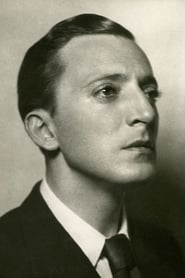
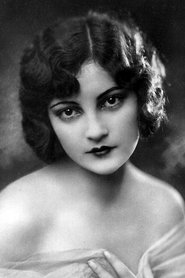

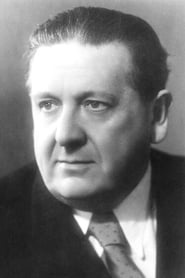

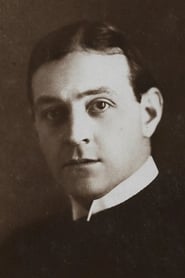
More films like this
More from Gustav Machatý
View all →
More about Erotikon
Production
- Release date
- February 27, 1929
- Country
- Czechoslovakia
- Budget
- Approximately 1.5 million Czechoslovak koruna
- Box office
- Highly successful in European markets, particularly in France and Germany
- Production
- Ocean-Film, G-M-Film
- Filmed in
- Prague, Czechoslovakia, A-B Studios, Vinohrady, Prague, Křivoklát (rural railway scenes)
Director Gustav Machatý was known for his perfectionism, often demanding dozens of takes for single shots to achieve the specific lighting effects he desired. The film was a private production that bypassed the traditional studio system of the time to maintain artistic control. Machatý collaborated closely with set designer Arch. Hanuš Gödert to create the stark contrast between the rustic, claustrophobic gateman's hut and the expansive, modern Art Deco interiors of Prague. The film was one of the last great silent masterpieces produced in Czechoslovakia just as the sound era was beginning to take hold.
Themes & topics
Historical background
The film was produced during the 'Golden Age' of the First Czechoslovak Republic, a period of immense cultural flowering and liberal social attitudes. It reflects the transition from traditional rural life to the modern, urbanized world of the late 1920s. Historically, it sits at the precipice of the Great Depression and the end of the silent film era, representing the absolute peak of silent visual storytelling. The film's frank exploration of female sexuality was part of a broader European movement (including the works of G.W. Pabst) that sought to modernize cinematic morality.
Why this film matters
Erotikon is considered the foundational work of Czech poetic realism. It broke away from the theatrical traditions of early cinema to create a purely visual language of desire. It proved that a small European nation could produce a film of world-class technical and artistic quality, rivaling the output of UFA in Germany or Hollywood. It remains a landmark in the history of eroticism in cinema, showing how atmosphere and editing can be more provocative than explicit imagery.
Making of
The production was characterized by Machatý's obsession with visual symbolism and the 'European' style of filmmaking that blended German Expressionism with French Impressionism. Casting Ita Rina was a gamble, as she was relatively unknown, but Machatý spent weeks coaching her to deliver a performance that was internal and psychological rather than the exaggerated pantomime common in silent films. The lighting crew used innovative techniques, including silk screens and mirrors, to create the shimmering, ethereal quality of the romantic sequences. During the railway scenes, the production had to coordinate closely with the national railway service, often filming between scheduled train arrivals to capture the authentic atmosphere of the tracks.
What critics said
At the time of release, critics praised the film for its 'visual music' and sophisticated editing, though some conservative reviewers found the subject matter distasteful. Modern critics, such as those at Sight & Sound, have hailed it as a masterpiece of late silent cinema, often comparing Machatý's eye for detail to that of F.W. Murnau. It is frequently cited for its innovative use of close-ups and its ability to convey complex psychological states through objects and shadows.
What audiences thought
The film was a significant commercial success in urban centers like Prague, Berlin, and Paris, appealing to a sophisticated 'New Objectivity' audience. However, in rural areas and more religious countries, it faced protests and was occasionally banned or heavily edited. Audiences were particularly captivated by Ita Rina's screen presence, which made her a major pin-up star of the era.
Visual style
The cinematography by Václav Vích is characterized by its soft-focus romanticism and sharp, geometric compositions in the urban scenes. The film utilizes rapid montage, double exposures, and rhythmic editing to simulate heartbeats and emotional agitation. Notable is the use of 'chiaroscuro' lighting to create a sense of mystery and intimacy in the small cottage, contrasted with the bright, flat lighting of the modern city apartments.
Innovations
The film is noted for its sophisticated use of the 'Kuleshov Effect,' where the meaning of a shot is derived from its relationship to the shots around it. The opening storm sequence is a technical marvel of 1920s special effects and editing. Additionally, the film's use of symbolic inserts (like a game of chess to represent a seduction) was highly influential in the development of cinematic metaphor.
Music
As a silent film, it originally premiered with a live orchestral score. In recent years, several new scores have been commissioned, most notably a haunting contemporary score by Jan Klusák for the 1994 restoration, and another by the group 'Trio Neuvěřitelno' which emphasizes the film's dreamlike qualities.
Film restoration
The film was long thought to be partially lost or available only in poor-quality prints until a major restoration project by the Národní filmový archiv (Czech National Film Archive) in 1994. It is now preserved in a high-quality 35mm format and has been digitized for modern audiences.
Did you know?
- The film's title was considered highly scandalous for 1929, leading to censorship issues in several conservative markets.
- Ita Rina, a former Miss Yugoslavia, became an international star following her performance in this film.
- The film features an early use of 'subjective camera' to represent the intoxicated or emotional state of the characters.
- The rain sequence at the beginning of the film took several days to film using fire hoses to create a convincing deluge.
- The film was rediscovered and restored by the Czech National Film Archive in the 1990s, bringing it back to international attention.
- Director Gustav Machatý would later direct the even more controversial 'Ecstasy' (1933) starring Hedy Lamarr.
- The film uses visual metaphors, such as a boiling kettle or a ticking clock, to represent sexual tension without violating censorship laws.
- The cinematography was handled by Václav Vích, who became one of Europe's most sought-after lighting experts.
- Despite the title, the film contains no actual nudity, relying instead on suggestion and atmosphere.
- The film was a major hit in Paris, where it ran for several months at the Studio 28 cinema.
Awards & recognition
- Honorary Diploma - Venice Film Festival (Retrospective recognition)
- Special Mention for Restoration - Pordenone Silent Film Festival
Memorable scenes
- The opening storm sequence where the traveler arrives at the gateman's hut, featuring rhythmic editing of rain, wind, and train wheels.
- The seduction scene, which is told entirely through the visual metaphor of a boiling pot and the shadows on the wall.
- The chess game in the city, where the moves on the board mirror the psychological maneuvering between Andrea and George.
- The final confrontation at the train station, bringing the story full circle back to the tracks.
Influenced by
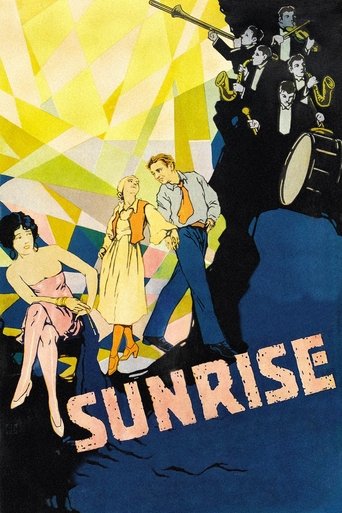
- The films of F.W. Murnau (specifically 'Sunrise')
- German Expressionism
- French Impressionist Cinema (Jean Epstein, Abel Gance)
- The psychological novels of Stefan Zweig
This film influenced
- Ecstasy (1933)
- Closely Watched Trains (1966)
- The Unbearable Lightness of Being (1988)
Where else to watch
- Available on DVD/Blu-ray via the Czech National Film Archive
- Occasionally streamed on specialized platforms like MUBI or Criterion Channel
- YouTube (various public domain or archival uploads)
- Film festivals specializing in silent cinema retrospectives
Famous quotes
The film is silent; however, the intertitle: 'A man passed by... and the world changed' is often cited as the central motif of the story.
Intertitle: 'In the city, memories are easily buried under the noise of the streets.'
Intertitle: 'The rain washes away the tracks, but not the sins.'