L. H. Struna
Actor
- Born
- June 27, 1899, Prague, Austria-Hungary (now Czech Republic)
- Died
- February 14, 1980
- Active
- 1919-1974
- Birth name
- Ladislav Bohumír Struna
Films 1
About L. H. Struna
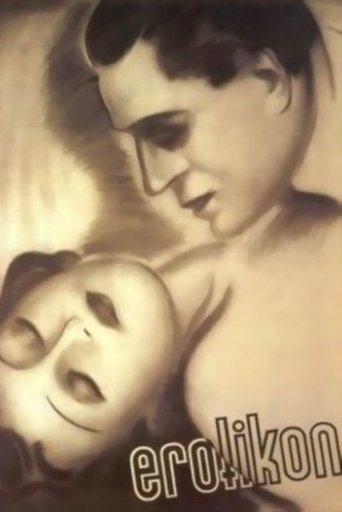
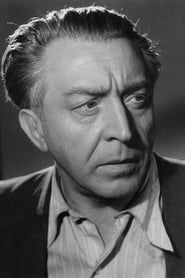
Ladislav Herbert Struna, commonly known as L. H. Struna, was a prominent Czech actor whose career spanned over five decades, bridging the gap between the silent era and the modern Czechoslovak cinema. Born in Prague in 1899, he initially gained recognition for his striking physical presence and versatility in silent films, often portraying a wide range of characters from romantic leads to complex villains. His breakthrough came in the late 1920s with roles in landmark films such as Gustav Machatý's 'Erotikon' (1929) and 'From Saturday to Sunday' (1931), the latter of which showcased his transition into sound cinema. Renowned for his deep baritone voice, he was famously dubbed the 'Czech Jean Gabin' by poet Vítězslav Nezval due to his rugged yet sensitive screen persona. Despite a hiatus during the German occupation of Czechoslovakia where he worked in his family's business, Struna returned to the screen after World War II, evolving into a respected character actor. He remained active in the film industry until the mid-1970s, concluding a prolific career that included nearly 80 film credits and a secondary passion as a landscape painter.
More about L. H. Struna
On screen
Struna was noted for a naturalistic and grounded acting style that favored internal emotion over the theatrical exaggeration common in the early silent era. His transition to sound was particularly successful because of his 'sonorous baritone,' which added a layer of authority and masculinity to his roles. He was often cast as the 'everyman'—hardworking, honest, and occasionally world-weary—which allowed him to embody the social realism prevalent in Czech cinema of the 1930s and 1950s.
Impact on culture
L. H. Struna was a vital figure in the Czechoslovak 'New Wave' of the late 1920s and early 30s, contributing to films that pushed the boundaries of eroticism and social realism. His collaboration with Gustav Machatý helped establish a sophisticated, internationally recognized style for Czech cinema that blended avant-garde techniques with narrative drama. As the 'Czech Jean Gabin,' he represented a specific type of masculine vulnerability that resonated with audiences during the Great Depression and the post-war reconstruction period.
Lasting legacy
Struna's legacy is preserved through his contributions to the 'Golden Age' of Czech silent film. His performance in 'From Saturday to Sunday' remains a textbook example of early sound synchronization and urban poetic realism. In the Czech Republic, he is remembered not only as a versatile actor who appeared in nearly 80 films but also as a talented artist whose paintings continue to be associated with the cultural history of the Czech acting community.
Who they inspired
He influenced subsequent generations of Czech actors by demonstrating a transition from the 'heroic' style of silent film to a more nuanced, psychological approach in sound cinema. His ability to maintain a career through multiple political regimes (from the Austro-Hungarian Empire through the Communist era) made him a symbol of professional resilience in the Czech arts.
Off screen
Struna was born into a middle-class family of tradespeople in Prague. During World War I, he served on the front lines, an experience that reportedly informed the grit and realism of his later acting. Outside of his film career, he was a devoted painter, a passion he maintained throughout his life. During the Nazi occupation of Czechoslovakia (the Protectorate of Bohemia and Moravia), he largely withdrew from public life and acting to work in his family's business to avoid collaborating with the occupation-era film industry.
Education
Studied acting and art in Prague; military service during WWI.
Career milestones
- Starred in the avant-garde silent masterpiece 'Erotikon' (1929) directed by Gustav Machatý
- Played the lead role of Karel the typesetter in 'From Saturday to Sunday' (1931), one of the first significant Czech sound films
- Earned the nickname 'Czech Jean Gabin' for his distinctive baritone voice and stoic acting style
- Successfully transitioned from silent film stardom to a prolific career as a character actor in the post-war era
- Final film appearance in 'Weapons for Prague' (Zbraně pro Prahu) in 1974, delivering a performance praised for its depth
- Maintained a secondary career as an accomplished painter, with his works featured in 'Actors Paint' exhibitions
Iconic roles
- Karel the typesetter in 'From Saturday to Sunday' (1931)
- The Carter in 'Erotikon' (1929)
- Ferda Štika in 'The Sins of Love' (1929)
- Emil Hora in 'God's Mills' (1929)
- Chýňův otec (Chýň's father) in 'Weapons for Prague' (1974)
Must-see films
- Erotikon (1929)
- From Saturday to Sunday (Ze soboty na neděli) (1931)
- The Sins of Love (Hříchy lásky) (1929)
- The Organist at St. Vitus' Cathedral (Varhaník u sv. Víta) (1929)
- White Darkness (Bílá tma) (1948)
- The Stolen Frontier (Uloupená hranice) (1947)
Awards
- Merited Artist (Zasloužilý umělec) of Czechoslovakia
Special recognition
- Posthumous recognition in the 'Actors Paint' (Herci malují) exhibition in Petřín Park
- Subject of various retrospectives on the Czech avant-garde and the works of Gustav Machatý
Worked often with
- Gustav Machatý (Director)
- Vítězslav Nezval (Writer/Poet)
- Václav Vích (Cinematographer)
- Theodor Pištěk (Actor)
- Ita Rina (Actress)
Studios
- AB Studios (Barrandov)
- National Film Archive (NFA) Czechoslovakia
Did you know?
- He was a talented landscape painter and often spent his time between filming sessions at his easel.
- The nickname 'Czech Jean Gabin' was given to him by the famous Surrealist poet Vítězslav Nezval.
- He fought as a soldier in the First World War before starting his film career in 1919.
- During the German occupation, he refused to act in films to avoid political compromise, choosing instead to work in a family shop.
- His filmography includes early appearances in 'The Good Soldier Švejk' adaptations in the 1920s.
- He lived to the age of 80, witnessing the entire evolution of the Czech film industry from its infancy to the 1970s.
In their own words
I play the linotype solo. It's a large machine and you play it like a piano. (As Karel in 'From Saturday to Sunday', describing his job as a typesetter)
Questions and answers
Who was L. H. Struna?
L. H. Struna (Ladislav Herbert Struna) was a celebrated Czech actor and painter, best known for his roles in the early 20th-century Czech avant-garde cinema. He was a major star of the silent era who successfully transitioned to sound films, earning the nickname 'the Czech Jean Gabin'.
What are L. H. Struna's most famous films?
He is best known for the silent masterpiece 'Erotikon' (1929) and the early sound drama 'From Saturday to Sunday' (1931), both directed by Gustav Machatý. Other notable works include 'The Sins of Love' (1929) and 'White Darkness' (1948).
When was L. H. Struna born and when did he die?
He was born on June 27, 1899, in Prague, and passed away on February 14, 1980, also in Prague, at the age of 80.
Why was he called the 'Czech Jean Gabin'?
The poet Vítězslav Nezval gave him this title because of his deep, resonant baritone voice and his ability to portray rugged, working-class characters with a sense of poetic melancholy, similar to the French star Jean Gabin.
Did L. H. Struna have any other talents besides acting?
Yes, he was an accomplished painter. Throughout his life, he created numerous landscape paintings and was frequently featured in exhibitions alongside other multi-talented Czech artists.