
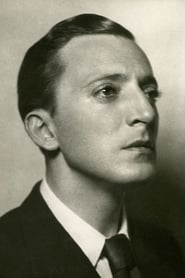
Gustav Machatý
Director
- Born
- May 9, 1901, Prague, Austria-Hungary (now Czech Republic)
- Died
- December 13, 1963
- Active
- 1919-1955
- Birth name
- Augustín Otokar Jan Machatý
Films directed 2
About Gustav Machatý
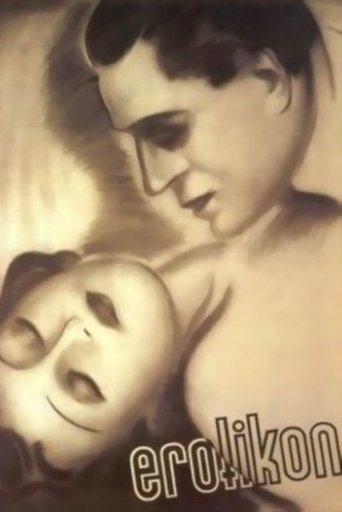
Gustav Machatý was a pioneering Czech film director and screenwriter whose work pushed the boundaries of cinematic expression during the late silent and early sound eras. Born in Prague, he began his career as a cinema pianist and actor before directing his first film at the age of 17. In the early 1920s, he traveled to Hollywood to apprentice under legendary directors D.W. Griffith and Erich von Stroheim, whose meticulous visual styles and interest in mature themes profoundly influenced his later work. Upon returning to Czechoslovakia, Machatý gained international acclaim for his visually stunning and psychologically complex films, most notably 'Erotikon' (1929) and 'Ecstasy' (1933). The latter film, starring a young Hedy Lamarr, became a global sensation and a subject of intense controversy for its depiction of female sexuality and nudity. Despite his early success, Machatý's subsequent career in Hollywood and Europe was hampered by censorship and the rigid studio system, leading him to spend much of his later life teaching and working in West Germany.
More about Gustav Machatý
Behind the camera
Machatý was a master of visual storytelling, favoring symbolic imagery, fluid camera movements, and extreme close-ups over heavy dialogue. His style was deeply influenced by the 'New Objectivity' (Neue Sachlichkeit) movement, using physical objects and architectural spaces to mirror the inner psychological states of his characters. He was renowned for his 'stylish eroticism,' treating mature subjects with a poetic and sophisticated lens that emphasized atmosphere and sensation.
Impact on culture
Gustav Machatý's impact on cinema is defined by his bold exploration of human sexuality and his contribution to the visual language of film. 'Ecstasy' is widely cited as the first non-pornographic film to portray sexual intercourse and the female orgasm, albeit through symbolic close-ups of the actress's face. This work challenged global censorship standards, including the Hays Code in the United States, and sparked a worldwide debate on the artistic merits of eroticism. His films were admired by contemporaries like Michelangelo Antonioni, who noted the 'tremendous impact' of Machatý's work on the development of modern cinematic aesthetics.
Lasting legacy
Machatý remains a cornerstone of Czech cinema history, representing a bridge between the silent era's experimentalism and the psychological realism of later decades. While his Hollywood career did not reach the heights of his European success, his early masterpieces 'Erotikon' and 'Ecstasy' are preserved as essential works of world cinema. He is remembered as a director who could convey profound emotional depth through 'images that speak for themselves,' influencing the way directors use objects and atmosphere to tell stories.
Who they inspired
His use of symbolic objects to represent internal desire influenced the European avant-garde and later filmmakers of the 1960s. His apprenticeship with Von Stroheim brought a European 'sophistication' to his work that later influenced the 'film noir' aesthetic in Hollywood, particularly in his 1945 film 'Jealousy.'
Off screen
Machatý was the son of a real estate investor/banker and grew up in a cultured environment. He was a polyglot and a skilled pianist, which informed the lyrical rhythm of his films. His personal life was marked by the tragedy of his first wife's suicide, which prompted his eventual return to Europe from the United States.
Education
Attended high school in Prague but did not graduate, choosing instead to enter the film industry as a teenager; later claimed a Doctor of Philosophy degree in some Hollywood biographies.
Career milestones
- Apprenticeship in Hollywood under D.W. Griffith and Erich von Stroheim (1920-1924)
- Directed 'The Kreutzer Sonata' (1927), a successful adaptation of Tolstoy's novella
- Gained international fame with the symbolist erotic drama 'Erotikon' (1929)
- Won the Best Director award at the Venice Film Festival for 'Ecstasy' (1934)
- Contracted by Metro-Goldwyn-Mayer (MGM) in the late 1930s
- Directed the film noir 'Jealousy' (1945) for Republic Pictures
- Served as a professor at the Deutsches Institut für Film und Fernsehen in Munich
Iconic roles
Must-see films
- The Kreutzer Sonata (1927)
- Erotikon (1929)
- From Saturday to Sunday (1931)
- Ecstasy (1933)
- Nocturno (1934)
- Jealousy (1945)
- Suchkind 312 (1955)
Awards
Nominations
- Mussolini Cup for Best Foreign Film (Nominee) - Venice Film Festival (1934) for 'Ecstasy'
Special recognition
- Recognized as a seminal figure of the first Czech New Wave
- Subject of major retrospectives at international film festivals, including Venice and Karlovy Vary
Worked often with
- Václav Vích (Cinematographer)
- Alexander Hackenschmied (Art Director/Editor)
- Vítězslav Nezval (Screenwriter/Poet)
- Jan Stallich (Cinematographer)
Studios
- Universal Pictures
- Elektafilm
- MGM
- RKO Pictures
- Republic Pictures
Family
- Maria Ray (1937–1951; her death)
- Helga Marlo (1951–1963; his death)
Did you know?
- Machatý was nicknamed 'Gus the Dutchman' during his early days at Universal Pictures.
- He reportedly discovered Marlene Dietrich and introduced her to director Joe May for 'Tragedy of Love'.
- He was highly superstitious about the number 14, considering it his lucky number.
- Hedy Lamarr's first husband, Friedrich Mandl, tried to buy every existing print of 'Ecstasy' to stop people from seeing her nude.
- He worked as a cinema pianist in his early teens before becoming a director.
- Mussolini reportedly requested a private screening of 'Ecstasy' after the Vatican condemned it.
- In Hollywood, he was once tasked with training a studio comedy lion named 'Humpy'.
- He introduced Rudolph Valentino to Pola Negri, sparking one of the most famous romances of the silent era.
In their own words
Images should speak for themselves, even without dialogue.
It is precisely certain objects and certain places that make films convey sensations to the audience.
Questions and answers
Who was Gustav Machatý?
Gustav Machatý was a prominent Czech film director and screenwriter known for his visually poetic and erotic dramas. He is best remembered for directing the controversial 1933 film 'Ecstasy'.
What films is Gustav Machatý best known for?
He is most famous for 'Erotikon' (1929) and 'Ecstasy' (1933). He also directed 'The Kreutzer Sonata' (1927) and the American film noir 'Jealousy' (1945).
When was Gustav Machatý born and when did he die?
He was born on May 9, 1901, in Prague and passed away on December 13, 1963, in Munich, West Germany.
What awards did Gustav Machatý win?
His most significant recognition was the Best Director award at the 1934 Venice Film Festival for 'Ecstasy'.
What was Gustav Machatý's directing style?
His style was characterized by 'New Objectivity,' using symbolic objects, fluid cinematography, and minimal dialogue to explore complex psychological and erotic themes.
Did Gustav Machatý work in Hollywood?
Yes, he had two stints in Hollywood: first as an apprentice in the 1920s and later as a contract director for MGM and RKO in the late 1930s and 40s.