Ecstasy
“The Most Talked About Picture in the World!”
About Ecstasy
Eva, a vibrant young woman, marries the wealthy but cold and elderly Emil, only to find herself trapped in a passionless marriage defined by his obsessive-compulsive need for order and lack of physical affection. After a disastrous wedding night where Emil prioritizes his routine over intimacy, Eva returns to her father's estate and seeks a divorce, eventually finding liberation in the countryside. While bathing nude in a lake, her horse bolts with her clothes, leading her to meet Adam, a young and virile engineer working on a nearby construction project. The two embark on a torrid, wordless affair that awakens Eva's dormant sensuality, but their bliss is threatened when a guilt-ridden Emil encounters Adam by chance. The film concludes with a tragic confrontation and a symbolic montage of labor and rebirth, as Eva chooses a path of independence and emotional awakening over the stifling conventions of her past.
Cast & crew
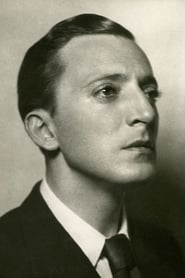

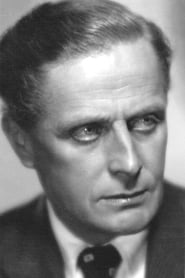
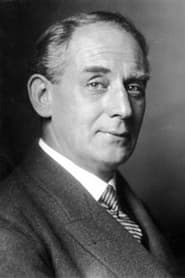
More films like this
More from Gustav Machatý
View all →More about Ecstasy
Production
- Release date
- January 20, 1933
- Country
- Czechoslovakia
- Budget
- Approximately 400,000 Czechoslovak koruna
- Box office
- Unknown; however, it was a massive international success despite being banned in several territories.
- Production
- Elektafilm
- Filmed in
- Barrandov Studios, Prague, Czechoslovakia, Jevany, Czechoslovakia (Lake scenes), High Tatras, Slovakia
Director Gustav Machatý was known for his perfectionism and visual storytelling, often prioritizing imagery over dialogue. The film was shot in three different language versions simultaneously: German, French, and Czech. Hedy Lamarr (then Hedy Kiesler) was only 18 years old during production and later claimed she was tricked into the nude scenes by the director using long-distance lenses and specific instructions she didn't fully understand at the time. The production was highly controversial from its inception due to its frank depiction of female desire and nudity.
Themes & topics
Historical background
Produced during the transition from silent to sound cinema, 'Ecstasy' reflects the avant-garde spirit of 1930s European filmmaking before the tightening grip of fascism and the Hays Code in America. In 1933, Czechoslovakia was a hub of artistic freedom, allowing for such a provocative exploration of sexuality. However, the film's release coincided with the rise of the Nazi party in neighboring Germany, where the film was eventually banned due to Lamarr's Jewish heritage and the film's 'degenerate' content. It stands as a bridge between the expressionism of the 1920s and the psychological realism that would follow.
Why this film matters
The film is a landmark in cinematic history for its bold treatment of female sexuality and its role in the career of Hedy Lamarr, who became one of Hollywood's most iconic stars. It challenged international censorship laws and forced a global conversation about art versus obscenity. Beyond the scandal, it is celebrated by film historians for its innovative use of sound and image, proving that cinema could communicate complex psychological states without heavy dialogue. It remains a primary example of the 'Poetic Realism' movement in Central European cinema.
Making of
The production was a technical marvel for the early 1930s, utilizing the newly built Barrandov Studios in Prague. Machatý worked closely with cinematographer Jan Stallich to create a 'visual poem' that utilized the Kuleshov effect to convey emotion through editing rather than words. The famous lake scene was filmed in the cold waters of Jevany, and Lamarr reportedly had to be warmed with blankets and cognac between takes. The director's obsession with symbolism is evident in the recurring motifs of water, horses, and machinery, which were meticulously planned during the storyboard phase. The editing process was extensive, as Machatý sought to create a rhythmic flow that mirrored the emotional states of the characters.
What critics said
Initial reviews were polarized; European critics praised its lyrical beauty and Machatý's direction, while American and religious critics condemned it as pornographic. The New York Times in 1936 called it 'an aesthetically pleasing but morally questionable' work. Modern critics view it as a masterpiece of visual storytelling, often comparing its rhythmic editing to the works of Eisenstein. It currently holds high regard in the canon of world cinema for its bravery and technical sophistication.
What audiences thought
The film was an underground sensation. Audiences flocked to see it wherever it wasn't banned, often driven by the notoriety of its nude scenes. In many cities, it played in 'adults only' theaters, creating a mystique that lasted for decades. Despite the controversy, audiences were often struck by the film's genuine emotional depth and the haunting beauty of its lead actress.
Visual style
Jan Stallich used soft-focus lenses and natural lighting to create a dreamlike, ethereal atmosphere. The film is noted for its extreme close-ups, particularly of Eva's face, and its use of 'subjective camera' to place the viewer in the protagonist's emotional state. The outdoor sequences utilize the natural landscape of the Czech countryside to symbolize freedom and fertility, contrasting with the rigid, geometric interiors of Emil's house.
Innovations
The film is a pioneer in the use of 'creative sound,' where non-diegetic sounds are used to enhance the psychological mood. It also utilized advanced editing techniques to create a sense of eroticism through suggestion and montage rather than explicit action. The synchronization of the three different language tracks was also a significant logistical feat for the era.
Music
The score by Giuseppe Becce is integral to the film, acting as a substitute for dialogue. Becce, who had previously worked on silent film scores, created a lush, Wagnerian soundtrack that swells with the characters' passions. The music is synchronized with the visual rhythm of the editing, particularly in the climax, where the sound of machinery blends with the orchestral themes.
Film restoration
The film has been extensively restored. In 2019, a 4K restoration was completed by the Czech National Film Archive, which premiered at the Venice Film Festival, returning the film to its original length and visual quality.
Did you know?
- This is widely considered the first non-pornographic film to depict a woman's orgasm on screen, achieved through close-ups of Hedy Lamarr's face.
- Hedy Lamarr's first husband, munitions tycoon Friedrich Mandl, reportedly spent over $300,000 trying to buy up every copy of the film to prevent people from seeing his wife nude.
- Pope Pius XI publicly denounced the film in the Vatican newspaper, L'Osservatore Romano, after it screened at the Venice Film Festival.
- The film was banned in the United States by the Customs Service for several years until a censored version was finally allowed in 1936.
- To achieve the look of an orgasm, the director reportedly pricked Lamarr's feet with a pin or used a safety pin to elicit a sharp physical reaction.
- The film features very little dialogue, relying instead on a lush musical score and highly expressive cinematography to tell its story.
- Hedy Lamarr's performance in this film is what ultimately caught the eye of Louis B. Mayer, leading to her Hollywood career.
- The movie was a sensation at the 2nd Venice International Film Festival in 1934, where Machatý won the award for Best Director.
- In some versions, a scene was added where Eva and Adam get married to appease censors who were outraged by the depiction of adultery.
- The film's title in Czech is 'Extase' and in German 'Ekstase'.
Awards & recognition
- Best Director - Venice International Film Festival (1934)
- City of Venice Cup for Best Foreign Film - Venice International Film Festival (1934)
Memorable scenes
- The bathing scene: Eva swims nude in a lake, a sequence that became one of the most famous and controversial in early cinema history.
- The horse chase: Eva's horse runs away with her clothes, forcing her to run through the woods naked, leading to her first encounter with Adam.
- The close-up of the orgasm: A revolutionary sequence focusing entirely on Eva's facial expressions to convey sexual climax.
- The ending montage: A rhythmic sequence of laborers and machinery that symbolizes the cycle of life and the protagonist's new beginning.
Influenced by
- The works of Sergei Eisenstein
- German Expressionism
- F.W. Murnau's 'Sunrise'
- The psychological theories of Sigmund Freud
This film influenced
- Lady Chatterley's Lover (various adaptations)
- The Dreamers
- And God Created Woman
- The Piano
Where else to watch
- The Criterion Channel
- HBO Max (occasionally)
- Kino Lorber (Blu-ray/DVD)
- YouTube (Public Domain versions, though often censored or low quality)
Famous quotes
Eva: 'I want to live, not just exist.' (Translated from Czech version context)
Emil: 'Everything must be in its place, even love.' (Contextual dialogue regarding his obsession with order)