
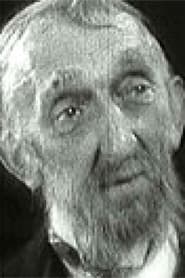
Eduard Šlégl
Actor
- Born
- March 27, 1869, Prague, Austria-Hungary (now Czech Republic)
- Died
- January 16, 1935
- Active
- 1926-1934
- Birth name
- Edvard Vincenc Schlögl
Films 1
About Eduard Šlégl
Eduard Šlégl was a distinguished Czech character actor who flourished during the transition from silent films to the early sound era of Czechoslovak cinema. Born in Prague as Edvard Vincenc Schlögl, he was a member of a prominent middle-class family and initially established himself as a successful businessman, operating shops on Wenceslas Square and Na Poříčí street. His entry into the film industry came later in life, often appearing alongside his famous son, the actor and director Čeněk Šlégl. Throughout the late 1920s and early 1930s, he became a staple of the Barrandov Studios, specializing in dignified supporting roles such as butlers, officials, and elderly gentlemen. His most internationally recognized contribution was a supporting role in Gustav Machatý's 1933 masterpiece 'Ecstasy', which gained worldwide notoriety for its artistic eroticism. Despite his relatively short active period in film, Šlégl appeared in dozens of productions, lending a sense of authentic bourgeois gravitas to the burgeoning Czech film industry before his passing in 1935.
More about Eduard Šlégl
On screen
Eduard Šlégl was known for his naturalistic and understated approach to character acting. He typically portrayed figures of authority or service—such as butlers, priests, and council members—with a quiet dignity and precise physical presence. His performance style was rooted in the realism of the era, avoiding the over-the-top theatricality often found in silent cinema, which allowed him to transition seamlessly into the more dialogue-heavy sound films of the 1930s.
Impact on culture
Eduard Šlégl represents the 'everyman' of early Czech cinema—the reliable character actor who provided the necessary social fabric for the films of the era. By appearing in 'Ecstasy', he became part of one of the most significant films in cinematic history, contributing to a work that challenged censorship and pushed the boundaries of visual storytelling. His presence in the comedies of Vlasta Burian helped define the 'First Republic' aesthetic of Czechoslovak film, which is still celebrated today as a pinnacle of national culture.
Lasting legacy
His legacy is preserved through the digital restoration of classic Czech films by the National Film Archive (NFA) in Prague. He is remembered as a vital part of a family dynasty that shaped Czech entertainment during the interwar period. Film historians value his performances for their authentic depiction of early 20th-century European social types, ranging from the aristocracy to the working class.
Who they inspired
He influenced the tradition of Czech character acting, where small, precisely etched roles are seen as essential to the film's overall atmosphere. His ability to maintain a professional acting career while also being a successful merchant served as a model for other 'civilian' performers of the time.
Off screen
Eduard Šlégl was born into a respected Prague family; his father was also named Eduard Schlögel (1842–1910) and his mother was Antonie Walterová. He was a businessman by trade before his acting career took off. He is most notably the father of Čeněk Šlégl, one of the most famous Czech actors and directors of the 1930s, with whom he shared the screen in several films.
Education
Educated in Prague; primary background in commerce and business management.
Career milestones
- Appeared in the internationally acclaimed and controversial film 'Ecstasy' (1933)
- Frequent collaborator with his son, the prominent Czech film star Čeněk Šlégl
- Featured in several early sound comedies starring the 'King of Comedians' Vlasta Burian
- Maintained a prolific output of over 30 films within a single decade
- Transitioned successfully from silent era productions like 'Pohorská vesnice' to major sound talkies
Iconic roles
- Vagrant/Man in the country inn in 'Ecstasy' (1933)
- The Butler in 'His Highness' Adjutant' (1933)
- The Priest in 'Páter Vojtěch' (1929)
- František Fleischhans in 'Imperial and Royal Field Marshal' (1930)
- The Court Marshal in 'Lelíček in the Services of Sherlock Holmes' (1932)
Must-see films
- Ecstasy (1933)
- Imperial and Royal Field Marshal (1930)
- Lelíček in the Services of Sherlock Holmes (1932)
- Anton the Sharpshooter (1932)
- Heave-Ho! (1934)
Special recognition
- Recognized as a key supporting figure in the Golden Age of Czechoslovak Cinema
Worked often with
- Čeněk Šlégl (Director/Actor)
- Vlasta Burian (Actor)
- Gustav Machatý (Director)
- Karel Lamač (Director)
- Martin Frič (Director)
Studios
- Elektafilm
- AB Studios (Barrandov)
- Slaviafilm
Family
- Information regarding his specific spouse is not publicly documented in standard film archives.
Did you know?
- He was the father of the legendary Czech film star Čeněk Šlégl.
- He did not start acting in films until he was in his late 50s.
- He appeared in three different language versions of the film 'Ecstasy' (Czech, German, and French).
- His birth name was the German-style 'Schlögl', but he used the Czech version 'Šlégl' for his film credits.
- He owned two prominent shops in the center of Prague while pursuing his acting career.
- His final film, 'Pozdní máj' (Late May), was released just months before his death.
- He worked with Hedy Lamarr before she became a major Hollywood icon.
In their own words
Quotes from his specific supporting roles are rarely preserved in English translation, as his impact was primarily visual and atmospheric within the Czech sound film tradition.
Questions and answers
Who was Eduard Šlégl?
Eduard Šlégl was a prominent Czech character actor of the 1920s and 1930s, best known for his roles in early sound films and for being the father of film star Čeněk Šlégl.
What films is Eduard Šlégl best known for?
He is most famous for his role in the controversial 1933 film 'Ecstasy' starring Hedy Lamarr, as well as popular Czech comedies like 'Imperial and Royal Field Marshal' and 'Anton the Sharpshooter'.
When was Eduard Šlégl born and when did he die?
He was born on March 27, 1869, in Prague and passed away on January 16, 1935, also in Prague.
What was Eduard Šlégl's acting style?
He was known for a dignified and realistic acting style, often playing authoritative or service-oriented characters like butlers and officials with great subtlety.
Did Eduard Šlégl win any awards?
While he did not receive individual acting awards, many of the films he appeared in, such as 'Ecstasy', won major international prizes including honors at the Venice Film Festival.