
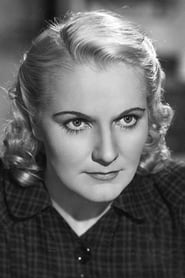
Jiřina Štěpničková
Actor
- Born
- April 3, 1912, Prague, Austria-Hungary (now Czech Republic)
- Died
- September 5, 1985
- Active
- 1931-1951, 1961-1984
- Birth name
- Jiřina Julie Štěpničková
Films 1
About Jiřina Štěpničková
Jiřina Štěpničková was a prominent Czech stage and film actress whose career spanned the Golden Age of Czechoslovak cinema and the post-war era. Born in Prague, she began her artistic journey at the Liberated Theatre under Jindřich Honzl before joining the National Theatre in 1930 and later the Vinohrady Theatre in 1936. During the 1930s and 1940s, she became one of the nation's most beloved stars, often portraying tragic, melancholic heroines and rural women, earning her the nickname 'The Czech Madonna.' Her life took a tragic turn in 1951 when she was lured into a trap by the communist secret police (StB) while attempting to defect to West Germany with her young son. Following a show trial in 1952, she was sentenced to 15 years in prison, of which she served nearly ten years in Pardubice despite numerous petitions for mercy from her fellow artists. After her release in 1960, she courageously returned to the stage and screen, eventually receiving official rehabilitation and the title of Merited Artist in 1968.
More about Jiřina Štěpničková
On screen
Štěpničková was known for her deeply emotional and authentic acting style, often specializing in 'tragic blondes' and rural heroines. She possessed a naturalistic presence that allowed her to transition seamlessly between avant-garde theater and mainstream cinema. Critics often noted her ability to convey profound internal suffering and moral purity, which led to her being cast in roles that embodied national virtues. Her performances were characterized by a blend of youthful vitality and a haunting, melancholic depth that resonated with the Czechoslovak public during the turbulent mid-century period.
Impact on culture
Jiřina Štěpničková was a symbol of Czech national identity during the 1930s and 40s, representing the 'ideal' Czech woman through her roles in rural dramas and historical epics. Her career and subsequent persecution became a poignant example of the tragic intersection between art and totalitarian politics in 20th-century Eastern Europe. She is remembered not only for her immense talent but also for her resilience and the moral courage she showed by refusing to collaborate with the Nazi regime and later surviving the brutality of the Stalinist era.
Lasting legacy
Her legacy is defined by her status as one of the greatest actresses of the pre-war Czechoslovak era. The 2020 film 'Past' (The Trap) dramatized her life and the betrayal she faced, introducing her story to a new generation. She remains a figure of immense respect in the Czech Republic, honored for her contributions to both the stage and the screen, and her life serves as a testament to the endurance of the human spirit under political oppression.
Who they inspired
She influenced generations of Czech actors through her psychological depth and naturalistic approach to performance. Her son, Jiří Štěpnička, became one of the leading actors of the National Theatre, carrying on her artistic lineage. Her 'Czech Madonna' archetype set a standard for rural and tragic portrayals in Czech cinema for decades.
Off screen
Štěpničková was married to medical student Ilja Kopřiva from 1942 to 1943. Following the war, she lived briefly in London, where she had a son, Jiří, with the artist Jan Samec. Her attempt to flee Czechoslovakia in 1951 was motivated by a desire for freedom for herself and her son, but it resulted in her son being placed in a state children's home while she was imprisoned. She remained dedicated to her son, who eventually followed in her footsteps to become a prominent actor.
Education
Studied at the Prague Conservatory (Prague State Conservatory) but left before graduation to join the National Theatre.
Career milestones
- Joined the National Theatre in Prague at the age of 18 in 1930.
- Achieved national stardom with the title role in the rural drama 'Maryša' (1935).
- Awarded the National Prize for her performance in 'Muzikantská Liduška' in 1940.
- Maintained a successful career during WWII while refusing to act in German-produced films.
- Survived a decade of political imprisonment (1951–1960) and successfully resumed her career.
- Named a Merited Artist (Zasloužilá umělkyně) in 1968 during the Prague Spring.
Iconic roles
- Maryša in 'Maryša' (1935)
- Liduška in 'Muzikantská Liduška' (1940)
- Viktorka in 'Babička' (1940)
- Barbora Hlavsová in 'Barbora Hlavsová' (1942)
- Dorotka in 'Strakonický dudák' (Stage)
Must-see films
- Maryša (1935)
- Muzikantská Liduška (1940)
- Babička (Grandmother, 1940)
- Jan Cimbura (1941)
- Witchhammer (Kladivo na čarodějnice, 1970)
Awards
- National Prize (Národní cena) for 'Muzikantská Liduška' (1940)
- Merited Artist (Zasloužilá umělkyně) (1968)
- Lady of Czech Culture (Dáma české kultury) - In Memoriam (2018)
Special recognition
- Rehabilitated by the Czechoslovak government in 1969
- Street named 'Jiřiny Štěpničkové' in the Zbraslav district of Prague
- Commemorative plaque at her former residence in Prague
Worked often with
- Václav Wasserman (Director)
- Otakar Vávra (Director)
- Otomar Korbelář (Actor)
- Gustav Machatý (Director)
- Jindřich Honzl (Director/Mentor)
Studios
- National Theatre (Národní divadlo)
- Vinohrady Theatre (Divadlo na Vinohradech)
- Barrandov Studios
- Realist Theatre (Realistické divadlo)
Family
- Ilja Kopřiva (1942-1943)
Did you know?
- She provided the voice for Hedy Lamarr in the Czech version of the scandalous 1933 film 'Ecstasy'.
- Her arrest in 1951 was a 'sting operation' involving a fake letter from director František Čáp.
- Some of her colleagues at the Vinohrady Theatre reportedly signed a petition calling for her execution during her trial.
- She spent nearly 10 years in the Pardubice labor camp, where she was forced to sew uniforms.
- She was a talented athlete in her youth, excelling in swimming and tennis.
- Despite her imprisonment, she returned to cinema in the 1960s, appearing in the classic 'Witchhammer' (1970).
- Her son Jiří did not know the truth about her 'escape' attempt until he was an adult.
In their own words
I have to admit, I was young and stupid... (Quoted by a colleague who apologized for voting for her condemnation)
I knew exactly what I wanted. (Describing her early career ambition)
Questions and answers
Who was Jiřina Štěpničková?
Jiřina Štěpničková was a legendary Czech film and stage actress, widely considered one of the greatest stars of the 1930s and 40s. She is equally famous for her tragic life story, involving a decade-long imprisonment by the communist regime after a failed attempt to defect.
What films is Jiřina Štěpničková best known for?
She is best known for her roles in 'Maryša' (1935), 'Muzikantská Liduška' (1940), and the 1940 adaptation of 'Babička' (Grandmother). Later in her career, she appeared in the acclaimed historical drama 'Witchhammer' (1970).
Why was Jiřina Štěpničková imprisoned?
She was arrested in 1951 after being lured into a trap by the secret police while trying to cross the border into West Germany. She was sentenced to 15 years for treason and espionage in a politically motivated show trial.
What was Jiřina Štěpničková's acting style?
She was known for a deeply authentic and emotional style, often portraying melancholic, virtuous, and strong-willed women. Her ability to bring psychological depth to rural and traditional characters earned her the title of the 'Czech Madonna'.
Is Jiřina Štěpničková related to other famous actors?
Yes, her son is Jiří Štěpnička, who became a highly celebrated actor in the Czech Republic and a long-time member of the National Theatre in Prague.