
Charlotte Susa
Actor
- Born
- March 1, 1898, Memel, East Prussia (now Klaipėda, Lithuania)
- Died
- April 8, 1976
- Active
- 1926-1941
- Birth name
- Charlotta Wegener
Films 1
About Charlotte Susa
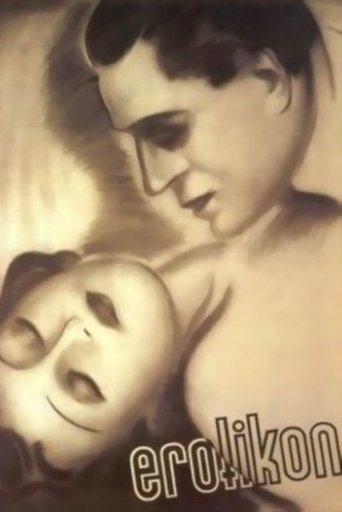
Charlotte Susa was a prominent German stage and film actress who rose to fame during the transition from the silent era to the early talkies. Born in Memel, East Prussia, she began her artistic journey as a singer and stage performer before making her cinematic debut in the mid-1920s. She quickly became a sought-after leading lady in Weimar cinema, often cast as sophisticated, elegant, and sometimes 'femme fatale' characters due to her striking features and commanding presence. In 1929, she delivered one of her most memorable performances in Gustav Machatý's 'Erotikon', a film that pushed the boundaries of visual storytelling and sensuality. Her success in Germany eventually caught the attention of Hollywood scouts, leading her to sign a contract with MGM in 1932. However, like many European stars of the era, her transition to the American film industry was fraught with challenges, and she eventually returned to Germany to continue her career on stage and in film until her retirement.
More about Charlotte Susa
On screen
Susa was known for her 'cool' and sophisticated acting style, often portraying modern, independent women of the upper class. She possessed a statuesque beauty and a refined screen presence that allowed her to convey deep emotion through subtle facial expressions rather than theatrical gestures. Her voice, described as deep and melodic, helped her transition smoothly into sound films, where she often played roles requiring a certain level of gravitas and mystery.
Impact on culture
Charlotte Susa represented the 'New Woman' of the Weimar Republic—independent, stylish, and sexually liberated. Her performance in 'Erotikon' is cited by film historians as a landmark in the evolution of cinematic eroticism, handled with a poetic sensibility that was rare for the time. She helped bridge the gap between European art cinema and the commercial demands of the early sound era.
Lasting legacy
While her name is less frequently mentioned today than contemporaries like Marlene Dietrich, Susa remains a cult figure among silent film enthusiasts. Her work in 'Erotikon' ensures her place in film history as a key figure in the development of visual storytelling. She is remembered as a symbol of the sophisticated, cosmopolitan culture of pre-war Berlin.
Who they inspired
Her sophisticated screen persona influenced the 'European' archetype in Hollywood, paving the way for other continental actresses to be marketed as exotic and mysterious leading ladies.
Off screen
Charlotte Susa was married to the actor and director Paul Wegener for a period, though the marriage ended in divorce. She was known for her private nature and rarely engaged with the tabloid press of the era. After her stint in Hollywood proved unsatisfying, she returned to Germany and focused heavily on theater work in Berlin and Basel. She eventually retired from the public eye, living quietly until her death in Basel, Switzerland.
Education
Trained in classical singing and dramatic arts in Tilsit and Berlin.
Career milestones
- Established herself as a major star of the Weimar Republic cinema in the late 1920s.
- Starring role in the internationally acclaimed silent drama 'Erotikon' (1929).
- Signed a prestigious contract with Metro-Goldwyn-Mayer (MGM) in 1932.
- Successfully transitioned from silent films to 'talkies' in the early 1930s.
- Maintained a prolific stage career alongside her film work throughout the 1930s.
Iconic roles
- Gidda in 'Erotikon' (1929)
- The Baroness in 'The Prince of Rogues' (1928)
- The Singer in 'Zwei Menschen' (1930)
- The mysterious woman in 'The Road to Rio' (1931)
Must-see films
- Erotikon (1929)
- The Prince of Rogues (1928)
- Zwei Menschen (1930)
- The Road to Rio (1931)
- The Tiger (1930)
- The Great Unknown (1927)
Special recognition
- Recognized as one of the 'Top Ten' most beautiful women in German cinema by contemporary film magazines in 1930.
- Subject of numerous high-fashion photography spreads in 'Die Dame' and 'Uhu' during the late 1920s.
Worked often with
- Gustav Machatý (Director)
- Hans Albers (Actor)
- Willy Fritsch (Actor)
Studios
- UFA
- MGM
- Terra Film
Family
- Paul Wegener (married 1930s, divorced)
Did you know?
- She was often compared to Greta Garbo by the American press when she arrived in Hollywood.
- Despite her MGM contract, she never actually appeared in a major American film, as the studio struggled to find the right vehicle for her.
- She chose her stage name 'Susa' as a tribute to her Italian ancestry on her mother's side.
- She was a trained opera singer before she ever stepped in front of a camera.
- Susa was known for her extensive collection of modern art and her interest in the Bauhaus movement.
- She lived in Switzerland for the final decades of her life, completely detached from the film industry.
In their own words
The camera sees the soul, not just the face. If there is no thought behind the eyes, the image is empty.
Hollywood is a factory of dreams, but sometimes the dreams are not your own.
Questions and answers
Who was Charlotte Susa?
Charlotte Susa was a famous German actress of the silent and early sound eras, best known for her roles in Weimar cinema. She was celebrated for her sophisticated beauty and her role in the landmark film 'Erotikon'.
What films is Charlotte Susa best known for?
She is most famous for the 1929 silent masterpiece 'Erotikon', as well as 'The Road to Rio' (1931) and 'Zwei Menschen' (1930).
When was Charlotte Susa born and when did she die?
She was born on March 1, 1898, in Memel, East Prussia, and passed away on April 8, 1976, in Basel, Switzerland.
Did Charlotte Susa ever work in Hollywood?
Yes, she signed a contract with MGM in 1932 and moved to Hollywood, but she never appeared in a major film there and eventually returned to Europe.
What was Charlotte Susa's acting style?
She was known for a restrained, elegant, and modern acting style, often portraying high-society women with a sense of mystery and independence.