Beda Saxl
Actor
- Born
- circa 1900, Prague, Austria-Hungary (now Czech Republic)
- Active
- 1929-1929
Films 1
About Beda Saxl
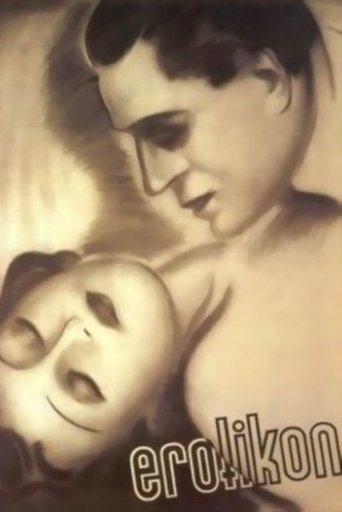
Beda Saxl was a Czechoslovakian stage and film actor who remains a mysterious figure in the annals of European silent cinema, primarily remembered for a singular, high-profile performance. He emerged from the vibrant theatrical scene of Prague during the interwar period, a time when the city was a melting pot of German and Czech avant-garde expressionism. Saxl's most significant contribution to film history came in 1929 when he was cast by the visionary director Gustav Machatý in the visually stunning silent masterpiece 'Erotikon' (also known as 'Seduction'). In this film, Saxl portrayed the character of Hilmer, the 'other man' or the seducer, playing opposite the legendary Ita Rina in a role that required a sophisticated blend of charm and predatory intent. Despite the film's international success and its status as a landmark of poetic realism and eroticism in silent film, Saxl did not transition into a prolific screen career. His presence in 'Erotikon' is characterized by the stylized, understated acting typical of the late silent era's transition toward psychological realism. Following this peak, Saxl largely disappeared from the cinematic record, likely returning to the stage or being affected by the geopolitical upheavals that soon engulfed Central Europe.
More about Beda Saxl
On screen
Saxl employed a restrained, naturalistic approach that contrasted with the broader histrionics of early silent cinema. His performance in 'Erotikon' is noted for its reliance on subtle facial expressions and body language to convey a sense of upper-class detachment and seductive allure. He utilized the 'Kuleshov effect' principles prevalent in European montage at the time, allowing his stillness to be imbued with meaning by the film's rhythmic editing.
Impact on culture
Beda Saxl's impact is tied inextricably to the cultural shockwaves caused by 'Erotikon.' As the catalyst for the film's central conflict, his character helped define the 'modern man' in 1920s cinema—someone who was both attractive and morally ambiguous. The film's frank depiction of desire, facilitated by Saxl's performance, helped pave the way for more mature themes in European cinema before the imposition of stricter censorship codes in the 1930s.
Lasting legacy
Saxl remains a 'one-hit wonder' of the silent era, but his contribution is immortalized because 'Erotikon' is frequently cited by film historians as one of the most beautiful films ever made. His image, captured in the soft-focus, high-contrast lighting of Václav Vích, continues to be studied in film schools as an example of late-silent era aesthetics. He represents the lost generation of Central European artists whose careers were truncated by the advent of sound and political instability.
Who they inspired
His portrayal of the suave, somewhat villainous seducer influenced the 'European lover' archetype that would later be popularized in Hollywood by actors like Charles Boyer.
Off screen
Very little is documented regarding Saxl's private life outside of his brief tenure in the Prague film industry. He was part of the German-speaking artistic circles in Prague, which were decimated or dispersed during the late 1930s due to the rise of the Nazi regime and the subsequent occupation of Czechoslovakia.
Education
Likely trained in classical theater in Prague or Vienna, given the technical proficiency shown in his singular film role.
Career milestones
- Cast as a lead in Gustav Machatý's internationally acclaimed silent film 'Erotikon' (1929)
- Collaborated with the pioneering cinematographer Václav Vích
- Participated in one of the first European films to push the boundaries of onscreen eroticism and visual symbolism
- Represented the sophisticated 'urban' archetype in late 1920s Czechoslovakian cinema
Iconic roles
- Hilmer in 'Erotikon' (1929)
Must-see films
- Erotikon (1929)
Special recognition
- His performance is preserved in the Czech National Film Archive as part of the country's cinematic heritage.
Worked often with
- Gustav Machatý (Director)
- Ita Rina (Actress)
- Olaf Fjord (Actor)
- Václav Vích (Cinematographer)
Studios
- G.-M.-Film
Did you know?
- Saxl was chosen for 'Erotikon' specifically because his face fit the 'modern, cosmopolitan' look director Gustav Machatý desired.
- The film 'Erotikon' was so controversial that it was banned or heavily censored in several countries, yet Saxl's performance remained a focal point of the drama.
- Despite the film's title, Saxl's performance is noted for its psychological depth rather than mere physical presence.
- He is often confused with other actors of the era due to the rarity of his filmography.
- His primary career was likely on the stage, which was common for actors in the burgeoning Czech film industry of the 1920s.
In their own words
The film 'Erotikon' relies on visual poetry rather than dialogue, so Saxl's 'quotes' are found in his expressive glances and the visual storytelling of the silent frame.
Questions and answers
Who was Beda Saxl?
Beda Saxl was a Czechoslovakian actor primarily known for his leading role in the 1929 silent film 'Erotikon.' He was a part of the artistic movement in Prague that sought to elevate cinema to a form of visual poetry.
What films is Beda Saxl best known for?
He is almost exclusively known for the masterpiece 'Erotikon' (1929), directed by Gustav Machatý. This film is considered one of the pinnacles of silent cinema for its cinematography and mature themes.
When was Beda Saxl active in the film industry?
His recorded film activity is centered around 1929. While he may have had a career in theater before or after, 'Erotikon' remains his sole major cinematic contribution.
What was Beda Saxl's acting style?
Saxl practiced a restrained and sophisticated style of acting that relied on subtle facial expressions and a commanding physical presence, fitting the 'cosmopolitan' aesthetic of late 1920s European film.
What is the legacy of Beda Saxl?
His legacy is tied to the survival and critical reappraisal of 'Erotikon.' As a key figure in a film that redefined visual storytelling, he remains a person of interest for silent film historians and enthusiasts of avant-garde cinema.