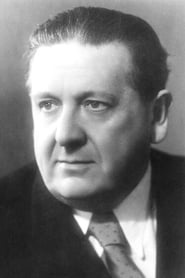
Theodor Pištěk
Actor
- Born
- June 13, 1895, Prague, Austria-Hungary (now Czech Republic)
- Died
- August 5, 1960
- Active
- 1921-1959
Films 2
About Theodor Pištěk
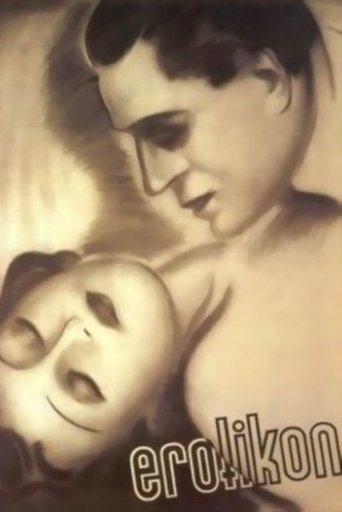
Theodor Pištěk was a titan of Czech cinema, whose career spanned the transition from the silent era to the Golden Age of Czechoslovak film. Born into a theatrical family, he initially studied law but was inexorably drawn to the stage and screen, making his film debut as early as 1921. He became one of the most prolific actors in European history, appearing in over 200 films and often playing authoritative yet comedic figures, such as fathers, factory owners, or aristocrats. His collaboration with director Gustav Machatý in the 1929 silent masterpiece 'Erotikon' showcased his ability to handle sophisticated, adult dramas, though he was equally beloved for his comedic timing in popular 'Lidová veselohra' (folk comedies). Throughout the 1930s and 1940s, he was a fixture of the Barrandov Studios, frequently paired with his close friend and fellow legend Vlasta Burian. Despite the political upheavals in Central Europe, Pištěk remained a beloved public figure until his death, representing the elegance and humor of the First Republic's cinematic tradition.
More about Theodor Pištěk
On screen
Pištěk was known for his 'civilian' acting style, which favored naturalism over the exaggerated gestures common in early silent cinema. He possessed a commanding physical presence and a distinctive, resonant voice that made him ideal for roles of authority, yet he infused these characters with a sense of warmth, fallibility, and dry wit. His ability to play the 'straight man' to more eccentric comedians made him an indispensable ensemble player.
Impact on culture
Theodor Pištěk was instrumental in defining the 'Czech character' on screen during the interwar period. He helped establish a domestic film industry that could compete with German and American imports by creating relatable, localized archetypes. His transition from silent to sound film served as a bridge for audiences, maintaining a sense of cultural continuity during a period of rapid technological and political change.
Lasting legacy
Pištěk is remembered as the 'Grand Old Man' of Czech cinema. His filmography serves as a visual record of the evolution of Czech society from the Austro-Hungarian era through the First Republic and into the post-WWII period. His son, Theodor Pištěk Jr., carried on the family legacy by winning an Academy Award for Costume Design, cementing the Pištěk name in international film history.
Who they inspired
He influenced generations of Czech character actors who sought to emulate his effortless blend of dignity and comedy. His work with Vlasta Burian set the standard for comedic duos in Central European cinema, emphasizing timing and verbal repartee over slapstick.
Off screen
Theodor Pištěk was the son of the famous theater director and actor Jan Pištěk and actress Marie Píštěková. He was married to actress Máňa Ženíšková, who came from a prominent artistic family (her grandfather was the painter František Ženíšek). Their marriage was one of the most celebrated 'power couples' in the early Czech film industry, and they often appeared in films together.
Education
He studied at a gymnasium in Prague and subsequently enrolled in the Faculty of Law at Charles University, though he left before graduating to pursue his passion for the theater.
Career milestones
- Starred in the internationally acclaimed silent film 'Erotikon' (1929) directed by Gustav Machatý
- Co-founded the film production company 'Biografia' in the early 1920s
- Became the most frequent on-screen partner of the 'King of Comedians' Vlasta Burian
- Successfully transitioned from silent film to 'talkies' with the 1930 film 'C. a k. polní maršálek'
- Directed several films in the 1920s and 1930s, including 'Pramen lásky'
- Maintained a continuous career through the Nazi occupation and the subsequent nationalization of the film industry
Iconic roles
- Hilmar in Erotikon (1929)
- The Count in C. a k. polní maršálek (1930)
- The Father in Muži v offsidu (1931)
- Alois Kohout in Přednosta stanice (1941)
- The King in Princezna se zlatou hvězdou (1959)
Must-see films
- Erotikon (1929)
- C. a k. polní maršálek (1930)
- Muži v offsidu (1931)
- Anton Špelec, ostrostřelec (1932)
- Ducháček to zařídí (1938)
- Přednosta stanice (1941)
- U pokladny stál... (1939)
- Princezna se zlatou hvězdou (1959)
Awards
- State Prize for Acting (1925)
- Title of Merited Artist (Zasloužilý umělec) awarded by the Czechoslovak government (1955)
Special recognition
- Commemorative plaque at his birthplace in Prague
- Posthumous recognition as a foundational figure of the Barrandov Studios 'Walk of Fame' equivalents in Czech film history
Worked often with
- Vlasta Burian (Actor)
- Karel Lamač (Director)
- Martin Frič (Director)
- Anny Ondra (Actress)
- Gustav Machatý (Director)
Studios
- AB Studios (Barrandov)
- Lucernafilm
- Meissner Film
Family
- Máňa Ženíšková (1930-1960)
Did you know?
- He appeared in over 200 films, making him one of the most prolific actors in the history of Czech cinema.
- His son, Theodor Pištěk, designed the costumes for Miloš Forman's 'Amadeus' (1984) and won an Oscar.
- He was an avid sportsman and was particularly fond of motoring and football.
- During the silent era, he often played 'lover' roles before transitioning into the 'father' and 'authority figure' roles he became famous for.
- He remained active in film until the very year of his death, with his final role being a King in a classic fairy tale.
- He was known for his incredible memory and rarely needed more than one take for his lines.
In their own words
In 'Erotikon', the silence was our greatest dialogue; we had to speak with our souls through our eyes.
Acting is not about pretending to be someone else, but about finding that person within yourself and letting them breathe.
Questions and answers
Who was Theodor Pištěk?
Theodor Pištěk was a legendary Czech actor and director who became one of the most prominent figures of the European silent and early sound eras. He appeared in over 200 films and was a cornerstone of the Czechoslovak film industry for four decades.
What films is Theodor Pištěk best known for?
He is best known for the silent drama 'Erotikon' (1929) and a series of classic comedies alongside Vlasta Burian, such as 'C. a k. polní maršálek' and 'Anton Špelec, ostrostřelec'.
When was Theodor Pištěk born and when did he die?
He was born on June 13, 1895, in Prague and passed away on August 5, 1960, in the same city.
What awards did Theodor Pištěk win?
He received the State Prize for Acting in 1925 and was honored with the title of Merited Artist in 1955 for his lifelong contribution to Czech culture.
What was Theodor Pištěk's acting style?
He was celebrated for his naturalistic and 'civilian' approach, moving away from theatrical exaggeration to provide nuanced performances that balanced authority with humor.