Ita Rina
Actor
- Born
- July 7, 1907, Divača, Austria-Hungary (now Slovenia)
- Died
- May 10, 1979
- Active
- 1927-1939, 1960
- Birth name
- Italina Lida Kravanja
Films 1
About Ita Rina
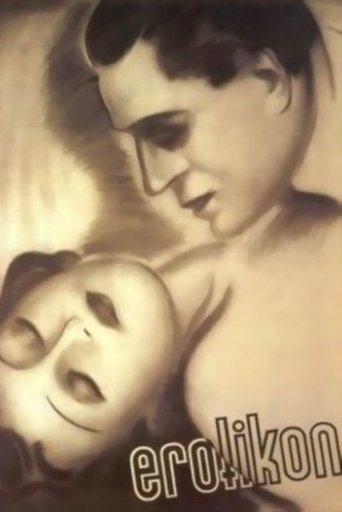
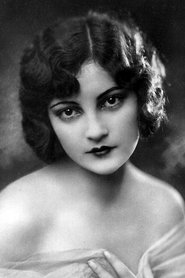
Ita Rina was a pioneering Slovenian actress who rose to international stardom as one of the most significant film icons of Central Europe during the late silent and early sound eras. Born Italina Lida Kravanja in Divača, she began her journey into the spotlight after winning the Miss Slovenia beauty pageant in 1926, which led to a screen test in Berlin despite her mother's initial disapproval. She made her cinematic debut in 1927 and quickly gained attention for her natural screen presence and striking beauty, but it was her collaboration with Czech director Gustav Machatý in the 1929 masterpiece 'Erotikon' that cemented her status as a global sensation. Known for her ability to convey deep psychological tension and sensuality, she became a symbol of the modern, emancipated woman of the late 1920s. At the height of her fame, she famously turned down a lucrative contract from Hollywood to remain in Europe and marry her fiancé, Miodrag Đorđević. Following her marriage in 1931, she converted to Serbian Orthodoxy, took the name Tamara Đorđević, and gradually stepped away from the limelight to focus on her family. Her career effectively ended in the late 1930s, though she made a final, poignant return to the screen in the 1960 science fiction film 'Atomic War Bride'.
More about Ita Rina
On screen
Ita Rina was celebrated for her 'photogenic' quality and a modern, understated acting style that relied heavily on expressive close-ups and emotional nuance. Unlike the exaggerated gestures common in early silent cinema, her performances were characterized by a naturalistic sensuality and a psychological depth that conveyed longing, pain, and desire. Critics often noted her 'ardor and charm,' describing her as an actress who could say little yet conceal nothing through her gaze.
Impact on culture
Ita Rina was the first true international film star from the Balkans, bridging the gap between Eastern European talent and the major Western European film hubs of Berlin and Paris. Her role in 'Erotikon' was a landmark in cinematic history, pushing the boundaries of eroticism and visual storytelling in the late silent era. She represented the 'New Woman' of the 1920s—independent, visually striking, and emotionally complex—and her image graced countless postcards and magazines across the continent.
Lasting legacy
Her legacy is preserved as a symbol of artistic integrity, famously remembered for choosing love and family over the allure of Hollywood fame. In Slovenia and Serbia, she remains a legendary figure; her life has been the subject of multiple documentaries and books. The Slovenian Cinematheque and various film festivals continue to celebrate her work, ensuring her place as a pioneer of European cinema and a key figure in the transition from silent to sound film.
Who they inspired
Rina influenced a generation of European actresses with her naturalistic approach to screen acting. Her collaboration with Gustav Machatý helped define the 'Czech New Wave' precursors of the 1930s, emphasizing visual poetry over theatricality. Her decision to stay in Europe also paved the way for other regional actors to seek careers in the German and French film industries without necessarily moving to America.
Off screen
In 1931, Rina married Miodrag Đorđević, a Serbian engineer she had met years earlier. To marry him, she converted from Roman Catholicism to Serbian Orthodoxy and adopted the name Tamara Đorđević. The couple had two children and lived primarily in Belgrade. During World War II, they fled the bombing of Belgrade to Vrnjačka Banja. In her later years, suffering from asthma, she moved to Budva, Montenegro, where she cared for her ailing husband until her death.
Education
Attended gymnasium in Ljubljana; later received formal training in acting, diction, dancing, driving, and riding in Berlin under the mentorship of Peter Ostermayr.
Career milestones
- Crowned Miss Slovenia in 1926, launching her path to stardom
- International breakthrough in the controversial silent drama 'Erotikon' (1929)
- Starring in 'Tonka of the Gallows' (1930), the first Czech sound film
- Famously declined a major Hollywood contract to prioritize her personal life and marriage
- Became a major cultural icon in Germany, Czechoslovakia, and Yugoslavia during the 1930s
- Final screen appearance in the acclaimed Yugoslav film 'Atomic War Bride' (1960)
Iconic roles
Must-see films
- Erotikon (1929)
- Tonka of the Gallows (1930)
- Spring's Awakening (1929)
- The Last Supper (1928)
- The Song of the Black Mountains (1933)
- Atomic War Bride (1960)
Awards
- Golden Arena Award (shared by film 'Rat' for Best Film/Director, 1960)
- Honorary recognition at the Pula Film Festival
Nominations
- Venice Film Festival Golden Lion Nomination (for 'Rat', 1960)
Special recognition
- Slovenian Cinematheque Retrospective (2007)
- Subject of the documentary 'Ita Rina: The Film Star Who Said No to Hollywood' (2016)
- Commemorative plaque in her birthplace of Divača
- Museum dedicated to her life in the Škratelj House, Divača
Worked often with
- Gustav Machatý (Director)
- Olaf Fjord (Actor)
- Karl Anton (Director)
- Václav Vích (Cinematographer)
Studios
- Ostermayr Film (Germany)
- Avala Film (Yugoslavia)
- UFA (Germany)
Family
- Miodrag Đorđević (1931-1979)
Did you know?
- She secretly entered the Miss Slovenia contest without her mother's permission.
- At the Paris premiere of 'Erotikon', the audience was so enamored that they carried her out of the theater in their arms.
- A French abbot was so outraged by the 'erotic' posters for her film that he personally tore them down in Paris.
- She was a bank clerk in Ljubljana before her film career began.
- She had to learn to drive and ride horses specifically for her first film roles in Berlin.
- Her name change to Tamara was a requirement for her conversion to the Orthodox faith.
- She worked as a co-production advisor for Avala Film later in her life.
- She died of an asthma attack in 1979.
In their own words
I wanted to be named Ljubica, but the Russian priest would not allow that name. (Regarding her conversion to Tamara)
It's either Hollywood or me. (The ultimatum given by her husband, which she often recounted as the turning point of her career)
Questions and answers
Who was Ita Rina?
Ita Rina was a famous Slovenian actress and beauty queen who became a major star of European silent cinema in the late 1920s. She is best known for her role in the controversial film 'Erotikon' and for being the first international film star from Yugoslavia.
What films is Ita Rina best known for?
She is most famous for the silent masterpiece 'Erotikon' (1929) and 'Tonka of the Gallows' (1930), which was the first Czech sound film. She also appeared in 'Spring's Awakening' and the 1960 film 'Atomic War Bride'.
When was Ita Rina born and when did she die?
She was born on July 7, 1907, in Divača, Austria-Hungary (now Slovenia), and passed away on May 10, 1979, in Budva, Yugoslavia (now Montenegro).
Why did Ita Rina turn down Hollywood?
At the height of her fame, her fiancé Miodrag Đorđević gave her an ultimatum to choose between a Hollywood career and their life together. She chose him, moved to Belgrade, and largely retired from professional acting to raise a family.
What was Ita Rina's acting style?
Rina was known for her modern, naturalistic style that utilized subtle facial expressions and intense close-ups. She was praised for her ability to portray complex emotions and sensuality without the over-the-top theatricality typical of many silent film stars.