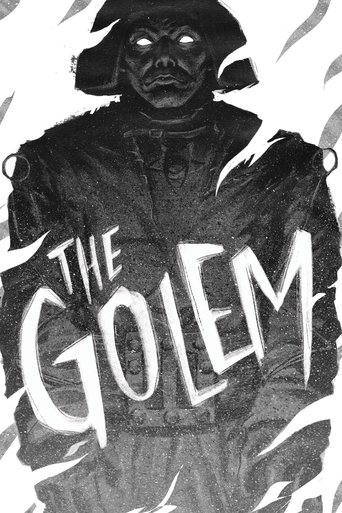
The Golem
"Paul Wegener's lost 1915 Prague Golem prelude."
Keys: Space play/pause · ←/→ 10s · F fullscreen · M mute · </> speed
About this film
This mostly lost film is often confused with director Paul Wegener third and readily available interpretation of the legend; Der Golem, wie er in die Welt kam (1920). In this version of the golem legend, the golem, a clay statue brought to life by Rabbi Loew in 16th century Prag.
Cast & crew
More films like this

More Horror films
View all →


More from Paul Wegener
View all →
More about this film
About the production
Release dateJanuary 15, 1915 (Germany)
Box officeUnknown
ProductionDeutsche Bioscop GmbH, Union-Film GmbH
Filmed inBerlin, Germany, Studio locations in Berlin
This was Paul Wegener's first of three Golem films and was groundbreaking for its time in terms of special effects and makeup. The film was shot during World War I, which created significant production challenges including material shortages and limited resources. Wegener himself portrayed the Golem, spending hours in the elaborate makeup and costume that restricted his movement and vision. The production used innovative techniques including forced perspective and detailed miniature work to create the illusion of a massive clay creature.
Themes
Creation and responsibilityThe dangers of unchecked scientific ambitionPersecution and protection of minoritiesUnrequited love and its destructive potentialThe nature of humanity and consciousness
Themes & topics
golemclay statueantique dealerrampageunrequited loveJewish folklorePraguesupernaturalhorrorexpressionist cinemalost filmsilent filmcreature feature1910sGerman cinema
Historical background
The Golem (1915) reached screens through Deutsche Bioscop GmbH. Exhibitors of the time built silent-era bills that mixed shorts, features, and live acts, so a clear premise helped The Golem travel between cities and exchange markets.
Why this film matters
Archivists and revival programmers still cite The Golem (1915) when tracing studio habits, casting pools, and the visual rhetoric audiences once took for granted. Even modest surviving prints help map how The Golem fit beside competing releases of its day.
Making of
The production of 'The Golem' in 1915 faced numerous challenges due to the ongoing World War I. Resources were scarce, and the film crew had to be creative with materials to create the Golem's distinctive clay-like appearance. Paul Wegener, both director and star, worked closely with makeup artists to develop a revolutionary technique using a combination of putty, cotton, and special paints to achieve the creature's distinctive texture. The film's special effects, while primitive by modern standards, were groundbreaking for their time, incorporating clever camera tricks and matte paintings to create the illusion of a massive clay figure. The production team constructed elaborate sets representing both ancient and modern Prague, with particular attention to detail in the synagogue scenes where the Golem is discovered. Despite the wartime conditions, the film managed to attract significant investment due to Wegener's growing reputation in German cinema.
What critics said
Trade coverage around 1915 discussed The Golem for pacing, clarity, and program fit rather than blockbuster grosses. Later writers value it as evidence of period style and as a reference point beside other films from the same era.
Did you know?
- This is the first of three Golem films directed by Paul Wegener, followed by 'The Golem and the Dancing Girl' (1917) and the famous 'The Golem: How He Came into the World' (1920)
- The film is considered mostly lost, with only fragments and still photographs surviving today
- Paul Wegener was so committed to the role that he studied Jewish mysticism and Kabbalistic texts to understand the legend's origins
- The Golem makeup took up to four hours to apply and was extremely heavy, causing Wegener considerable physical strain during filming
- Despite being made during WWI, the film managed to secure international distribution, which was rare for German productions at the time
- The film's success established the Golem as a recurring figure in German cinema and horror
- Original promotional materials emphasized the film's connection to authentic Jewish folklore from Prague
- The surviving fragments are preserved at the Bundesarchiv-Filmarchiv in Berlin
- The film was one of the earliest to explore the theme of artificial intelligence and the consequences of creating sentient life
- Wegener's portrayal of the Golem influenced countless later monster performances in cinema
Visual style
The cinematography of 'The Golem' was pioneering for its time, utilizing innovative techniques that would become hallmarks of German Expressionist cinema. Cinematographer Guido Seeber employed dramatic lighting techniques, using strong contrasts between light and shadow to create an atmosphere of menace and mystery. The film made extensive use of low-angle shots to emphasize the Golem's imposing presence and high-angle shots to create a sense of vulnerability in other characters. Camera movement was carefully choreographed to enhance the supernatural elements of the story, with slow, deliberate movements during the Golem's scenes to create a sense of unnatural power. The visual style incorporated distorted perspectives and unusual camera angles that would later become characteristic of Expressionist cinema. The film's visual language helped establish the dark, atmospheric aesthetic that would define German horror films of the silent era and influence the visual style of horror cinema worldwide.
Innovations
The 1915 'The Golem' featured several groundbreaking technical achievements that pushed the boundaries of early cinema. The film's most significant innovation was in the area of makeup and creature effects, with Paul Wegener's Golem costume representing a major advancement in creating convincing non-human characters on screen. The production team developed new techniques for creating the illusion of clay skin using layers of putty and specially formulated makeup that could withstand the heat of studio lights. The film also employed sophisticated matte painting techniques to create the illusion of ancient Prague and massive architectural structures. Special effects included innovative use of forced perspective to make the Golem appear larger than other characters, and carefully orchestrated camera tricks to simulate supernatural events. The film's production design incorporated movable set pieces and elaborate lighting rigs that allowed for the dramatic shadows and distorted angles characteristic of German Expressionism. These technical achievements established new standards for visual effects in horror cinema and influenced countless subsequent films in the genre.
Music
As a silent film, 'The Golem' would have been accompanied by live musical performances during its original theatrical run. The typical score would have been provided by a theater organist or small orchestra, playing a mixture of classical pieces and original compositions tailored to the film's dramatic moments. The music would have emphasized the film's horror elements through dissonant chords and dramatic crescendos during the Golem's rampage scenes, while more romantic themes would have accompanied the scenes involving the Golem's unrequited love. While no original score survives, contemporary reconstructions for archival screenings typically draw from early 20th-century German classical music and traditional Jewish folk melodies to reflect the film's cultural origins. The musical accompaniment would have played a crucial role in establishing the film's atmosphere and emotional impact, particularly during moments of high drama and supernatural occurrence.
Famous quotes
As the Golem remains silent throughout the film, its emotions are conveyed through gesture and movement rather than dialogue
Contemporary promotional materials described the film as 'A tale of clay and passion, of ancient magic and modern tragedy'
Wegener reportedly said of the role: 'To play the Golem is to understand the loneliness of creation without purpose'
Original intertitles (surviving in fragments) included: 'Born of earth, given life by man's arrogance, doomed by love's despair'
The film's poster proclaimed: 'The Monster That Walked the Earth - A Legend of Terror and Tragedy'
Memorable scenes
- The discovery of the Golem in the synagogue rubble, where the antique dealer carefully excavates the massive clay figure, creating an immediate sense of mystery and ancient power
- The ceremonial scene where the Golem is brought to life, using dramatic lighting and smoke effects to create an atmosphere of supernatural ritual and forbidden knowledge
- The Golem's first attempts at menial labor, where its massive, clumsy movements contrast with delicate household objects, establishing both its power and vulnerability
- The poignant scene where the Golem observes the dealer's wife from afar, its massive frame conveying a sense of loneliness and unrequited longing through subtle gestures
- The climactic rampage through the streets of Prague, where the Golem's destructive power is unleashed in a sequence of carefully choreographed chaos and destruction
What audiences thought
The 1915 'The Golem' was a commercial success upon its release, attracting significant audiences in Germany and achieving international distribution in several countries. Contemporary theater records indicate that the film played to packed houses in major German cities, with audiences particularly responding to the dramatic visual effects and Wegener's compelling performance as the Golem. The film's blend of horror, romance, and philosophical themes appealed to a broad spectrum of moviegoers, from working-class audiences seeking entertainment to more sophisticated viewers interested in its artistic innovations. The success of this first Golem film directly led to Wegener's subsequent Golem productions and established the character as a recognizable figure in popular culture. Audience reaction to the film's themes of persecution and protection resonated strongly with Jewish viewers who recognized elements of their own cultural history, while the universal themes of creation and responsibility appealed to diverse audiences across Europe.
Film connections
Influenced by
- Jewish folklore and mythology
- Mary Shelley's Frankenstein
- German Romantic literature
- Kabbalistic texts
- Prague Jewish legends
- Expressionist art movement
- Gothic literature
- Ancient creation myths
This film influenced
- The Golem: How He Came into the World (1920)
- Frankenstein (1931)
- The Cabinet of Dr. Caligari (1920)
- Nosferatu (1922)
- Metropolis (1927)
- King Kong (1933)
- The Hunchback of Notre Dame (1923)
- Frankenstein's Daughter (1967)
- The Terminator (1984)
- Ex Machina (2014)
Film restoration
The 1915 'The Golem' is considered a mostly lost film, with only fragments and still photographs surviving today. Approximately 5-10 minutes of footage exists in various archives, primarily held at the Bundesarchiv-Filmarchiv in Berlin and the Cinémathèque Française. The surviving material consists of disconnected scenes and title cards that provide only a glimpse of the film's original scope. Film preservationists have made several attempts to reconstruct the film's narrative using surviving fragments, production stills, and contemporary reviews, but a complete version is unlikely to ever be recovered. The film's status as a lost work has only increased its reputation among film historians and cinema enthusiasts, making it among the leading sought-after lost films of the silent era.
Where to watch
- Due to its mostly lost status, the complete 1915 'The Golem' is not commercially available. However, surviving fragments can occasionally be found in special collections and archival screenings. Some film archives, including the Bundesarchiv-Filmarchiv in Berlin, occasionally screen the surviving material as part of silent film retrospectives. The fragments have been included in some DVD collections about German Expressionist cinema as supplemental material. Film historians and enthusiasts can access still photographs and written descriptions of the film through various cinema history databases and archives. The more readily available 1920 version 'The Golem: How He Came into the World' is often mistakenly distributed as this 1915 original, so viewers should exercise caution when seeking this specific film.