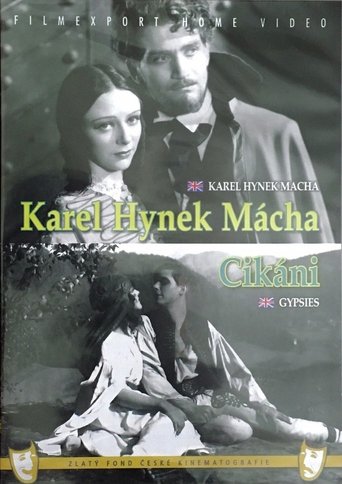
Hugo Svoboda
Actor
- Active
- 1922-1922
Films 1
About Hugo Svoboda
Hugo Svoboda is a documented silent-era screen actor best known for appearing in the 1922 film Gypsies, but very little verifiable biographical information about him survives in standard film reference sources. His screen career, as currently traceable through available filmography records, appears to have been extremely brief and limited to a single credited appearance in the early 1920s. Because of the scarcity of reliable archival data, details such as his birth date, birthplace, family background, training, and later life are not well established in public film history references. He is part of the large group of lesser-known performers whose names are preserved in cast lists even when their personal histories were never widely reported in trade papers or studio publicity. His presence in Gypsies places him within the international silent-film world of the post-World War I era, when many productions featured ensembles whose careers left only fragmentary documentary traces. In the absence of stronger archival confirmation, he should be regarded as a historical but obscure screen performer rather than a widely documented star. Any fuller biography would require consultation of primary source materials such as production records, contemporary reviews, census or civil registry data, or localized European film archives.
More about Hugo Svoboda
In film history
Hugo Svoboda's cultural impact is best understood as archival rather than celebrity-based: he is one of the many names that help reconstruct the personnel and casting networks of early silent cinema. Even when a performer left behind only a single known credit, that credit contributes to a broader understanding of film production practices, international casting, and the circulation of actors across early European cinema. His documented presence in Gypsies (1922) gives researchers a fixed point for studying that film's cast and production context. For historians, such obscure credits matter because they preserve the reality that silent cinema was built not only by major stars but also by lesser-known working actors whose contributions were seldom publicized. In that sense, Svoboda's significance lies in the survival of his name in film history rather than in a large body of widely seen work.
Later reputation
Hugo Svoboda's legacy is limited but meaningful within the historical record of silent film, where many performers remain known only through incomplete credits. His name survives as part of the cast history of Gypsies (1922), offering evidence of the broader performance culture that sustained early cinema beyond its famous stars. The lack of accessible biographical information is itself a reminder of how easily the careers of minor silent-era players could vanish from public memory. For archivists and film historians, he exemplifies the importance of preserving cast documentation, trade listings, and surviving production records. His lasting legacy is therefore one of documentary importance: he is a small but real part of the mosaic of early twentieth-century screen history.
Influence
There is no documented evidence that Hugo Svoboda directly influenced later actors or filmmakers. Any influence he may have had would have been indirect, through participation in the working fabric of silent-era production rather than through a widely recognized public persona. His historical value lies more in the preservation of early casting records than in a traceable artistic school or line of influence.
Off screen
No reliable public information has been located regarding Hugo Svoboda's personal life, including marriage, family, residence, or later career. He does not appear in standard biographical summaries for prominent silent-era performers, suggesting that he was either a minor screen player or a figure whose records were not preserved in commonly accessible archives. Until further archival evidence is discovered, personal details should be treated as unknown.
Education
No verified information is available about his education or acting training.
Credits
- Appeared in the silent-era film Gypsies (1922)
- Represents one of the many little-documented supporting performers whose names survive in early film cast records
- Associated with the international silent-film environment of the early 1920s
- His known filmography places him in the historical record of early European or cross-cultural screen production
Roles
- Role in Gypsies (1922)
Films
- Gypsies (1922)
Notes
- He is specifically associated with the 1922 silent film Gypsies.
- His surviving filmography is extremely short, with only one known acting credit in the available record.
- He is an example of how many silent-era actors remain little documented despite appearing on screen.
- No verified birth or death dates are readily available in standard public film references.
- His career illustrates the archival challenges of researching minor performers from the silent era.
- The surname Svoboda suggests a Central European background, but this cannot be confirmed from the available film record.
- Because his recorded activity is limited to 1922, he may have had a brief screen career or a career preserved only incompletely by surviving sources.
Questions
Who was Hugo Svoboda?
Hugo Svoboda was a silent-era actor best known from his credited appearance in Gypsies (1922). Very little verified biographical information survives about him, so he is primarily known to film historians through cast records rather than a documented star career.
What films is Hugo Svoboda best known for?
He is best known for Gypsies (1922), which is the only firmly documented screen credit currently associated with him in the available record. No other confirmed film appearances have been established from the information at hand.
When was Hugo Svoboda born and when did he die?
His birth and death dates are not reliably documented in the accessible classic-cinema references used here. Until archival sources or civil records are found, both remain unknown.
What awards did Hugo Svoboda win?
No awards or formal honors are documented for Hugo Svoboda in the available film-history record. This is not unusual for minor or little-documented silent-era performers, many of whom worked before modern awards culture was fully established.
What was Hugo Svoboda's acting style?
No detailed contemporary critique of his acting style appears to survive in the accessible record. Because he worked in silent cinema, any performance would have relied on expressive physical acting and gesture, but specific stylistic descriptions cannot be verified.
What is Hugo Svoboda's legacy in film history?
His legacy is primarily archival: he is one of the many lesser-known performers whose name survives in silent-film cast listings. That makes him useful to researchers reconstructing the personnel and production networks of early cinema, even though his broader fame is limited.
Did Hugo Svoboda work with any famous directors or actors?
No frequent collaborators have been confirmed from the currently available information. Without stronger archival evidence, it is not possible to reliably name directors or co-stars beyond the film Gypsies (1922).