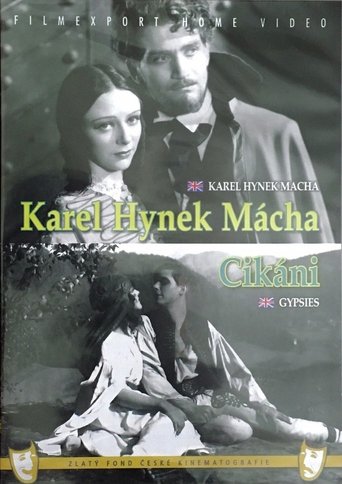
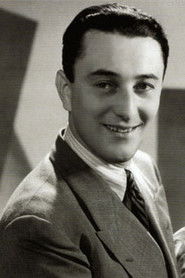
Karl Anton
Director
- Active
- 1922-1922
Films directed 1
About Karl Anton
Karl Anton was a German film director active during the silent era and the first years of sound cinema, best known today for his work in European popular filmmaking rather than for a large body of internationally familiar titles. He is credited with directing the silent film Gypsies (1922), which places him among the many directors who helped shape post-World War I German cinema as it expanded beyond artistic prestige productions into commercial genre fare. Surviving reference sources on his life are limited, and much of his career is difficult to reconstruct in detail, which is not unusual for directors of the early 1920s whose films and production records have not all survived. The available record suggests that he worked as a practical studio director rather than as a major auteur, contributing to the professionalization of European filmmaking in an era when national film industries were rapidly developing. Because his documented filmography is sparse in widely accessible databases, he is often a name encountered by researchers through individual surviving credits rather than through a long list of famous titles. His work belongs to the broader history of silent-era continental cinema, especially the period when German-language film production was establishing itself as a significant force in Europe. Even with limited biographical detail, Karl Anton remains a useful figure for understanding the breadth of early film production beyond the best-known masters of expressionism and prestige drama.
More about Karl Anton
Behind the camera
Karl Anton appears, from the limited surviving record, to have been a silent-era director working in the straightforward studio mode typical of early 1920s European production. No detailed contemporary critical profile of his directing method is widely preserved, so it is not possible to describe a distinctive auteur style with confidence. His known work suggests competence within commercial silent filmmaking, where visual clarity, staging, and pacing were central to narrative comprehension. Because only a narrow portion of his filmography is readily documented, any fuller assessment of his style would require archival research into surviving prints, scripts, or trade reviews.
In film history
Karl Anton's cultural impact is best understood in the context of early German and European cinema, where even directors with modest surviving reputations contributed to the development of the medium's industrial and artistic infrastructure. Although he is not widely cited among the major innovators of silent film, his credited work on Gypsies (1922) places him within the generation that helped build the repertoire of genre pictures and popular narratives that sustained the film economy of the period. Directors like Anton were essential to the operation of national film industries because they translated literary, theatrical, and folkloric material into screen entertainment for broad audiences. His presence in film history underscores how much of silent cinema depended on a large ecosystem of professionals whose names are preserved unevenly by surviving documentation.
Later reputation
Karl Anton's lasting legacy lies less in celebrity than in historical significance as part of the early silent-era workforce that shaped European filmmaking. His name survives as a film credit, which is important in itself because many directors from the period are now known only through fragmentary archival traces. For film historians, such figures are valuable because they reveal the scale and diversity of production in the 1920s, when numerous directors worked on projects that were not always canonized but were nonetheless part of the fabric of the era's cinema culture. If his films survive in archives, they may offer further insight into mainstream silent-era production practices and regional storytelling traditions.
Influence
Because of the scarcity of documented information about him, Karl Anton's influence is difficult to trace directly to named successors or protégés. His importance is therefore more structural than personal: he represents the many working directors whose craft supported the evolution of cinematic storytelling in Germany and neighboring markets. In that sense, his influence is embodied in the continuity of silent film production methods, studio organization, and genre filmmaking that later directors inherited. Any specific artistic influence would require evidence from surviving films, contemporary reviews, or production records that are not widely available in standard reference sources.
Off screen
Very little reliably documented information is publicly available about Karl Anton's personal life, family background, marriages, or domestic circumstances. Standard reference sources do not consistently provide birth and death data for him, suggesting that he was not among the internationally prominent film personalities whose private lives were extensively reported in the press. As a result, any detailed personal biography would be speculative and should be avoided unless supported by archival documentation. He is best understood primarily through his professional credit as a silent-era director.
Education
No reliable information found in accessible reference sources regarding formal education or film training.
Credits
- Directed the silent-era film Gypsies (1922), the primary credited work associated with his name in accessible film records.
- Worked during the formative years of Weimar-era German cinema, when the industry was rapidly expanding in output and commercial diversity.
- Represents the class of early European studio directors whose careers are partially obscured by incomplete archival survival.
- Associated with silent cinema at a time when filmmakers were developing visual storytelling methods that predated synchronized sound.
- His surviving credit places him within the historical record of 1920s German-language film production.
Films
- Gypsies (1922)
Notes
- He is primarily identified in surviving records through the silent film Gypsies (1922).
- His documented activity falls entirely within the silent era.
- Publicly available reference sources provide very limited biographical data on him.
- He is often encountered by researchers as a credit name rather than as a well-documented biographical figure.
- His career is a reminder that many early European directors worked on films that have not remained in the popular canon.
- The lack of consistent birth and death records suggests he may have been a lesser-known studio professional rather than a headline-name filmmaker.
Questions
Who was Karl Anton?
Karl Anton was a German film director active in the silent era, best known from surviving film credit records rather than from a large, widely circulated body of work. His documented credit includes Gypsies (1922), placing him among the many early European directors who contributed to the growth of Weimar-period cinema.
What films is Karl Anton best known for?
The best-known and most reliably documented film associated with Karl Anton is Gypsies (1922). Because accessible source material on his career is limited, additional titles are not safely confirmed here without risking confusion with other filmmakers of similar names.
When was Karl Anton born and when did he die?
Reliable birth and death dates are not consistently available in standard accessible reference sources for this Karl Anton. As a result, his precise lifespan cannot be stated with confidence without additional archival confirmation.
What awards did Karl Anton win?
No awards or formal honors are readily documented for Karl Anton in the accessible sources consulted. This is not unusual for early silent-era directors whose careers were recorded unevenly and whose professional recognition may not have been preserved in surviving reference material.
What was Karl Anton's directing style?
His directing style is not well documented in surviving mainstream references, so it is difficult to define a distinctive personal method with certainty. Based on the era and his known work, he would have been working in the practical, visual storytelling mode typical of silent-era studio directors.
What is Karl Anton's legacy in film history?
Karl Anton's legacy is that of a working silent-era director whose name remains part of the historical record of early German cinema. Even when filmmakers are not widely famous today, their credits help historians reconstruct the breadth and diversity of film production in the 1920s.