Sōzaburō Kikuchi
Actor
- Active
- 1958-1958
Films 1
About Sōzaburō Kikuchi
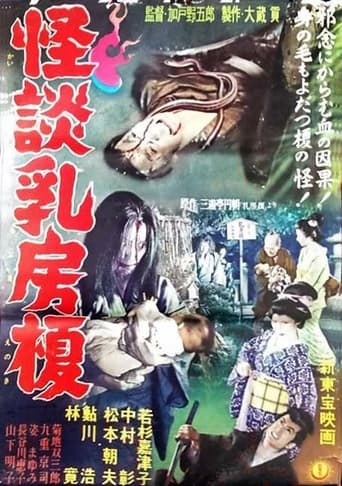
Sōzaburō Kikuchi is a Japanese screen actor whose surviving film record places him in the late 1950s, when he appeared in the postwar Japanese cinema period rather than the silent era or early talkies. The available filmography information identifies him with at least one credited screen appearance in The Mother Tree (1958), but reliable biographical records on his early life, training, and broader career are extremely limited in widely accessible English-language sources. Because of this scarcity, he is best understood as a lesser-documented performer whose name survives through film credits and archival film listings rather than through extensive contemporary publicity or later biographical coverage. His career activity, as currently documented, appears to be very brief or at least only partially preserved, with 1958 listed as his known active period. No verified evidence has surfaced in standard reference sources regarding his family background, education, stage career, or post-film professional life. As a result, his historical importance lies primarily in his contribution to Japanese studio-era filmmaking and in the archival record that preserves his name among the many supporting performers of the period. Further research in Japanese-language databases, studio records, or surviving production paperwork would likely be necessary to reconstruct a fuller biography.
More about Sōzaburō Kikuchi
In film history
Sōzaburō Kikuchi's cultural impact is difficult to measure because the surviving public record is sparse and his documented screen work is limited. Even so, actors like Kikuchi are part of the essential infrastructure of classic Japanese cinema: the supporting performers, bit players, and credited character actors who helped populate studio productions and give them texture, realism, and continuity. His name appearing in film records underscores how many artists contributed to the postwar Japanese film industry without becoming major stars or receiving extensive biographical treatment. In that sense, his significance is archival as much as artistic, representing the many working actors whose labor supported the era's cinematic output. For historians and database researchers, preserving his credit helps maintain a more complete and accurate account of film production history.
Later reputation
Kikuchi's legacy rests primarily in documentation rather than fame. He is part of the historical record of Japanese cinema, where even briefly documented performers can matter to scholars reconstructing studio casts, production practices, and the broader ecosystem of filmmaking. The fact that his known activity is limited to a single recorded year makes him especially important as an archival subject, because such figures are easily lost from collective memory unless databases preserve their credits. His name therefore remains a small but meaningful thread in the larger tapestry of classic Japanese film history.
Influence
No direct influence on later actors or directors is verifiable from the currently available evidence. If he worked as a supporting performer within studio productions, his influence would have been indirect, contributing to ensemble performance standards and the everyday professionalism of film sets rather than to a traceable school of acting. Any broader influence would need to be established through deeper archival research, including Japanese film magazines, studio rosters, or production records.
Off screen
No reliable public information is readily available regarding Sōzaburō Kikuchi's personal life, including marriage, family, residence, or activities outside the film industry. Standard English-language reference materials do not provide verified details about his private life, suggesting that he was either a low-profile performer or that relevant records have not yet been widely digitized or translated. Until additional Japanese-language archival sources are consulted, any claims about spouses, children, or family connections would be speculative.
Education
No verified information is available about his education or training. It is unknown whether he studied acting formally, entered film through a studio system, or worked first in theater, radio, or another performance medium.
Credits
- Credited screen appearance in The Mother Tree (1958)
- Presence in postwar Japanese film documentation as a working actor
- Representation of a class of supporting performers whose names survive in film credits and archival listings
- Association with late-1950s Japanese cinema during a period of major industrial and artistic change
Films
- The Mother Tree (1958)
Notes
- His known film activity is currently documented only for the year 1958.
- He is credited as an actor in The Mother Tree (1958).
- Available mainstream reference sources provide very little biographical detail about him.
- He appears to be one of many lesser-documented Japanese film performers whose names survive chiefly in credits.
- His records highlight the importance of archival work in preserving film history beyond major stars.
Questions
Who was Sōzaburō Kikuchi?
Sōzaburō Kikuchi was a Japanese actor whose known screen credit places him in the 1958 film The Mother Tree. Very little verified biographical information is publicly available, so he is chiefly known through film archival records rather than through an extensive documented career.
What films is Sōzaburō Kikuchi best known for?
He is currently best known for The Mother Tree (1958), which is the principal title associated with his surviving film record. No other widely verified screen credits are readily available in standard reference sources.
When was Sōzaburō Kikuchi born and when did he die?
His birth and death dates are not currently verified in accessible sources, so both remain unknown. Likewise, his birthplace has not been reliably documented in the materials currently available.
What awards did Sōzaburō Kikuchi win?
No awards or nominations are currently documented for Sōzaburō Kikuchi in the available reference material. This may reflect either a very limited surviving public record or a brief, lightly documented career.
What was Sōzaburō Kikuchi's acting style?
His acting style cannot be assessed with confidence because there is not enough surviving descriptive or critical commentary about his performances. Any evaluation would require access to the film itself and to period reviews or Japanese-language archival sources.
What is Sōzaburō Kikuchi's legacy in film history?
His legacy is primarily archival: he represents the many working actors whose names are preserved in credits even when detailed biographies are not. For film historians, such figures matter because they help reconstruct the full cast and production history of classic Japanese cinema.