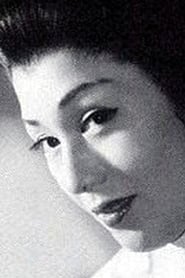
The Mother Tree
Plot
A painter leaves his wife and infant child behind to take work decorating the homes of wealthy patrons, hoping the commission will provide a better life for his family. During his absence, a lonely and violent samurai becomes obsessed with the painter's wife, seduces and then brutally rapes her, setting in motion a chain of suffering and revenge. The samurai later murders the painter and his servants, leaving the household destroyed and the wife forced into a desperate struggle for survival. From beyond the grave, the painter's spirit returns to avenge the murders and protect his wife and newborn child, turning the film into a supernatural tale of retribution rooted in betrayal, lust, and maternal endurance.
About the Production
The film is an early postwar Japanese horror title directed by Gorō Kadono and appears to draw on the long-standing Japanese tradition of ghost-revenge narratives rather than on Western horror conventions. Like many genre films from the era, detailed production records are scarce in widely available English-language sources, so exact budgetary and crew logistics are not well documented. The story combines melodrama, period drama, rape-revenge, and yūrei-style supernatural elements, suggesting a production aimed at audiences familiar with both historical tragedies and ghost stories. Surviving documentation indicates the film circulated under the English title The Mother Tree, but many precise production details remain elusive in public databases.
Historical Background
The film was made in 1958, during Japan's rapid postwar recovery and modernization, when cinema remained one of the country's most important mass entertainment forms. Japanese filmmakers of the 1950s often turned to historical settings to explore moral conflict, social trauma, and the instability of family structures in ways that could be legible to contemporary audiences. Horror and ghost stories were particularly resonant because they allowed filmmakers to stage unresolved guilt, injustice, and ancestral obligation in stylized form. The Mother Tree belongs to that cultural moment, where traditional narrative forms, samurai-era settings, and supernatural vengeance could be used to dramatize anxieties about honor, family continuity, sexual violence, and the fragility of social order.
Why This Film Matters
Although not widely known internationally, the film is culturally significant as part of the mid-century Japanese horror and period-drama continuum that helped shape later understandings of Japanese genre cinema. Its revenge-from-beyond-the-grave structure connects it to a deep theatrical and literary tradition, and its focus on violated domesticity places family and moral restoration at the center of horror. The film also reflects a recurring Japanese cinematic interest in the suffering of women and the return of the dead as an instrument of justice, themes that would later become central to many influential ghost films. For scholars and collectors, The Mother Tree is valuable as an example of a lesser-known but thematically rich genre production from Japan's classic studio era.
Making Of
Publicly available behind-the-scenes information on The Mother Tree is limited, which is typical for mid-century Japanese genre films that did not receive major international distribution. What can be inferred from the film itself is that the production likely relied on studio-era period design, with an emphasis on interiors, costumes, and atmosphere rather than large-scale spectacle. The film's mix of historical setting, sexual violence, murder, and ghostly intervention suggests a careful balancing act between melodramatic emotion and horror imagery, which would have required a director comfortable with tonal shifts. Because surviving English-language commentary is sparse, the most reliable production detail is its place within the 1950s Japanese horror landscape, when filmmakers frequently adapted folklore and revenge tales for commercially oriented genre programming.
Visual Style
Specific cinematography credits and technical notes are not well documented in accessible sources, but the film's narrative suggests a visual style suited to stark contrasts between domestic interiors, aristocratic spaces, and haunted or liminal afterlife imagery. Japanese horror films of this era often used controlled framing, theatrical blocking, and shadow-rich compositions to heighten emotional tension, and The Mother Tree likely follows that tradition. Because the story involves both intimate violence and supernatural return, the visual language would have needed to move between realism and stylization, emphasizing the painter's perspective, the wife's vulnerability, and the ghost's ominous presence. The period setting also implies careful attention to costume and set design as part of the film's atmosphere.
Innovations
The film does not have widely documented technical innovations, but it is noteworthy for integrating multiple genre modes within a single period-horror framework. The structure requires transitions from domestic drama to sexual threat, murder, and supernatural retaliation, which is itself a significant narrative technique in vintage Japanese cinema. If the original presentation included stylized ghost effects or atmospheric lighting, those would represent the kind of practical, studio-era craftsmanship common to the period rather than flashy innovation. Its endurance lies less in technical firsts than in the effective fusion of horror, melodrama, and historical tragedy.
Music
No reliable publicly available information about the composer or score is currently confirmed in major accessible references. As with many 1950s Japanese genre films, the music likely supported the film's emotional arc through a mixture of mournful melodrama, tense suspense cues, and heightened passages for the ghostly revenge sequences. If surviving prints or archival materials are consulted, the score may prove important to the film's mood, but detailed documentation remains scarce in standard English-language databases.
Famous Quotes
null
Memorable Scenes
- The samurai's obsessive pursuit of the painter's wife, which turns domestic vulnerability into imminent horror.
- The brutal murder of the painter and his servants, a massacre that transforms the story from social drama into supernatural revenge.
- The painter's return from the afterlife, where the dead father becomes an avenging protector of his wife and child.
- The wife struggling to safeguard her newborn amid the ruin of the household, underscoring the film's maternal core.
- The final confrontation in which spiritual justice overrides earthly violence and restores moral balance.
Did You Know?
- The film is a Japanese horror title from 1958, a period when ghost stories and revenge dramas were especially fertile material for domestic cinema.
- Its plot combines samurai-period violence with a supernatural afterlife revenge structure, a blend that prefigures later Japanese horror and period-horror hybrids.
- The story centers on a painter, which gives the title an additional layer of meaning, as the domestic and artistic worlds are interrupted by aristocratic and martial violence.
- The film features a female victim-survivor narrative that is both tragic and redemptive, with the wife surviving the assault, murder, and chaos that destroys her household.
- The ghost of the painter becomes an active force of justice, aligning the film with Japanese kaidan traditions in which the dead return to restore moral balance.
- Gorō Kadono is not as internationally documented as some of his contemporaries, which contributes to the film's relative obscurity outside specialist circles.
- The English-language title The Mother Tree may not be a direct literal translation of the Japanese title and is likely chosen to evoke a protective, maternal image tied to the story's family core.
- The film is often cited by database records rather than by extensive scholarly writing, making it one of those vintage genre works that survives more strongly in catalog entries than in critical literature.
What Critics Said
Contemporary critical reception is difficult to reconstruct in detail because reviews and English-language coverage are scarce. In modern terms, the film is primarily evaluated by database entries and genre historians rather than by a large body of published criticism. Where it is discussed, the film is generally understood as an obscure but thematically potent example of 1950s Japanese horror, notable for its tragic plot and supernatural revenge framework. Its current critical reputation is therefore based more on historical interest and genre context than on widely circulated review consensus.
What Audiences Thought
Audience reception data is not readily available in surviving public sources, and no reliable box office figures are known. Given the era and genre, it was likely consumed by domestic Japanese audiences as a period ghost drama rather than as an internationally marketed horror export. Today its audience is largely niche: classic cinema enthusiasts, Japanese horror collectors, and researchers interested in obscure vintage genre titles. For modern viewers who discover it, the film's combination of romance, brutality, and vengeful supernatural justice is likely to be its main draw.
Film Connections
Influenced By
- Japanese kaidan ghost-story tradition
- Kabuki and classical revenge drama
- Edo-period moral tales
- Postwar Japanese melodrama
This Film Influenced
- null
More Horror Films
View allFilm Restoration
Preservation status is unclear in widely accessible sources. The film is known through database records and plot summaries, but detailed archival status, restoration history, and print availability are not firmly documented in public English-language references. It is best described as an obscure surviving vintage title whose accessibility may depend on archival holdings, private collections, or specialist Japanese film sources.