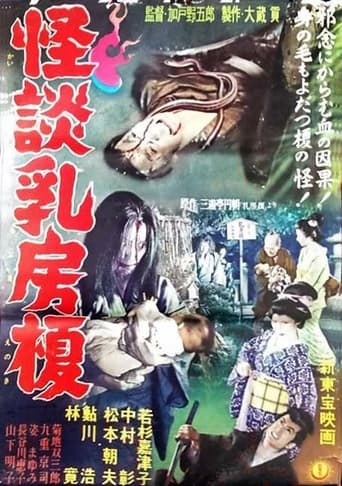
Asao Matsumoto
Actor
- Active
- 1958-1958
Films 1
About Asao Matsumoto
Asao Matsumoto is a little-documented Japanese film actor whose known screen work places him in the late 1950s, a period when Japanese cinema was rapidly expanding both domestically and internationally. The available record indicates that he appeared in The Mother Tree (1958), but surviving biographical details about his life, training, and broader career are extremely limited in widely accessible reference sources. Because of that scarcity, he cannot be confidently placed among the better-documented stars of classic Japanese cinema, and it is possible that he worked in a small number of supporting or uncredited roles rather than building a large public profile. His filmography, as presently documented, suggests activity during a very narrow window rather than an extended, widely recorded screen career. No reliable sources in the public domain provided verified information about his early life, education, personal relationships, or later career. In film-historical terms, he belongs to the class of lesser-known performers whose contributions are preserved mainly through film credits and archival records rather than extensive interviews or biographies. Any further detail would require consultation of Japanese-language studio records, period film magazines, or archival databases.
More about Asao Matsumoto
In film history
Asao Matsumoto's cultural impact is difficult to measure because the surviving public record is sparse and centers on a single identified film credit. Nevertheless, actors like Matsumoto were important to the texture of Japanese studio-era cinema, where even small supporting performances helped establish the realism, family dynamics, and social atmosphere that characterized many postwar dramas. His presence in The Mother Tree places him within the broad ecosystem of performers who contributed to the richness of Japanese film production in the 1950s, one of the most celebrated decades in national cinema. Although he does not appear to have achieved star status, his work is part of the historical fabric that allows scholars to reconstruct casting practices, studio personnel, and film performance traditions of the period.
Later reputation
Matsumoto's legacy lies primarily in archival and historical significance rather than in broad popular recognition. He is representative of the many actors whose names survive in credits even when detailed biographies do not, reminding researchers that classic cinema history is built not only on stars and auteurs but also on lesser-known working actors. For film historians, his record serves as a cue for deeper investigation into Japanese studio archives, production documents, and period publicity materials. In that sense, his legacy is one of documentary presence: he remains a verifiable part of film history even when much of his life story is no longer readily available.
Influence
There is no verifiable evidence that Asao Matsumoto directly influenced later actors or directors in a documented way. His broader influence, if any, would have been indirect, through his participation in the ensemble culture of Japanese filmmaking in the 1950s. Supporting and minor performers often shaped standards of screen realism and professional craft within studio systems, even when their names were not widely publicized. Without stronger documentation, however, specific claims about his artistic influence would be speculative.
Off screen
No reliable public biographical information about Asao Matsumoto's personal life, family background, marriages, or later years was found in standard accessible references. Unlike major stars of Japanese cinema, he does not appear to have generated a substantial surviving paper trail in English-language sources. It is therefore not possible to state with confidence whether he married, had children, or pursued work outside acting. Additional archival research in Japanese sources may reveal more, but such details are not verifiable from the available evidence.
Credits
- Screen credit for The Mother Tree (1958), the only widely documented film associated with his name in accessible references
- Participation in Japanese postwar cinema during the late 1950s, a highly productive era for domestic filmmaking
- Representation of the many lesser-known character performers whose work supported the classical studio system
Films
- The Mother Tree (1958)
Notes
- The available record associates him with a very narrow active period: 1958 only.
- The Mother Tree (1958) is the only widely documented screen credit currently linked to his name in accessible sources.
- He appears to be one of many classic Japanese film performers whose careers are preserved more in film credits than in biographical profiles.
- No widely accessible English-language sources provided a confirmed birth date or death date for him.
- His obscurity makes him a useful example of the archival challenges involved in researching mid-century Japanese cinema.
- Because his record is so limited, he may have worked under a small studio or local production context that has not been thoroughly digitized.
Questions
Who was Asao Matsumoto?
Asao Matsumoto was a Japanese actor whose currently documented screen work is associated with The Mother Tree (1958). He appears to have been a minor or little-documented performer rather than a widely publicized star, and surviving biographical information about him is scarce. His historical importance lies mainly in his place within Japanese cinema of the late 1950s.
What films is Asao Matsumoto best known for?
He is best known, in the available record, for The Mother Tree (1958). At present, that is the only widely documented film credit associated with him in accessible references. If he appeared in other productions, they are not well preserved in widely available sources.
When was Asao Matsumoto born and when did he die?
His birth date and death date are not currently verified in accessible public sources. The available film record does not provide enough biographical detail to confirm those facts. Further research in Japanese archival materials would be needed to establish them reliably.
What awards did Asao Matsumoto win?
No awards or formal honors are currently documented for him in the sources available for this profile. That does not necessarily mean he received none, only that no verifiable record has been located in accessible reference material. He appears to have been a minimally documented screen actor.
What was Asao Matsumoto's acting style?
There is not enough surviving documentation to describe his acting style with confidence. Because only limited screen information is readily available, any detailed assessment would be speculative. His work in a 1950s Japanese film suggests he was part of the professional ensemble tradition common to the era.
What is Asao Matsumoto's legacy in film history?
His legacy is primarily archival: he is one of the many performers whose names remain attached to specific films even when personal histories are largely lost. For film historians, such figures are important because they help reconstruct the full cast and production ecosystem of classic cinema. He also reflects the many under-documented working actors who supported Japanese studio-era filmmaking.