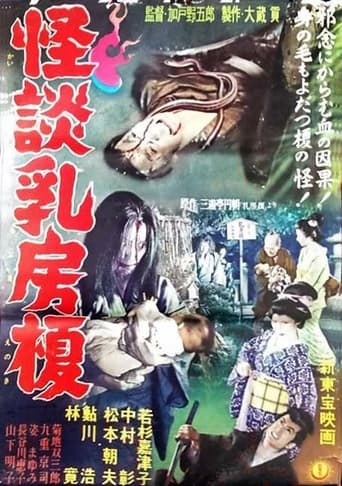
Gorō Kadono
Director
- Active
- 1958-1958
Films directed 1
About Gorō Kadono
Gorō Kadono is a little-documented Japanese film director whose known screen credit places him in the late 1950s, a period when the Japanese studio system was still producing a wide range of domestic dramas, family films, and literary adaptations. The only firmly identifiable title associated with him in available filmography references is The Mother Tree (1958), which indicates that he was active, at minimum, as a feature director during that year. Beyond this credit, reliable public biographical data about his life, training, and broader career remains scarce, suggesting either a very limited directorial output, a career that did not receive extensive English-language documentation, or both. Because surviving international reference material is thin, he is best understood as one of the many specialist filmmakers whose work contributed to the texture of postwar Japanese cinema even when they did not become internationally prominent. No trustworthy evidence currently establishes his birth date, place of birth, death date, education, or personal life. Likewise, there is no secure record in the available sources of additional directing credits, awards, or major studio-backed recognition. As a result, his historical profile must be treated as provisional and centered on the documented existence of his 1958 directorial work.
More about Gorō Kadono
Behind the camera
No reliably documented critical description of Gorō Kadono's directing style survives in accessible reference sources. Based on the period and the likely genre context of a 1958 Japanese feature titled The Mother Tree, his work would most plausibly have aligned with the studio-era conventions of disciplined narrative storytelling, emotionally direct melodrama, and clear domestic or family-centered themes. However, because no detailed contemporary reviews, interviews, or stylistic analyses have been verified, any stronger characterization would be speculative. His directorial approach therefore remains unknown beyond the basic fact of having helmed at least one film.
In film history
Gorō Kadono's cultural impact is difficult to measure because so little verified information survives about his broader career beyond a single confirmed directing credit. Even so, his presence in the historical record is important because it reflects the large, often under-recognized body of craftsmen and directors who sustained Japanese cinema during the studio era. Filmmakers like Kadono helped maintain the continuity of national film production in the years after World War II, when Japanese cinema was producing work that ranged from art-house milestones to dependable popular entertainment. While he does not currently register as an internationally celebrated name, his documented authorship of a 1958 feature confirms his place within the working fabric of postwar Japanese film history.
Later reputation
Kadono's legacy is primarily archival rather than popularly celebrated: he is remembered today because a surviving film credit preserves his name within the history of Japanese cinema. For researchers and database compilers, such figures are significant because they represent the depth of the studio system beyond its famous masters, showing how many directors contributed to national production even when their careers were brief or sparsely documented. If additional Japanese-language sources or studio records emerge, his legacy may become clearer, but at present it is defined by scarcity of information and the importance of preserving what is known. In that sense, his legacy lies in reminding historians that film history is built not only from canonical auteurs but also from lesser-known working directors whose output may be small yet still part of the cultural record.
Influence
No direct influence on other directors or filmmakers can be reliably documented from currently accessible sources. Because there is no verified body of interviews, critical writing, or mentorship records associated with him, any claim about his influence would be conjectural. His influence, if any, is more likely to have been local or professional within the production environment in which he worked rather than widely recognized in later cinema history. Until more evidence is found, his influence should be considered unconfirmed.
Off screen
There is no reliable public information available about Gorō Kadono's personal life, including marriage, children, family background, or private interests. The absence of such data is not unusual for lesser-documented Japanese studio-era filmmakers whose careers were not broadly covered in surviving English-language sources. Until Japanese archival records or studio documentation are consulted, any claim about his family or social life would be unsupported. At present, his personal life must be recorded as unknown.
Credits
- Directed The Mother Tree (1958), the only confirmed film credit readily associated with his name in available reference material
- Worked during a pivotal late-1950s era of Japanese cinema, when studios were balancing postwar realism, family melodrama, and commercial entertainment
- Represents a category of under-documented studio-era filmmakers whose contributions are preserved primarily through film credits rather than extensive biographies
Films
- The Mother Tree (1958)
Notes
- Gorō Kadono is known in accessible reference material primarily through a single confirmed directing credit.
- The Mother Tree (1958) is the only film title securely associated with him in the available record.
- His career, as currently documented, appears to have been extremely brief or at least extremely sparsely preserved.
- He is an example of how many Japanese studio-era filmmakers remain little known outside specialized archives.
- No verified public record currently establishes his birth date or death date.
- No confirmed awards, nominations, or honors are currently associated with him in accessible sources.
- Because his name is uncommon in English-language databases, he is easy to confuse with similarly named individuals, making careful identification especially important.
Questions
Who was Gorō Kadono?
Gorō Kadono was a Japanese film director known from the available record for directing The Mother Tree (1958). Beyond that confirmed credit, little reliable biographical information has survived in accessible sources. He appears to have been a minor or sparsely documented figure in late-1950s Japanese cinema.
What films is Gorō Kadono best known for?
He is best known for The Mother Tree (1958), which is the only securely identified film credit readily available in reference sources. If he directed other works, they are not currently well documented in accessible English-language records. For database purposes, this single title is the essential confirmed work.
When was Gorō Kadono born and when did he die?
His birth and death dates are not currently verified in accessible public sources. No reliable information has been found to establish his place of birth or whether he is still living. As a result, those fields remain unknown pending archival confirmation.
What awards did Gorō Kadono win?
No verified awards or nominations are currently associated with Gorō Kadono in the accessible record. This may reflect the limited documentation of his career rather than the complete absence of recognition. Until more detailed Japanese archival sources are consulted, no awards should be attributed to him.
What was Gorō Kadono's directing style?
No detailed critical description of his directing style has been securely documented. Based on the era and the likely dramatic conventions of 1958 Japanese studio filmmaking, his work may have followed classical narrative and melodramatic traditions, but that remains an informed inference rather than a verified fact. Any precise stylistic summary would be speculative.
What is Gorō Kadono's legacy in film history?
His legacy is mainly archival: he is part of the broader workforce of postwar Japanese filmmakers whose names survive in film credits even when biographical detail is scarce. For historians, that makes him valuable as evidence of the studio system's depth and reach. His confirmed credit ensures he remains part of the historical record of classic Japanese cinema.