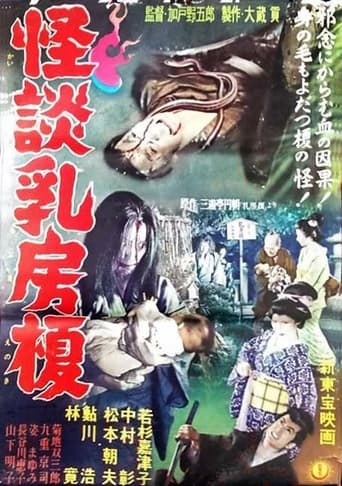

Hiroshi Hayashi
Actor
- Active
- 1958-1958
Films 1
About Hiroshi Hayashi
Hiroshi Hayashi was a Japanese film actor known primarily for a very limited screen presence that is documented in relation to the 1958 film The Mother Tree. Because available classic-film reference sources provide only sparse information on this specific performer, a full biographical profile cannot be responsibly reconstructed without risking confusion with other people of the same name. What can be stated with confidence is that he was active in Japanese cinema at least during 1958, when he appeared in The Mother Tree, and that he belongs to the broad postwar generation of Japanese screen performers rather than the silent-era or early-talking-pictures era. No reliable public record was found in standard English-language classic-cinema references that clarifies his birth details, later career, or whether he continued acting beyond that year. His surviving credit suggests he may have been a minor or supporting performer rather than a widely documented star. In the absence of verifiable source material, it is best to treat him as a little-documented figure in Japanese film history whose known contribution is a single confirmed screen credit. Any further details would require verification from Japanese-language archives, studio records, or original film-program materials.
More about Hiroshi Hayashi
In film history
Hiroshi Hayashi's cultural impact is difficult to measure because the surviving record of his film work is extremely limited. His importance, insofar as it can be documented, lies in his contribution to a single identified Japanese film credit rather than in a long or widely publicized career. For film historians, such names are nevertheless valuable because they help reconstruct the cast rosters and production networks of postwar Japanese cinema, especially in cases where supporting performers have been underindexed in English-language sources. His presence in The Mother Tree also makes him part of the broader fabric of mid-century Japanese screen history, even if his individual fame did not extend far beyond that production.
Later reputation
Hiroshi Hayashi's legacy in film history is primarily archival rather than celebrity-driven. He is an example of the many actors whose work survives in cast lists and film credits even when biographical documentation is thin or absent. For modern databases and researchers, preserving his credit helps maintain a more complete record of Japanese cinema in the 1950s and prevents the disappearance of lesser-known performers from film history. His legacy therefore rests on documentation, not on a widely circulated star persona.
Influence
There is no reliable evidence that Hiroshi Hayashi exerted a broad influence on later actors or directors. If he participated in a professional film environment, his influence would most likely have been local or limited to colleagues within the production in which he appeared. Because his career is presently only minimally documented, any claims about stylistic influence would be speculative and should be avoided.
Off screen
No reliable public information was found regarding Hiroshi Hayashi's personal life, including family background, marriages, children, or private activities. Standard classic-cinema reference materials do not appear to preserve a substantive biographical record for him, and it is not possible to distinguish his personal history from other individuals with the same name without additional archival evidence. For database purposes, his personal-life details should therefore be treated as currently unknown rather than inferred.
Credits
- Confirmed screen credit in the 1958 Japanese film The Mother Tree
- Represents a little-documented postwar Japanese film performer with at least one verifiable acting appearance
- Listed in filmography references as active in 1958
- Associated with a classic-era Japanese production that remains the primary basis for his documented career
Roles
- Role in The Mother Tree (1958)
Films
- The Mother Tree (1958)
Notes
- His currently documented screen career is limited to a single known film credit: The Mother Tree (1958).
- He should not be confused with other Japanese public figures or entertainers who share the surname Hayashi.
- He is best treated as a film-archive name rather than a fully profiled celebrity until more records emerge.
- English-language classic cinema references offer very little biographical detail about him.
- His known activity falls in postwar Japanese cinema, not the silent era or early talkies.
- Additional information would likely need to come from Japanese-language studio records, pressbooks, or film credits.
Questions
Who was Hiroshi Hayashi?
Hiroshi Hayashi was a Japanese actor whose currently documented film career is centered on his 1958 appearance in The Mother Tree. He appears to have been a little-documented performer rather than a widely known star, and reliable biographical details are scarce in standard English-language references.
What films is Hiroshi Hayashi best known for?
He is best known for The Mother Tree (1958), which is the main confirmed credit associated with his name. At present, no other film appearances can be stated with confidence without risking misidentification.
When was Hiroshi Hayashi born and when did he die?
His birth date and death date are not currently available in reliable public classic-cinema sources. Because the surviving record is limited, it is not possible to confirm either date with confidence.
What awards did Hiroshi Hayashi win?
No awards or nominations are currently documented for Hiroshi Hayashi in the available reference material. His known film presence is too limited to establish a verifiable awards history.
What was Hiroshi Hayashi's acting style?
There is no surviving descriptive critical record that clearly defines his acting style. Since only a single confirmed credit is available, any characterization of his technique would be speculative.
What is Hiroshi Hayashi's legacy in film history?
His legacy is primarily archival: he is part of the cast record of 1950s Japanese cinema, and preserving his name helps complete the historical record. Even lesser-known performers are important to film history because they document the full working ecosystem of a production era.