Keiko Hasegawa
Actor
- Active
- 1958-1958
Films 1
About Keiko Hasegawa
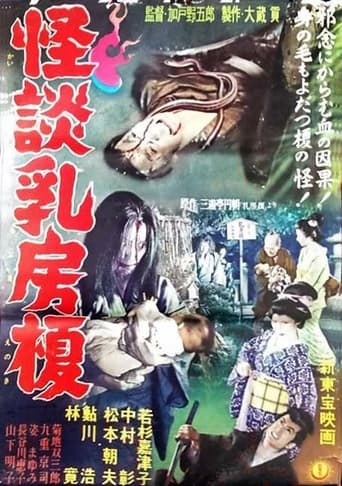
Keiko Hasegawa is credited as an actor in the 1958 Japanese film The Mother Tree, but beyond that single screen credit, verifiable biographical information about her life and career is extremely limited in widely accessible historical film references. She appears to have been a minor or little-documented performer active in the late 1950s, a period when many Japanese studio-era actors worked in supporting roles that were not always preserved in later English-language reference sources. At present, there is not enough reliable public evidence to reconstruct a detailed career arc, identify her training, or confirm whether she continued acting beyond this one known film. Because of the scarcity of surviving documentation, she should be treated as an obscure figure from late classic Japanese cinema rather than as a widely chronicled star. Her known association with The Mother Tree places her within the postwar studio era, when Japanese filmmaking was highly productive and many performers appeared in single or limited credits across studio productions. Further research in Japanese-language archives, film periodicals, studio records, or contemporary credits would be necessary to establish a fuller biography. In the absence of such records, any more specific claims about her personal life, training, or later career would be speculative.
More about Keiko Hasegawa
In film history
Keiko Hasegawa’s cultural significance lies less in a documented star persona and more in what her surviving credit reveals about the breadth of performers working in Japanese cinema during the late 1950s. Actors like Hasegawa helped fill out the casts of studio productions that formed the backbone of Japan’s postwar film industry, even when their names were not preserved in later international reference works. Her presence in The Mother Tree situates her within a moment when Japanese cinema was balancing traditional dramatic forms with modern studio practices and a rapidly evolving domestic audience. While she does not appear to have achieved major public fame, performers with limited surviving documentation are still important to film history because they reflect the many working artists whose labor supported the era’s cinematic output. For researchers and archivists, such names are valuable starting points for recovering fuller production histories and cast records.
Later reputation
Keiko Hasegawa’s legacy is currently archival rather than celebratory: she is remembered, insofar as the record survives, as a credited performer in a 1958 Japanese film. Her case underscores how many classic-era actors remain underdocumented, especially in non-English-language cinema where studio records and credits may not be readily accessible to international databases. Preserving names like hers matters because it helps reconstruct the industrial and artistic fabric of the period, not just its most famous stars. If additional records surface, her legacy could expand from a single credit to a more meaningful place within Japanese film history. For now, her historical importance is primarily as part of the wider ecosystem of postwar Japanese acting talent.
Influence
There is no verifiable evidence that Keiko Hasegawa directly influenced other actors or filmmakers in a documented, named way. Her influence, if any, would have been local and professional within the production environment of late-1950s Japanese cinema. In a broader historical sense, performers with sparse surviving records influence modern scholarship by prompting archival research and encouraging more complete cast identification. Her name contributes to the larger understanding that film history is built not only by major stars but also by many lesser-known working actors whose contributions remain partially hidden.
Off screen
No reliable public information has been located concerning Keiko Hasegawa’s personal life, including marriage, family background, education, or later activities. She does not appear in widely available English-language biographical references with enough detail to verify such facts. Because of this, any claims about spouses, children, or private life would be unsubstantiated. Her historical record remains limited primarily to a single identified acting credit.
Credits
- Screen credit as an actor in The Mother Tree (1958)
- Participation in a postwar Japanese studio-era production during a prolific period of national filmmaking
- Representation of the many lesser-documented performers who supported Japanese cinema’s mid-century output
Roles
- Role in The Mother Tree (1958) is the only verifiable credited performance currently available
Films
- The Mother Tree (1958)
Notes
- Keiko Hasegawa is currently identifiable in accessible film references primarily through one known credit: The Mother Tree (1958).
- She appears to have worked during the late studio era of Japanese cinema, a highly productive period for the industry.
- Her name is not widely documented in English-language classic film references, which is why biographical details are scarce.
- The limited record makes her an example of the many performers whose work survives in credits even when personal history does not.
- Further identification would likely require Japanese-language archival sources, original film programs, or studio production records.
- Because only one film credit is readily confirmed, it is not presently possible to determine whether she had a longer acting career under the same name or a different professional name.
Questions
Who was Keiko Hasegawa?
Keiko Hasegawa was a Japanese actor credited in the 1958 film The Mother Tree. At present, she is a very obscure figure in classic cinema records, and little verified biographical information is publicly available.
What films is Keiko Hasegawa best known for?
The only clearly verifiable film currently associated with her is The Mother Tree (1958). No additional confirmed filmography is readily available in widely accessible references.
When was Keiko Hasegawa born and when did she die?
Her birth date and death date are not currently verified in accessible sources, and both remain unknown. More archival research would be needed to establish those details with confidence.
What awards did Keiko Hasegawa win?
No awards or nominations have been verified for Keiko Hasegawa in the available historical record. She appears to have been a little-documented performer rather than a major award-recognized star.
What was Keiko Hasegawa's acting style?
Her acting style cannot be reliably described because insufficient documentation survives about her performances. Only one film credit is currently confirmed, and no detailed critical commentary has been found.
What is Keiko Hasegawa's legacy in film history?
Her legacy is mainly archival, reflecting the many supporting and lesser-documented performers who contributed to Japanese cinema in the 1950s. She is part of the historical fabric of the era even though her personal story has not yet been fully recovered.