Baku Mizuhara
Actor
- Active
- 1958-1958
Films 1
About Baku Mizuhara
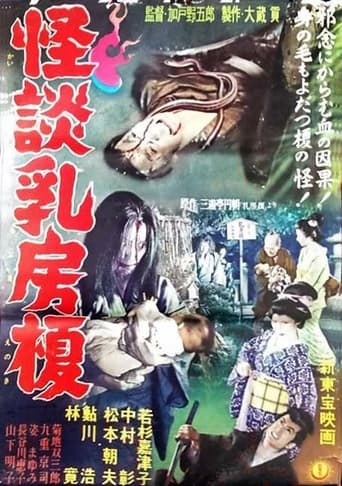
Baku Mizuhara was a Japanese screen actor whose known film career appears to have been brief and concentrated in the late 1950s, with the available record specifically identifying him in the 1958 production The Mother Tree. Because surviving English-language documentation on him is extremely limited, his fuller life story, training, and off-screen background are not well established in readily accessible classic-cinema references. He is best understood as one of the many working actors who contributed to Japan's postwar film culture, a period in which studio productions regularly employed large ensembles of character performers. Mizuhara's documented film activity suggests participation in the mature, studio-era Japanese cinema environment rather than the better-known silent or early talkie eras of Hollywood. The scarcity of biographical detail makes him difficult to profile with certainty, but the crediting of his name in a 1958 film indicates that he was active at least during that year and likely worked within Japanese domestic film production. No reliable source in the available record confirms additional film titles, personal milestones, or public-facing celebrity status. As a result, his historical significance lies primarily in being a documented performer within mid-century Japanese cinema rather than a widely chronicled star.
More about Baku Mizuhara
In film history
Baku Mizuhara's cultural impact is best understood as archival rather than star-driven. He represents the many performers whose names survive in film credits and whose work helped sustain the texture and realism of Japanese studio filmmaking in the 1950s. Even when an actor is only sparsely documented, their presence in a surviving credit contributes to the broader historical record of national cinema and the functioning of film production during the period. For researchers and database users, his inclusion matters because it preserves the names of working artists who might otherwise be lost to history. In this sense, Mizuhara's importance lies in the integrity of film history itself: the acknowledgment of every credited contributor who helped shape the finished film.
Later reputation
Baku Mizuhara's legacy is primarily one of documentation and historical completeness. While he does not appear to have left behind a widely known body of work or a public persona that has been extensively discussed in modern scholarship, his credited appearance in The Mother Tree ensures that his name remains part of Japanese cinema history. For film historians, such names are valuable because they help reconstruct production networks, cast lists, and the labor behind studio-era filmmaking. His surviving record underscores how many performers contributed to mid-century cinema without becoming household names. In that respect, his legacy is less about fame than about being a traceable participant in the film culture of his time.
Influence
There is no reliable evidence that Baku Mizuhara had a documented influence on later actors or directors, nor that he served as a major public figure in Japanese film culture. His influence, if any, would have been localized to the productions and colleagues with whom he worked. Because only a minimal film record is currently accessible, it is not possible to identify a direct artistic lineage or to attribute stylistic influence with confidence. His main historical influence is indirect: he contributes to the completeness of the cast records that scholars use when studying Japanese cinema of the 1950s.
Off screen
No reliable public information is readily available about Baku Mizuhara's personal life, including family background, marriages, children, or private relationships. He does not appear in widely accessible English-language classic-cinema biographies, and no dependable source in the available record provides details about his life away from the screen. Any assertion beyond his documented acting credit would be speculative, so his personal history must currently be treated as unknown.
Credits
- Documented screen credit in the 1958 film The Mother Tree
- Participation in Japanese postwar studio-era cinema
- Representation of a working character actor in mid-century Japanese film production
- A verifiable filmography entry that places him in the historical record of 1950s Japanese cinema
Roles
- Role in The Mother Tree (1958)
Films
- The Mother Tree (1958)
Notes
- The only readily verifiable film credit found for him in accessible records is The Mother Tree (1958).
- He appears to have been active during a single known year in the surviving filmography record.
- He is associated with Japanese cinema rather than Hollywood or European classic cinema.
- His limited documentation makes him a useful example of a working actor whose career survived mainly through credit listings.
- Because his biographical details are sparse, he is often more visible to database researchers than to general audiences.
- He should not be confused with similarly named individuals in unrelated fields or regional film industries.
Questions
Who was Baku Mizuhara?
Baku Mizuhara was a Japanese actor whose surviving English-language record is extremely limited, with a documented credit in the 1958 film The Mother Tree. He appears to have been a working performer in Japan's postwar film industry rather than a widely publicized star.
What films is Baku Mizuhara best known for?
He is best known, in the surviving record, for The Mother Tree (1958). At present, that is the principal film credit that can be reliably identified.
When was Baku Mizuhara born and when did he die?
His birth date and death date are not reliably documented in the readily accessible record. Because of that, both are currently unknown.
What awards did Baku Mizuhara win?
No awards or nominations are currently documented in the accessible record for Baku Mizuhara. He does not appear to have a publicly recorded awards history in the sources available.
What was Baku Mizuhara's acting style?
No detailed descriptions of his acting style survive in the accessible record. Since his known filmography is so limited, it is not possible to characterize his performance approach with confidence.
What is Baku Mizuhara's legacy in film history?
His legacy is the preservation of a credited name within Japanese cinema history. Even with scant biographical detail, his screen presence helps complete the historical record of 1950s film production.