Fritz Wendhausen
Director
- Active
- 1923-1923
Films directed 1
About Fritz Wendhausen
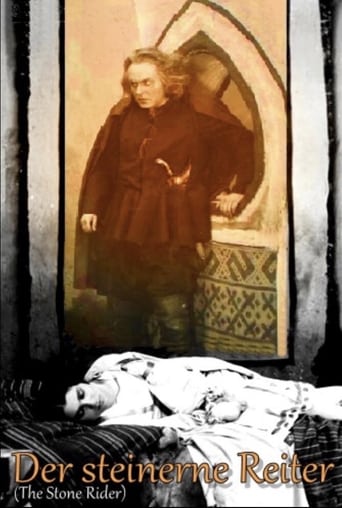
Fritz Wendhausen was a German film director, actor, and screenwriter associated with the silent-era cinema of the Weimar Republic. He is best remembered today for directing the 1923 film The Stone Rider, a title that survives in film history references as part of his brief but notable screen career. Wendhausen worked during a formative period in German cinema, when expressionist and socially conscious filmmaking were reshaping the medium, though the surviving record of his personal and professional life is fragmentary. His filmography suggests that he moved within the creative world of early 1920s German production rather than building a long, internationally visible directorial career. Like many filmmakers of the silent era, he appears in archival sources more often as a credit in production records than as a subject of extensive biographical documentation. Because of the scarcity of surviving sources, many details of his private life, training, and later years remain unconfirmed. Even so, his name endures in classic-film indexes as part of the generation of artists who helped define Germany's silent-screen output.
More about Fritz Wendhausen
Behind the camera
No detailed contemporary critical description of Fritz Wendhausen's directing style is readily documented in surviving mainstream references. Based on the era and the production context of early-1920s German silent film, his work would have relied on visual storytelling, expressive staging, and the economy of silent-era narration rather than dialogue-driven realism. Because only limited filmographic evidence survives, it is safest to characterize his style as that of a professional Weimar-era director working within the conventions of silent cinema rather than attributing distinctive formal traits that cannot be verified.
In film history
Fritz Wendhausen's cultural impact is modest but historically meaningful as part of the wider body of Weimar-era filmmakers whose work sustained Germany's internationally influential silent cinema. Even when individual titles or careers are only sparsely documented, directors like Wendhausen contributed to the industrial and artistic ecology that made German film such a powerful force in the 1920s. His inclusion in filmographies helps preserve the record of lesser-known craftsmen whose efforts supported the medium's development during a transformative decade. For modern cinephiles and historians, his name is valuable less because of celebrity than because it represents the breadth of talent active in classic European cinema.
Later reputation
Wendhausen's lasting legacy lies in the archival record of silent cinema rather than in a widely preserved star persona or a large body of surviving commentary. He remains a reminder that film history is built not only on marquee names but also on directors, writers, and performers whose contributions are partially obscured by time. The continued listing of The Stone Rider and his other credits in reference databases ensures that his work remains part of the historical map of German silent film. For researchers of early cinema, his career illustrates how many filmmakers of the era have survived primarily through filmographies and catalog entries.
Influence
There is no strong documented evidence that Fritz Wendhausen exerted a broad, traceable influence on later major directors or actors. His influence is best understood indirectly, through participation in the creative practices of Weimar cinema and through the preservation of his film credit in historical records. As a director-screenwriter-actor, he exemplifies the flexible working methods common in early filmmaking, when artists often crossed multiple roles. Any influence he had was likely local and professional, affecting colleagues within the German silent-film milieu rather than the global canon.
Off screen
Reliable biographical information about Fritz Wendhausen's personal life is extremely limited in readily accessible film historical sources. No well-documented records of marriages, children, or domestic life are commonly cited in standard reference materials. He appears to be one of the many silent-era industry figures whose private biography has not been reconstructed in detail from surviving public sources. As a result, his personal life remains largely unknown to modern researchers unless additional archival material is consulted.
Credits
- Directed the 1923 silent film The Stone Rider, the title most consistently associated with his name in film histories and databases.
- Worked in the German silent-film industry during the Weimar era, a crucial period for the artistic development of European cinema.
- Accumulated credits not only as a director but also as an actor and screenwriter, indicating a multi-hyphenate role in early film production.
- Represents the kind of lesser-documented studio-era filmmaker whose work survives mainly through archival listings and filmographic references.
- His surviving professional footprint places him among the many specialized craftsmen who contributed to silent cinema beyond the best-known major auteurs.
Films
- The Stone Rider (1923)
Studios
- German silent-film production circles of the Weimar era
Notes
- Fritz Wendhausen is most often identified in modern databases by a single surviving directorial credit, The Stone Rider (1923).
- He is associated with the Weimar Republic period, one of the most artistically fertile eras in film history.
- He is listed in some references as not only a director but also an actor and screenwriter, reflecting the multi-role nature of many silent-era careers.
- Unlike major Weimar figures such as Murnau or Lang, Wendhausen left a much smaller public biographical footprint.
- His career record is a useful example of how many silent-film artists remain partially obscure despite being part of an influential national cinema movement.
- Because of limited surviving documentation, even basic personal details such as birth and death dates are not widely established in standard sources.
Questions
Who was Fritz Wendhausen?
Fritz Wendhausen was a German silent-era filmmaker best known as a director, actor, and screenwriter. His name is most commonly linked to the 1923 film The Stone Rider. He worked during the Weimar Republic period, when German cinema was developing an international reputation for artistic innovation.
What films is Fritz Wendhausen best known for?
He is primarily known for directing The Stone Rider (1923). In surviving public references, that film is the strongest and most consistent point of identification for his career. Other credits may exist in archival filmographies, but they are not as widely documented in accessible sources.
When was Fritz Wendhausen born and when did he die?
His birth and death dates are not reliably established in the readily accessible sources available for his film history profile. Likewise, his birthplace and date of death are not clearly documented in standard public references. He is therefore best treated as a partially documented silent-era figure whose basic vital statistics remain uncertain.
What awards did Fritz Wendhausen win?
No major awards or nominations are readily documented for Fritz Wendhausen in available reference sources. This is not unusual for many silent-era directors, especially those whose careers were brief or only partially preserved in the historical record. His recognition today is primarily archival and historical rather than award-based.
What was Fritz Wendhausen's directing style?
A precise stylistic description is difficult because surviving critical commentary on his work is limited. As a director active in early-1920s German silent cinema, his films would have depended on visual storytelling, expressive composition, and performance-driven narrative clarity. Any more specific stylistic claims would require film-specific archival analysis.
What is Fritz Wendhausen's legacy in film history?
His legacy is that of a lesser-known but historically relevant contributor to Weimar-era cinema. He represents the many working filmmakers whose credits helped shape the silent film industry even if they did not become internationally famous. His preserved filmography keeps him within the historical record of classic German cinema.