
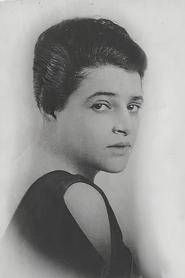
Marguerita Padula
Actor
- Active
- 1930-1930
Films 1
About Marguerita Padula
Marguerita Padula is a very obscure early sound-era screen performer whose surviving documented film credit places her in the 1930 MGM musical comedy The Cuckoos. Beyond this single identifiable screen appearance, reliable biographical information about her life, training, and later career is extremely limited in readily available reference sources, which suggests she was likely a minor supporting or ensemble player rather than a major star. Her presence in The Cuckoos connects her to the transitional moment when Hollywood was rapidly adapting stage-oriented musical entertainment to the new era of synchronized sound. Because the surviving public record is sparse, it is not currently possible to reconstruct a detailed career arc with confidence without risking confusion with similarly named individuals. What can be stated with certainty is that she was active during the early talkie period and was part of the broad pool of performers who helped populate studio musicals of the period. Her known screen history is therefore best understood as a brief, documented participation in one of the many musical comedies produced at the beginning of the sound era, rather than as the career of a fully documented leading player.
More about Marguerita Padula
In film history
Marguerita Padula's cultural impact lies less in star power than in the historical value of her documented appearance in an early MGM talkie. Performers like Padula represent the large and often under-credited body of actors who contributed to the texture of early sound cinema, especially in musicals and ensemble comedies where many smaller roles supported the production's overall rhythm and spectacle. Even when their individual careers are not extensively documented, such screen credits are important to film historians because they help map the labor, casting practices, and performer networks of the studio era. Her name surviving in film records reminds researchers that classic cinema history is built not only on marquee stars but also on the many lesser-known working actors who appeared in studio productions.
Later reputation
Padula's legacy is primarily archival: she remains a traceable name in early Hollywood filmography, associated with a transitional period in American film history. For modern researchers and database compilers, her credit in The Cuckoos (1930) helps preserve the completeness of cast documentation for early talkies. Her case also illustrates how many performers from the era remain partially documented, with their work preserved on screen while their personal histories have been lost or remain difficult to verify. In that sense, her legacy is representative of a much larger group of minor studio-era actors whose contributions are visible in the film record even when their biographies are not.
Influence
There is no evidence that Marguerita Padula exerted a direct, documented influence on later actors or directors in the way major stars or film innovators did. Her importance is instead indirect: she is part of the historical cast ecosystem that supported early musical and comedy filmmaking, helping create the ensemble fabric that defined studio entertainment. For film historians, her preserved credit contributes to a fuller understanding of early Hollywood casting and the many performers who worked briefly or anonymously within the studio system.
Off screen
No reliably verified public biographical information is readily available regarding Marguerita Padula's personal life, including marriage, family background, or later years. Surviving standard film references do not provide enough detail to establish her relationships, place of residence, or activities outside the one documented screen credit. Given the scarcity of records, any attempt to describe her private life beyond this would be speculative.
Credits
- Screen credit associated with the early sound musical comedy The Cuckoos (1930)
- Participation in a studio-era production during Hollywood's rapid transition from silent pictures to talkies
- Documented presence in classic cinema records despite otherwise sparse surviving biographical data
Roles
- Performer in The Cuckoos (1930)
Films
- The Cuckoos (1930)
Studios
- MGM
Notes
- Marguerita Padula is documented in connection with only one clearly identified film credit: The Cuckoos (1930).
- Her career falls squarely in the early talkie era, a time when studios were rapidly adapting to synchronized sound.
- She appears to have been a working performer rather than a marquee star, which is one reason detailed biographical records are scarce.
- The 1930 film The Cuckoos was part of MGM's effort to produce popular musical entertainment during the first years of sound film.
- Because her public record is so limited, she is the kind of performer whose existence is often rediscovered through cast lists and archival databases.
- Her name is uncommon enough that researchers should be careful not to confuse her with similarly named contemporary performers or non-film figures.
Questions
Who was Marguerita Padula?
Marguerita Padula was an obscure early sound-era film actor, best documented for appearing in The Cuckoos (1930). Very little verified biographical information survives about her life or broader career, so she is chiefly known through her film credit.
What films is Marguerita Padula best known for?
She is best known for The Cuckoos (1930). At present, that is the only clearly documented film credit readily associated with her in standard reference material.
When was Marguerita Padula born and when did she die?
Her birth and death dates are not currently available in reliable public sources. Likewise, her birthplace and death place have not been verified from the information presently accessible.
What awards did Marguerita Padula win?
No awards or nominations are currently documented for Marguerita Padula in accessible classic-cinema reference sources. Her historical significance comes from her screen credit rather than from a known awards record.
What was Marguerita Padula's acting style?
There is not enough surviving information to describe a distinctive, documented acting style with confidence. Since she is primarily known from a single early talkie credit, any stylistic description would be speculative.
Why is Marguerita Padula important to film history?
She is important as part of the historical record of early Hollywood and the many lesser-known performers who appeared in studio productions. Her credit in an early MGM musical helps preserve the completeness of classic cinema cast histories.